

Chardonnay is a white wine grape born in Burgundy, France, and one of the most widely planted white grapes in the world. The grape itself has a gentle aroma, so its taste changes dramatically with the climate it grows in and with whether the winemaker uses oak. From crisp, lemony dry whites to rich wines scented with butter and nuts, and all the way to Champagne bubbles: few grapes cover this much ground on their own.
I am Italian, I import Italian wine in Tokyo, and I pour it almost every day in restaurants and at tastings. The white wine question I hear most is: "Chardonnay is the heavy one, right?" The answer is half right and half a misunderstanding. In this guide I untangle that misunderstanding, then walk through oaked vs unoaked, regional styles, how to pair it with Japanese food, and the Chardonnays and Chardonnay "relatives" you can actually drink from the Swirl cellar.
The common misconception: is Chardonnay always a heavy, oaky white?
In Japan, "Chardonnay" makes many people think of a buttery, heavily oaked white. In the 1990s, Chardonnays from America and Australia made with plenty of new oak became huge hits, and the backlash in English-speaking countries even produced the phrase "ABC: Anything But Chardonnay". That image has stuck around.
In reality, most Chardonnay is a clean, dry white with little or no oak flavor. Chablis in northern Burgundy is famous for using almost no oak, and Champagne's "Blanc de Blancs" is 100% Chardonnay. What makes a Chardonnay light or heavy is not the grape but the climate of the region and the choices of the winemaker.
- Myth 1: Chardonnay is sweet → Almost all of it is dry. Many people simply read the roundness of oaked styles as "sweet".
- Myth 2: All Chardonnay tastes the same → Same grape, yet Chablis and Napa taste like different drinks.
- Myth 3: Chardonnay doesn't go with fish → Unoaked Chardonnay is a classic partner for oysters and white fish.
So most people who "don't like Chardonnay" just don't like heavily oaked styles. Check the label or description for oaked or unoaked and you will find a bottle you enjoy.
What Chardonnay tastes like
Chardonnay does not carry a strong "varietal" aroma the way Muscat or Sauvignon Blanc does. It is something like a white canvas, which means the character of the place and the winemaking come through clearly. Cool regions give lemon, green apple and white flowers. Warm regions give ripe pear, peach and pineapple. Add oak aging and you get layers of butter, nuts, toast and vanilla.
| Element | Tendency |
|---|---|
| Sweetness | Almost always dry |
| Body | Light to full (depends heavily on region and oak) |
| Acidity | Sharp in cool regions, softer in warm regions |
| Tannin | None |
| Aromas (unoaked) | Lemon, green apple, white flowers, minerality |
| Aromas (oaked) | Pear, peach, butter, nuts, toast, vanilla |
| Alcohol | Around 12 to 14.5% |
| Serving temperature | Unoaked 8 to 10°C, oaked 10 to 13°C |
Oaked vs unoaked: what's the difference?
This is the single most important point when choosing a Chardonnay. Unoaked Chardonnay is fermented in stainless steel tanks at fairly low temperatures, locking in the freshness of the fruit. Oaked Chardonnay is fermented or aged in oak barrels, which adds vanilla and toast aromas from the wood and a fuller, rounder texture.
| Type | Aromas | Texture | Best with |
|---|---|---|---|
| Unoaked (crisp) | Lemon, green apple, white flowers | Light, sharp acidity | Oysters, sashimi, tempura, starters |
| Lightly oaked (balanced) | Pear, white peach, a hint of nuts | Smooth, moderate richness | Grilled fish, chicken, most Japanese dishes |
| Oaked (rich) | Butter, nuts, toast, vanilla | Full, generous | Cream dishes, butter and soy sauce, roast chicken |
Where does the "butter" aroma come from?
The famous "buttery" note in oaked Chardonnay actually comes not from the barrel itself but from malolactic fermentation (MLF). This is the step where lactic bacteria turn the wine's malic acid (the sharp, green-apple kind) into softer lactic acid. A compound formed along the way, diacetyl, is the same molecule behind the aroma of real butter. If the winemaker also stirs the lees (spent yeast left after fermentation) in the barrel, a technique called bâtonnage, the wine picks up bread and brioche flavors and a silky texture. New barrels give stronger aromas, barrels used for many years give gentler ones. Winemakers combine these choices to shape each bottle.
Chardonnay's roots: the child of noble Pinot and a "peasant grape"
The name Chardonnay is said to come from a small village of the same name in the Mâconnais, in southern Burgundy. Its parents were only identified quite recently. In 1999, a team from the University of California, Davis and French researchers published DNA results in the journal Science showing that Chardonnay is a natural cross of Pinot (the Pinot Noir family) and a white grape called Gouais Blanc.
Gouais Blanc was a "peasant grape" that medieval France repeatedly tried to ban as inferior. Yet from that peasant and the noble Pinot came the most famous white grape in the world. Beaujolais' Gamay, Burgundy's other white Aligoté, and the Loire's Muscadet grape (Melon de Bourgogne) are all Chardonnay's siblings. For more grape genealogy, see our grape family tree guide.
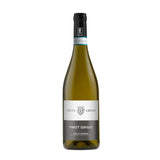
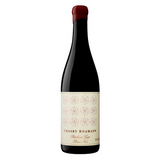
In the Swirl cellar you can taste this family starting from the "parent". Pinot Grigio, the grey-skinned mutation of Pinot, and Pinot Noir itself. Put a Chardonnay next to them and the family is complete.
How region shapes Chardonnay style
Chardonnay is grown all over the world, from France and Italy to America, Australia and even Nagano and Yamanashi in Japan. According to the International Organisation of Vine and Wine (OIV) 2017 report, it covered about 210,000 hectares worldwide (2015 figures). Because it is planted so widely, the differences between regions are easy to taste.
| Region | Climate | Style |
|---|---|---|
| Chablis, France | Cool | Little oak. Minerality and sharp acidity. The benchmark for Chardonnay |
| Côte de Beaune (Meursault etc.), France | Cool to moderate | Skillful use of oak: full, complex, the summit of white wine |
| Champagne, France | Cool | A star of sparkling wine. 100% Chardonnay is "Blanc de Blancs" |
| Northern Italy (Franciacorta, Trentino) | Cool to moderate | Traditional-method sparkling and whites with clean acidity |
| Sicily, Italy | Warm, sea breezes | Sunny fruit balanced by freshness from the sea wind |
| California (Napa), USA | Warm, morning fog | Ripe fruit and oak. Smooth and powerful |
| Australia | Varies widely by region | Once rich and heavy, now increasingly balanced |
The secret of Chablis: vineyards made of 150-million-year-old oysters
Chablis' sharp minerality has a geological secret. The soil here is called Kimmeridgian, and about 150 million years ago, in the Jurassic period, it was the floor of a warm, shallow sea. Dig into the vineyards and you find them packed with fossils of a tiny comma-shaped oyster, Exogyra virgula. In other words, Chablis vines draw that salty minerality from limestone built by ancient oysters.
That is why "Chablis with raw oysters" is the local rule. Wine from a vineyard made of fossil oysters, served with oysters fresh out of the sea: few tables are this poetic. When I tell this story, guests usually look puzzled for a second, and then always order another glass. Steamed oysters, oysters with a squeeze of lemon, shellfish dishes: pair them with unoaked Chablis or a crisp Italian Chardonnay. This "sea meets sea" match is easy to try at a Japanese table too.
Napa: the white that stunned the world at the "Judgment of Paris"
In 1976, at a blind tasting in Paris now known as the "Judgment of Paris", French judges placed a California Chardonnay, not a Burgundy, first among the whites. That moment put Napa Valley on the map as a world-class wine region. Today's Napa Chardonnay typically combines ripe fruit and the roundness of oak with acidity that keeps its shape.
Italian Chardonnay: bubbles and southern sun
In Italy, Chardonnay first means bubbles. Franciacorta in Lombardy and Trento DOC in Trentino are made by the same traditional method as Champagne, with Chardonnay as the leading grape. Down south in Sicily, the Mediterranean sun ripens the fruit fully while winds off the sea preserve the acidity. Not too heavy, yet generously fruity: an Italian-style Chardonnay you can drink with dinner every day without tiring of it.
Chardonnay you can drink at Swirl
The Swirl cellar holds two Chardonnays at opposite ends of the style range. Taste these two side by side and you will understand "crisp" vs "oaked" in one evening.
| Wine | Region | Style | Price (tax incl.) | Great for |
|---|---|---|---|---|
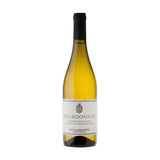
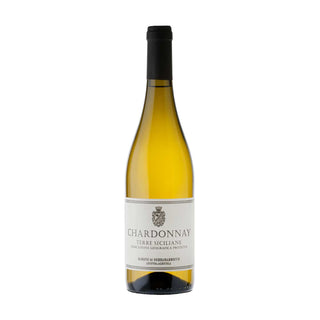
| Chardonnay (Barone di Serramarrocco) | Sicily, Italy | Fresh, fruity, crisp | ¥3,960 | Your first bottle, seafood, everyday meals |
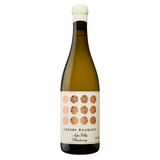
| Napa Valley Chardonnay (Crosby Roamann) | Napa Valley, USA | Barrel-fermented and barrel-aged, rich | ¥7,150 | Cream dishes, celebrations, oaked-style fans |
Sicilian Chardonnay: my pick for beginners
Barone di Serramarrocco, in western Sicily, is a family-run winery that looks after its vineyards with sustainable farming. Its Chardonnay balances sunny fruit with clean acidity. Oak never takes center stage, so this is exactly the bottle I want people who think "Chardonnay is heavy" to try. When I pour it for restaurant guests, I often hear "This is Chardonnay?"
Oaked Napa Chardonnay: for special occasions
Crosby Roamann's Napa Valley Chardonnay is made from grapes hand-picked before dawn, fermented in French oak barrels and then aged in oak for 18 months. Pear, peach and pineapple fruit meet white-rose aromas and the roundness of oak, while firm acidity gives it structure, so it never feels heavy. If you want "a white with butter-like richness", start here.
Enjoying Chardonnay in Japan: Japanese food and Chardonnay
Chardonnay is actually a great white for Japanese food. The reason is simple: its aromas are never overpowering, and its balance of acidity and savoriness sits well with dashi and salt-seasoned dishes. The key is to "match the oak to the richness of the dish". Choose unoaked for light dishes, and oaked for dishes with butter, oil or cream.
| Dish | Best style | Why it works |
|---|---|---|
| Raw or steamed oysters | Unoaked | Minerality and acidity lift the briny aroma of the oyster |
| White fish sashimi (with salt and sudachi) | Unoaked | The citrus notes overlap and bring out the sweetness of the fish |
| Tempura (with salt) | Unoaked to lightly oaked | Acidity cuts through the oil and matches the toasty batter |
| Yakitori (salt), salt-grilled chicken | Lightly oaked | Chicken fat and moderate richness are at the same weight |
| Butter-grilled salmon, chanchan-yaki | Oaked | Butter aromas connect with butter aromas |
| Grilled corn with butter and soy sauce | Oaked | Charred soy and toasty oak overlap: a surprising perfect match |
| Cream stew, gratin, carbonara | Oaked | The full texture holds up to the richness of cream |
Beyond "white with fish, red with meat"
In Japan the idea of "white wine = fish" is still strong, but oaked Chardonnay is lovely with roast chicken, pork sauté and even tonkatsu. With tonkatsu, go for salt or lemon rather than sauce: the toasty crust echoes the toast notes of the oak. On the other hand, with teriyaki and sweet-savory flavors, a balanced, fruit-forward style is easier to match than a heavily oaked one.
Tasting flights at home
The fastest way to understand Chardonnay is to open two or three bottles side by side. These are the line-ups I recommend most often.
- Parent and child flight: Pinot Grigio → Sicilian Chardonnay (the "parent" and "child" of the same family)
- Oak or no oak flight: Sicilian Chardonnay → Napa Valley Chardonnay (crisp style vs oaked style)
- Grape comparison flight: Sauvignon Blanc → Chardonnay (the aromatic individualist vs the white canvas)
Pour lighter, unoaked wines first. Serve sashimi or tempura as the first dish and butter-grilled salmon as the second, and the differences between the wines become very clear.
Tips for great Chardonnay without a wine fridge
Japanese summers can push room temperature above 30°C, and white wine changes a lot with temperature. Take unoaked Chardonnay out of the fridge (about 5°C) about 5 minutes before serving and enjoy it at 8 to 10°C, when its citrus fruit is most lively. Leave oaked Chardonnay out for 10 to 15 minutes and serve at 10 to 13°C. Too cold, and those lovely butter and nut aromas shut down. Close leftovers with the cork or a stopper and keep them in the fridge: they will taste fine for 2 to 3 days, and oaked styles sometimes open up even more the next day. For oaked styles, a slightly larger, rounder glass is best.
How to choose: follow your taste to the next bottle
For Chardonnay lovers, and for people who feel "Chardonnay isn't really for me": here is how to pick your next bottle from what you like.
- If you like crisp Chardonnay → Soave (Garganega) from Veneto, or Vermentino from the Tuscan coast
- If you love the minerality of Chablis → Arneis from Piedmont, or Vermentino
- If you like rich, oaked Chardonnay → Sicilian Grillo, or Langhe Nascetta, which deepens with age
- If Chardonnay feels too quiet on the nose → Sauvignon Blanc, with its distinctive aromas
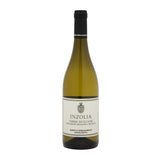
- If you enjoyed the Sicilian Chardonnay → Inzolia from the same producer (a native Sicilian grape)
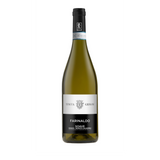
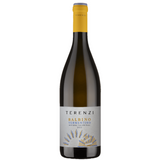
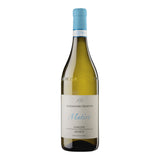
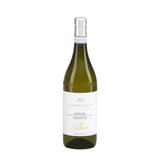
Citrus and a delicate bitter finish. For the unoaked camp
Langhe Arneis 2024Alessandro Rivetto
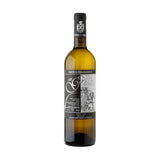
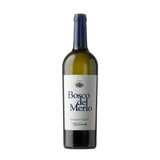
The aromatic individualist. For comparing with Chardonnay
Sauvignon Blanc Turranio 2024Bosco del Merlo
For how grapes compare, see What is Sauvignon Blanc? and our guide to grape varieties, and for French regions, An introduction to French wine.
Chardonnay prices and how to choose well
Chardonnay covers an enormous price range. For everyday drinking, expect roughly ¥3,000 to ¥4,000-something; for serious oaked styles, ¥5,000 and up. Famous Burgundy village wines climb much higher.
- Check the label for oak: "barrel-fermented", "barrel-aged" or "oak" means a rich style; "stainless steel" or "unoaked" means a crisp style.
- Choose by climate: cool regions if you like acidity, warm regions if you like fruit.
- Work backwards from the food: butter or cream in tonight's dinner means oaked; salt or sudachi means unoaked.
Should you age Chardonnay?
White wine is often thought of as something to drink young, but Chardonnay is one of the whites best suited to aging. Not all of it, though. Fresh unoaked styles are all about youthful fruit, so enjoy them within about 1 to 3 years of the harvest. Quality oaked styles come together over several years, developing nut and honey depth. Swirl's Napa Valley Chardonnay, for example, is described by its producer as reaching its peak a few years after harvest, so it is enjoyable now and rewards a little patience. If you keep bottles at home for a few years, store them on their side in a dark place with stable temperature, and in summer moving them to the vegetable drawer of the fridge is a safe bet.
Frequently asked questions
Q. Is Chardonnay sweet?
A. Almost all Chardonnay is dry. Oaked styles are round and rich, so they can taste sweet, but very little sugar remains. This is the most common misconception about Chardonnay.
Q. Should I choose oaked or unoaked?
A. Choose by the food. Unoaked suits light dishes like sashimi, oysters and tempura; oaked suits rich dishes like cream sauces, butter-grilled fish and roast chicken.
Q. Are Chablis and Champagne also Chardonnay?
A. Yes. Chablis is Chardonnay from northern Burgundy, in a sharp style with little oak. Chardonnay is also one of Champagne's main grapes, and 100% Chardonnay Champagne is called "Blanc de Blancs".
Q. How is Chardonnay different from Sauvignon Blanc?
A. Both are dry whites, but Sauvignon Blanc is an individualist with clear herb and grapefruit aromas. Chardonnay is gentler on the nose and changes greatly with region and oak. Chardonnay suits richer dishes, Sauvignon Blanc suits herbs and lighter fare.
Q. Is Chardonnay easy for beginners? Where should I start?
A. Yes, it is a very approachable grape. Start with a crisp style where oak doesn't dominate. At Swirl, the Sicilian Chardonnay is a great introduction. Once you know you enjoy richer whites, move on to the oaked Napa Chardonnay.
Q. How is Chardonnay different from Pinot Grigio?
A. They are actually relatives. Pinot Grigio is a skin-color mutation of Pinot, Chardonnay's parent. Pinot Grigio is usually light and fresh, while Chardonnay ranges more widely, all the way to rich styles. Pinot Grigio with starters and Chardonnay with the main course is a lovely progression.
Q. How is Muscat different from Chardonnay?
A. They are different grapes. Muscat has a showy, sweet-smelling aroma. Chardonnay is gentle on the nose and almost always made into dry wine.
The same Chardonnay can look astonishingly different depending on region and oak. Start by opening one unoaked and one oaked bottle side by side, and find the Chardonnay that is yours.
Sources: Bowers et al., "Historical genetics: the parentage of Chardonnay, Gamay, and other wine grapes of northeastern France", Science (1999); OIV, Distribution of the world's grapevine varieties (2017); Bureau Interprofessionnel des Vins de Bourgogne (Chablis Kimmeridgian soils); Crosby Roamann winemaking notes.


Comments (0)
There are no comments for this article. Be the first one to leave a message!