

Grenache is a red wine grape variety native to southern France, Spain, and Sardinia, Italy — one of the most widely planted grape varieties in the world. In Japan it's often pigeon-holed as "the rosé grape," but Grenache is far more: it's the backbone of some of the world's greatest reds, from Châteauneuf-du-Pape to Priorat.
Beyond the "Grenache equals rosé" assumption
Walk into most wine shops in Japan and Grenache almost always sits in the rosé section. But in southern France and Spain, locals drink Grenache-driven full-bodied reds every night — the rosé is almost a byproduct of those warm-climate vineyards.
Here's what you need to know: Grenache wears three names. In France it's Grenache, in Spain it's Garnacha, and on the Italian island of Sardinia it goes by Cannonau. Same grape, different language. It forms the structural spine of southern France's GSM blends (Grenache-Syrah-Mourvèdre) and is the dominant variety in Châteauneuf-du-Pape.
Flavour profile and characteristics
| Attribute | Character |
|---|---|
| Body | Medium to full |
| Acidity | Gentle (medium-low) |
| Tannins | Soft to medium |
| Aromas | Raspberry, cherry, white pepper, garrigue (herbal scrub) |
| Alcohol | High (13.5–15%). Grenache grapes accumulate sugar easily, so alcohol climbs naturally |
| Serving temperature | Red: 14–17°C / Rosé: 8–10°C |
Grenache has thin skins and oxidises readily. Winemakers often use sealed cement tanks or modified vessels to preserve freshness. The style ranges from early-drinking to age-worthy, depending on the producer's intent.
How style shifts by region
| Region | Local name | Style |
|---|---|---|
| Southern France (Rhône / Provence) | Grenache | Complex, full-bodied reds (e.g. Châteauneuf-du-Pape), dry rosé |
| Spain (Aragon / Priorat) | Garnacha | Concentrated, high-alcohol, mineral-driven |
| Sardinia, Italy | Cannonau | Gentler fruit, everyday table wine |
Sardinia, Cannonau, and the Blue Zone secret
Have you heard the name Cannonau? It's what Sardinians call Grenache — and it carries a quietly remarkable backstory.
Sardinia is one of the world's original Blue Zones — regions with exceptionally high longevity. As of January 2024, the island was home to 606 centenarians (people aged 100 or older), roughly 20 per 10,000 residents: about twice the Italian national average.
Among the lifestyle factors researchers have pointed to is a simple, multigenerational habit: drinking a small glass or two of local Cannonau at lunch and dinner, around the family table. Not as a health supplement — as part of the rhythm of eating and conversation. That pattern, sustained across generations, has drawn serious academic interest for its possible connection to longevity.
Cannonau is almost unknown in Japan, but on the island it's among the most ordinary everyday reds you'll encounter. That's another face of Grenache worth knowing.
My own introduction to Grenache as a red came at a bistro in southern France. What struck me was the balance: a gentle acidity, sweet red fruit, a faint drift of spice. Not heavy, not thin — the kind of wine that just belongs on a table. In Japan I find it pairs beautifully with yakitori (salt-seasoned), prosciutto salads, and braised pork belly. If you're opening a rosé, try it with sashimi or karaage. In summer, serve well-chilled, around 10°C.
Federico's pick
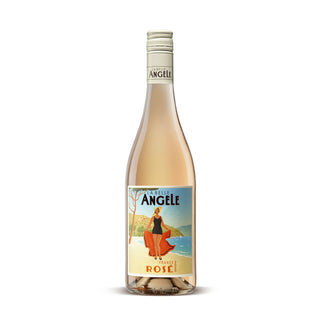
If you're new to Grenache, rosé is the easiest entry point. The bottle I recommend most often is La Belle Angèle Rosé (¥2,380) from southern France — a blend of Grenache and Cinsault with bright fruit and a clean finish. It's approachable even for red wine sceptics, and perfect chilled for summer.
How to choose and when to drink
For red Grenache, head to southern Rhône (Gigondas, Vacqueyras) or Spanish Garnacha for the most authentic expressions. For rosé, look to Languedoc or Provence. On vintages: rosé drinks best young and fresh (1–3 years). High-quality reds can evolve significantly over 10+ years.
Related: Grenache Rosé — A Buyer's Guide / How to Choose and Enjoy Rosé Wine
FAQ
- Are Grenache and Garnacha different grapes?
- No — same grape, different language. Grenache is the French name, Garnacha the Spanish. In Sardinia, Italy, it goes by Cannonau.
- Is Grenache dry?
- Yes, completely dry. The ripe fruit aromas can read as sweet, but alcohol is high (13–15%) and there's virtually no residual sugar. Grenache rosés are also dry.
- What food goes with Grenache?
- Rosé: white fish, prosciutto, grilled or fried chicken. Red: braised pork belly, yakitori (tare), lamb. Grenache is also a good match for spiced dishes.
- Why is Sardinian Cannonau linked to longevity?
- There's no direct medical proof of causation. Cannonau is noted for high polyphenol content, but the more likely factor is the pattern of drinking: small amounts, with food, with company. Sardinia's longevity is attributed to a cluster of lifestyle factors — diet, social connection, physical activity — not any single food or drink.
- What's the connection between Châteauneuf-du-Pape and Grenache?
- Châteauneuf-du-Pape is an AOC in the southern Rhône where Grenache is the dominant permitted variety. The name translates as "the pope's new castle" — a reference to the Avignon Papacy of the 14th century, when the appellation became associated with the papal court.


Comments (0)
There are no comments for this article. Be the first one to leave a message!