

Super Tuscan wines are a category of high-quality Italian wines born in Tuscany in the 1970s and 80s by deliberately stepping outside the region's official appellation rules.
You have likely seen "Super Tuscan" on wine shop shelves or restaurant lists. It is not an official Italian classification — it is a term coined for wines made from international grape varieties (Cabernet Sauvignon, Merlot, and others) blended with or used in place of Sangiovese, outside the boundaries of Italy's official appellation system. These are wines that became great precisely because they ignored the rulebook.
Common Misconception: Super Tuscan Does Not Mean Expensive
When people hear "Super Tuscan," they often assume it means unaffordably expensive. Sassicaia and Ornellaia are indeed among the world's great luxury wines — but Super Tuscan describes a style and philosophy, not a price tier. The range is vast.
Another misconception: seeing "IGT" (Indicazione Geografica Tipica, Italy's protected geographical indication tier) on the label and assuming the wine is inferior. For decades, Sassicaia was sold as Vino da Tavola — basic table wine — simply because Italian regulations at the time did not permit the international grape varieties it used in Tuscany. Its quality was, even then, Italy's finest.
The Birth of Super Tuscans: The Bolgheri Rebellion
The story begins in 1948 on the Tuscan coast near Bolgheri. Marchese Mario Incisa della Rocchetta, inspired by his deep love of Bordeaux, planted Cabernet Sauvignon on his estate, Tenuta San Guido. His motivation was entirely personal — to make a wine for his own family table, not for commercial sale.
He named the vineyard "Sassicaia," a Tuscan dialect word meaning "a place full of stones" — a reference to the gravelly soils resembling those of Bordeaux's Graves district.
For twenty years, he refused to sell a single bottle. The 1972 vintage, released after his 1968 commercial debut, won first place in a blind tasting organized by Decanter magazine in 1978, beating 33 wines from 11 countries. Italian wine has never looked back.
Landmark Super Tuscans
| Wine | Producer | Main Varieties | Area |
|---|---|---|---|
| Sassicaia | Tenuta San Guido | Cabernet Sauvignon-dominant | Bolgheri |
| Tignanello | Antinori | Sangiovese + Cabernet | Chianti Classico |
| Ornellaia | Tenuta dell'Ornellaia | Cabernet Sauvignon-dominant | Bolgheri |
| Masseto | Same estate | Merlot 100% | Bolgheri |
What Super Tuscan Wines Taste Like
Styles vary widely, but the common thread is the marriage of international grape concentration with Tuscan terroir character.
- Body: Medium to full. Well-structured and food-friendly.
- Tannins: Polished. Barriques (small French oak barrels) smooth the tannins over months of aging.
- Aromas: Blackcurrant, cassis, dark cherry, spice, smoke, cedar.
- Aging potential: The finest examples age 10 to 30-plus years.
Enjoying Super Tuscans in Japan
Super Tuscans are one of the most accessible entry points for anyone who loves Bordeaux-style wines but wants to explore Italian character alongside them.
Classic pairings are steak, lamb, and duck. In a Japanese context, sukiyaki, teriyaki-sauced grilled chicken, and shabu-shabu work beautifully. The vanilla and tobacco notes from barrique aging harmonize with the umami depth of soy-based sauces.
Serve at around 18°C. Young vintages benefit from decanting — pour into a wide vessel and wait 30 minutes before drinking. Even just opening the bottle 30 minutes early makes a noticeable difference.
Federico's Recommendation
As an Italian-born wine merchant with direct relationships in Bolgheri and the Maremma, I have a particular connection to this category. Tenuta San Guido's Sassicaia carries singular meaning as the origin point of the entire Super Tuscan movement.
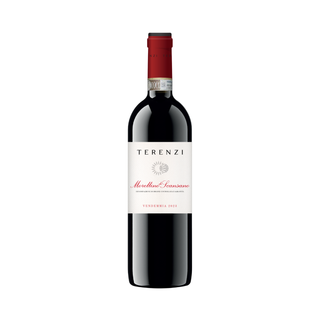
For everyday Tuscan drinking — something you can open without ceremony — Terenzi's Morellino di Scansano is a Sangiovese-based wine from the Maremma coast, the same stretch of Tuscan landscape that produced the Super Tuscans. Full of character, accessible in price, and adopted by many Tokyo restaurants, it is my go-to introduction to Tuscan winemaking for customers exploring Italy for the first time.
How to Choose
When buying a Super Tuscan, "IGT" on the label means the wine was made outside traditional appellation rules. Think of it not as "lesser" but as "liberated from convention." "Bolgheri DOC" and "Bolgheri Sassicaia DOC" represent cases where Super Tuscans eventually earned their own official recognition — but only after the wines had already proven themselves.
FAQ
Q: Are Super Tuscans not DOC or DOCG wines?
A: Sassicaia obtained its own DOC (Bolgheri Sassicaia) in 1994. But many Super Tuscans remain IGT because their producers maintain grape blends or methods outside the standard appellation rules. This reflects a philosophy, not a quality failure.
Q: When is the best time to drink a Super Tuscan?
A: The finest examples improve significantly with aging. But even young vintages are highly enjoyable with proper decanting — pour into a wide vessel and wait 30 to 45 minutes before serving.
Q: Are there Super Tuscans made with Sangiovese?
A: Yes — the iconic example is Tignanello by Antinori, which blends 80% Sangiovese with Cabernet. This style is sometimes described as "the second Super Tuscan revolution."
Q: What is the difference between Super Tuscan and Chianti?
A: Chianti is a DOCG wine made within strict appellation rules. Super Tuscans prioritized quality and personal vision over compliance with those rules. Same region, very different origin stories.
Q: Who are Super Tuscans best suited for?
A: Anyone who loves Bordeaux-style reds and wants to discover Italian character alongside them. People familiar with French wines often use Super Tuscans as their first confident step into Italian wine.


Comments (0)
There are no comments for this article. Be the first one to leave a message!