

Maremma, Tuscany is a relatively young wine region that spreads across the south of Tuscany, facing the sea. It is still less famous than inland Chianti or Montalcino, but it is where the Sangiovese I most want to recommend for the Japanese table grows. Today, let me tell you about the time I visited those hills.
The Sangiovese hills where the sea wind blows
Driving north from Rome and clearing the inland traffic, the landscape suddenly opens up: gentle hills touched by the light of the Tyrrhenian Sea. This is Maremma. This whole area was once marshland, and people only really settled and planted vines here fairly recently. That is exactly why the wines here feel open and everyday rather than bound by old formality.
| Item | Detail |
|---|---|
| Location | Southern Tuscany, along the coast |
| Climate | Warm, with a steady sea breeze |
| Main grape | Sangiovese (locally called Morellino) |
| Style | Soft tannins, red fruit, approachable |
The secret in the name: Morellino and the dark horses
Here, Sangiovese is called "Morellino." There are several theories about the name, but the one locals love is about horses. When officials and their families used to come up to the hills of Scansano to escape the summer heat, their carriages were pulled by dark-coated horses known as "morelli." The color of those horses recalls the deep hue of this wine, and so it became Morellino. It is a story almost unknown in Japan, a place's memory turned straight into a name, and I am very fond of this origin.
At the Terenzi cellar
Visiting Terenzi up on the hill, I found rows of gleaming stainless steel tanks. They keep to traditional methods while managing temperature to draw out every bit of the fresh red fruit. The Morellino they poured had a scent like violets and a soft, medium body. Unpretentious yet with a real core, it made their line, "you will want to buy thirty bottles at once," instantly make sense.
How to enjoy it in Japan
The charm of Morellino is that its tannins are gentle, so it slips easily onto the Japanese table. It pairs well with sweet-savory seasonings like sukiyaki or nikujaga, with chicken teriyaki, and with sauteed mushrooms. On a lingering hot late-summer day, a light chill to around 15C sharpens the outline of its red fruit. It is exactly the bottle for anyone who thinks they dislike heavy reds.
Federico's pick
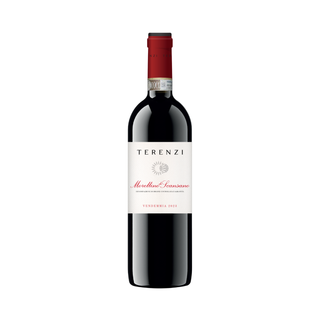
The star of this journal, Terenzi Morellino di Scansano, is a Sangiovese made to be enjoyed every day. Knowing the story behind the region changes the view in your glass a little. If you want to know more about the land of Maremma itself, see What is Maremma wine.
Frequently asked questions
Q. Are Morellino and Sangiovese different grapes?
A. They are the same grape. "Morellino" is the local name for Sangiovese in the Maremma area.
Q. How does it differ from Chianti?
A. Both are Sangiovese-based, but the seaside Morellino of Maremma tends to be softer and more approachably fruity than inland Chianti.
Q. Is it alright to chill it a little?
A. Yes. In the hot season, a light chill to 15 to 16C tightens the aroma and fruit and makes it delicious.
Q. What is a common misconception?
A. The idea that "Tuscan reds are tannic and heavy." Maremma's Morellino gently overturns that assumption.
Visit the land, and the wine becomes a story. Next time you choose a bottle, I would be glad if you remembered these seaside hills, just a little.


Comments (0)
There are no comments for this article. Be the first one to leave a message!