

Barbera is a red grape variety native to the Piedmont region of northwestern Italy. It is characterized by abundant dark fruit, naturally high acidity, and soft tannins — a wine purpose-built for the table.
Born in the same hills that gave the world Barolo and Barbaresco, Barbera has always played a different role: the everyday wine, the one opened without ceremony after a day in the vineyard. In recent years, thanks to careful winemaking and global curiosity, Barbera has stepped firmly into the international spotlight.
Common misconception: Barbera is not a "budget Barolo"
"Isn't Barbera just the cheaper version of Barolo?" I hear this question often. The answer is an emphatic no. Barbera's appeal lies precisely in what Nebbiolo (the grape behind Barolo) is not: soft, approachable tannins and a bright, food-friendly acidity that makes it one of the most versatile reds at the table. Barolo is the leading actor; Barbera is the equally talented character actor who holds the whole film together.
Flavor profile
| Element | Typical character |
|---|---|
| Body | Medium to medium-full |
| Acidity | High (naturally rich in tartaric acid) |
| Tannin | Low to medium — notably soft |
| Aroma | Dark cherry, plum, violet; oak-aged versions add vanilla and spice |
| Serving temp. | 14-16C (slightly chilled to highlight the acidity) |
How style changes by appellation
| Appellation | Style |
|---|---|
| Barbera d'Alba (DOC) | Alba hills: concentrated fruit, well-integrated acidity, often aged in small oak barrels |
| Barbera d'Asti (DOCG) | Asti hills: livelier, more expressive, leaning fresh and fruit-forward |
| Barbera del Monferrato (DOC) | Sandy soils: lighter body, vivid acidity, ideal everyday style |
Winemaking style further divides Barbera into two camps: stainless-steel-fermented wines that emphasize pure cherry fruit and cut acidity, and oak-aged cuvees that add layers of vanilla, smoke, and structure. Both are legitimate; the first is for Tuesday nights, the second for Saturday dinners.
Barbera once covered roughly 30% of Piedmont's total planted area, making it the region's most widely grown grape. While Barolo was the "Sunday wine" saved for celebrations, Barbera was what families drank every other day of the week. It received its DOC designation only in 1970 — late recognition for a grape that had been sustaining Piedmontese tables for centuries.
Enjoying Barbera in Japan: pairings and tips
When I introduce Barbera to guests in Tokyo, it consistently becomes the "discovery wine" of the evening. Those who say they find big reds too heavy find in Barbera exactly what they were looking for.
Barbera's high natural acidity makes it unusually food-flexible. At the Japanese table:
- Yakitori — especially salt-seasoned chicken thigh or with green onion
- Gyoza and grilled pork — the acidity cuts through the fat beautifully
- Wagyu sukiyaki — the sweetness resonates with the wine's fruit
- Pizza and tomato-based pasta — a natural pairing
- Aged cheeses — gouda, pecorino, or any semi-hard cheese
Serving temperature: 14-16C. Take the bottle out of the fridge about 10 minutes before pouring. Serving it slightly cool brings the acidity alive and makes the wine feel fresher and more food-friendly.
Federico's recommendation
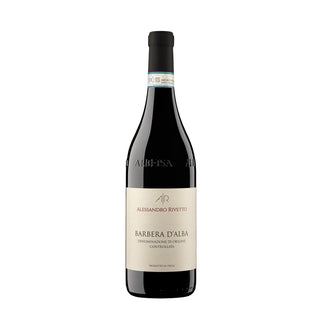
A Barbera I reach for often is the Barbera d'Alba from Alessandro Rivetto, a family estate in the Serralunga hills. Rivetto's Barbera is unforced and honest — dark cherry, a whisper of spice, and that long mineral finish that comes from old vines on Piedmont clay. In Tokyo I have watched many people taste it, look at me, and say: "Is this really Barbera?"
How to choose, serve, and explore further
Reading the label: Choose wines labeled "Barbera d'Alba" or "Barbera d'Asti DOCG" for reliable quality. A label that says only "Barbera" without a geographic designation can be inconsistent.
Drinking window: Standard bottles: 2-4 years from vintage. Premium oak-aged cuvees: 5-8 years.
Explore further: Primitivo from southern Italy offers a fascinating contrast — similar dark-fruit profile but with riper body and softer acidity.
Frequently asked questions
Q. Should I choose Barbera d'Alba or Barbera d'Asti?
A. If you want freshness and easy drinking, choose d'Asti. If you want more depth and structure, choose d'Alba. Both are excellent food wines.
Q. Can Barbera be aged?
A. Standard versions are best within 2-4 years. Well-made oak-aged Barbera from serious producers can develop beautifully over 5-10 years.
Q. Is Barbera dry?
A. Yes, fully dry. The impression of sweetness comes from ripe cherry and plum aromas, not residual sugar.
Q. What is the key difference between Barbera and Nebbiolo (Barolo)?
A. Nebbiolo: high tannin, high acidity, built to age. Barbera: low tannin, high acidity, built to drink now with food. Both represent Piedmont superbly, but in very different styles.
Q. Should I decant Barbera?
A. For standard bottles, no. Focus on temperature (14-16C) rather than decanting. Premium aged bottles may benefit from a brief pour into a wide glass to open up.


Comments (0)
There are no comments for this article. Be the first one to leave a message!