

The first time you pick up a bottle of Pinot Grigio Rosé, you might feel a little puzzled. The label says "rosé", yet the color is a pale salmon pink — or sometimes a deep copper-amber, like a burnished coin. Something is clearly different from ordinary rosé. That something is called Ramato, a winemaking tradition rooted in northern Italy for well over a century.
In this guide I'll walk you through why Pinot Grigio Rosé exists, why the world is rediscovering it now, and how to enjoy it at a Japanese table.
What Is Pinot Grigio Rosé?
Pinot Grigio is the Italian name for the French grape Pinot Gris. "Gris" means gray in French, and the grape's skin really is an unusual grayish-pink — somewhere between blue-gray and dusty rose, unlike any other common variety. That pigmented skin holds the key to everything.
Ordinary white wine is made by pressing the grapes immediately and fermenting only the juice. Pinot Grigio Rosé (Ramato), by contrast, lets the skins sit in contact with the juice for a few hours to a few days — a technique called skin contact. During this time, the skin's pigments and flavor compounds dissolve into the must, producing a wine with a copper sheen and far greater aromatic complexity.
Rosé vs Ramato — What's the Difference?
"Isn't this just rosé?" I get this question all the time. They look alike, but the process and the result are quite different.
- Ordinary rosé: Made from red varieties (Cabernet, Syrah, etc.) by bleeding a little color out of red-wine skins. Fruit-forward, straightforward.
- Pinot Grigio Rosé (Ramato): Made from the gray-pink skins of Pinot Grigio, extracting both color and savory texture. Closer in complexity to a white wine but with a light, silky tannin.
The texture is what sets Ramato apart — it lives in a "third place" between white and rosé, sharing white wine's delicacy and orange wine's body.
Pinot Grigio Rosé — Key Specs
| Feature | Description |
|---|---|
| Color | Pale salmon pink to copper-amber |
| Main Regions | Veneto and Friuli-Venezia Giulia, Italy |
| Grape | Pinot Grigio (100%) |
| Aromas | White peach, nectarine, bitter orange, rose, hint of almond |
| Palate | Dry. Fuller than white wine, a trace of tannin |
| Acidity | Medium. Refreshing |
| Alcohol | 12–13% ABV |
| Serving Temp | 10–14°C |
Regional Styles and the Story of Ramato
| Region | Style |
|---|---|
| Friuli-Venezia Giulia (the birthplace) | Longer skin contact, deeper copper. Emphasizes savory depth and complexity |
| Veneto (modern style) | Shorter contact, pale salmon. Emphasizes freshness and food-friendliness |
| Alto Adige | Very pale, translucent. Floral aromatics stand out |
Here is something every winemaker in Friuli knows by heart — but that almost nobody in Japan has ever heard.
The word Ramato comes from the Italian rame, meaning copper. For more than a century in Friuli, making Pinot Grigio this way — with skin contact — was simply how it was done. Then in the early 1960s, producer Santa Margherita pioneered a new pale, crisp, skin-free style specifically for British and American export markets, and the traditional Ramato nearly disappeared overnight. Local families who had always made their Pinot Grigio with copper hues found their knowledge quietly sidelined by export demand. Today, with the whole world suddenly fascinated by skin-contact whites and orange wines, that forgotten tradition is quietly reviving in Friuli and Veneto — and producers who never stopped making it just smile and say, "This is how my grandfather always did it."
How to Enjoy It in Japan
Pinot Grigio Rosé sits beautifully between white and red on the weight scale, which makes it surprisingly versatile with Japanese food. Delicate dishes — white fish simmered in dashi, grilled fish, silken tofu — benefit from its clean acidity. Richer fare — karaage, pork shabu-shabu, chilled noodles with sesame sauce — gets lifted by those peach and nectarine notes.
Federico's tip: serve it on the cooler side (10–12°C) and let it warm in the glass. First you get fresh white peach; then orange-peel bitterness and a whisper of almond emerge. That progression is Ramato's quiet magic.
Federico's Pick
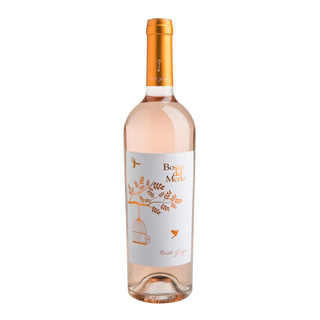
This Pinot Grigio Rosé comes from Bosco del Merlo, a family estate in the Veneto whose vines grow in gravelly riverside soils along the Piave. The result is a pale salmon-pink dry rosé with white peach, nectarine, and just a hint of bitter orange — fresh acidity balanced by that characteristic Ramato texture.

How to Choose: Pinot Grigio Rosé Buying Guide
- By label: "Ramato" on the label = traditional style. Deeper color, more savory.
- By color: Pale salmon = lighter and fresh. Copper to amber = richer and complex.
- By region: Friuli = characterful, full Ramato tradition. Veneto = fresh, easy food wine.
- By food: Fish, chicken, pork shabu → lighter style. Braised pork, cheese, mushrooms → deeper Ramato.
FAQ
Is Pinot Grigio Rosé the same as orange wine?
Close, but different. Orange wine uses weeks or months of skin maceration; Ramato typically uses a few hours to two days of skin contact. Ramato sits between white and red wine — it has far less tannin than a true orange wine.
Is it sweet?
It's dry. Despite the rosé label, Pinot Grigio Rosé is almost universally dry. The aromas of peach and orange give a perception of sweetness, but the palate is clean and refreshing.
How long can I store it?
Best enjoyed within 2–3 years of purchase. The light tannin from skin contact gives it a bit more structure than a typical white, but freshness is its strength — open it sooner rather than later.
Closer to red or white?
It has characteristics of both, but the alcohol and tannin are far gentler than any red. Perfect if you love white wine but want just a touch more body and texture.


Comments (0)
There are no comments for this article. Be the first one to leave a message!