

Cabernet Sauvignon is the world's most widely planted red wine grape variety. Known for its intense blackcurrant and dark cherry flavours, firm tannins and long finish, it thrives from Bordeaux to Napa Valley, Chile, Australia and Tuscany. Often called the "king of red wine," Cabernet Sauvignon is remarkably versatile: its character shifts dramatically depending on where it grows and how it is made.
The Birth of Cabernet Sauvignon: A DNA Story Solved in 1997
For centuries, the origins of Cabernet Sauvignon were a mystery. The breakthrough came in 1997, when UC Davis geneticist Professor Carole Meredith used DNA analysis to prove that Cabernet Sauvignon is a natural cross between Cabernet Franc and Sauvignon Blanc (Nature Genetics, 1997). A red grape and a white grape came together by chance in south-west France roughly 400 years ago, sometime in the 17th century. The name itself is a portmanteau: "Cabernet" from the father, "Sauvignon" from the mother.
A Common Misconception: Is Cabernet Sauvignon Just "Heavy and Bitter"?
In Japan, Cabernet Sauvignon has a reputation for being tannic, heavy and suited only to experienced drinkers. That is only half right. Its tannin levels are among the highest of any red variety, but climate and winemaking change the style enormously. Cool-climate Bordeaux produces wines with green pepper and cedar notes and a lean structure. Warm Napa Valley and Chile yield ripe, sweet dark fruit where the tannins feel soft and round. If your first experience was "too heavy," try a different region: the difference can be startling.
Flavour Profile and Key Specs
In a word, Cabernet Sauvignon is "structured dark fruit." Expect blackcurrant, blackberry and dark cherry layered with cedar, tobacco, dark chocolate and green bell pepper (when less ripe). With age, leather and truffle emerge.
| Attribute | Tendency |
|---|---|
| Body | Full (occasionally medium, depending on region) |
| Acidity | Medium to high |
| Tannin | High (among the highest of all red varieties) |
| Aromas | Blackcurrant, dark cherry, cedar, bell pepper, tobacco |
| Serving temperature | 16–18 °C |
| Ageing potential | High (top examples 10–20+ years) |
Cabernet Sauvignon by Region: Bordeaux, Napa, Chile and Italy Compared
The same variety produces very different wines in different places. Bordeaux traditionally blends Cabernet with Merlot and Cabernet Franc; Napa Valley favours single-varietal bottlings. Chile's Central Valley offers outstanding value, while in Italy, the 1968 creation of Sassicaia in Bolgheri launched the "Super Tuscan" movement, blending Cabernet with Sangiovese for a uniquely Italian style.
| Region | Climate | Style | Signature flavours | Price guide |
|---|---|---|---|---|
| Bordeaux (France) | Maritime (cool to moderate) | Blend-led, structured | Blackcurrant, cedar, pencil lead, tobacco | ¥3,000–¥50,000+ |
| Napa Valley (USA) | Mediterranean (warm) | Often single-varietal, rich | Dark cherry, vanilla, chocolate | ¥5,000–¥80,000+ |
| Central Valley (Chile) | Mediterranean (warm to hot) | Value-driven, approachable | Plum, blackberry, eucalyptus | ¥800–¥5,000 |
| Bolgheri / Tuscany (Italy) | Mediterranean (warm) | Super Tuscan, international blends | Dark fruit, herbs, Mediterranean mineral | ¥5,000–¥30,000+ |
| Coonawarra (Australia) | Maritime (cool) | Terra rossa terroir-driven | Mint, eucalyptus, red earth | ¥2,000–¥15,000 |
On the winemaking side, Cabernet Sauvignon takes well to oak. A high proportion of new barrels adds vanilla and toast; older oak lets the fruit shine through. Napa's top wines may see 80–100 % new oak, whereas Bordeaux cru bourgeois often use 30–50 % to let the terroir speak.
(Father: red grape from the Loire)
(Mother: white grape from the Loire)
Natural cross, 17th-century south-west France
Classic Bordeaux blend partner
Super Tuscan co-star
Australian GSM blends
Enjoying Cabernet Sauvignon with Japanese Food
Think Cabernet only goes with steak? It pairs surprisingly well with Japanese home cooking, too. The keys are rich fat and soy-based umami: tannin cuts through the fat, while the fruit echoes the sweetness in soy glazes.
Growing up in Milan, winter meant brasato al Barolo: beef slow-braised in red wine. In Tokyo, I apply the same logic to sukiyaki. The sweet-savoury warishita broth with its slick of beef fat is an ideal partner for Cabernet's tannins.
| Dish | Match | Why it works |
|---|---|---|
| Sukiyaki | ◎ | Beef fat and sweet soy broth meet tannin for a clean, balanced bite |
| Beef stew / hayashi rice | ◎ | Demi-glace richness merges with the wine's dark fruit |
| Yakiniku (tare sauce) | ◎ | Sweet-savoury tare and blackcurrant are a natural pairing |
| Hamburger steak (demi sauce) | ◎ | Juicy meat and rich sauce stand up to full body |
| Miso-marinated grills (pork, chicken) | ○ | Fermented miso umami harmonises with the wine's complexity |
| Aged hard cheese | ◎ | Amino acids in Comté or Parmigiano amplify tannin synergy |
| Dark chocolate | ○ | Cacao bitterness echoes Cabernet's bitter-sweet finish |
Home tip: Cabernet Sauvignon benefits from 30 minutes of breathing in the glass after opening. No decanter needed: a large wine glass works. Serve at 16–18 °C. If the bottle has been in the fridge, take it out 20 minutes before pouring so the tannins soften and the aromas open up.
If You Like Cabernet Sauvignon: A Style-Based Guide
The world of Cabernet is wide, so start from the style you enjoy.
Rich, fruit-forward: Choose Napa Valley or Chile. Ripe, generous dark fruit with vanilla oak.
Structured, age-worthy: Bordeaux's Left Bank (Médoc, Pauillac, Saint-Julien) is the benchmark. Firm when young, complex after 5+ years.
Value for everyday drinking: Chile's Central Valley and Argentina's Mendoza deliver excellent Cabernet from ¥1,000 to ¥3,000.
Curious about similar grapes? Merlot is Cabernet's classic blend partner, softer tannins, plush fruit. Syrah shares the power and spice.
SWIRL's Cabernet Sauvignon
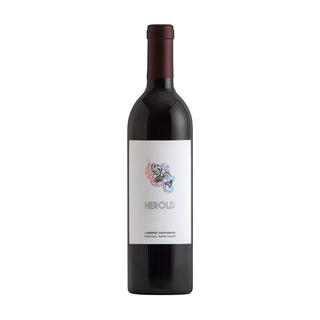
SWIRL carries Cabernet Sauvignon from Mark Herold, a cult Napa Valley winemaker known for small-lot, intensely concentrated wines.
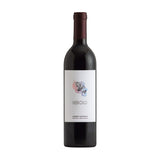
Single-vineyard Oakville. Dense blackcurrant and dark chocolate with new-oak vanilla. A benchmark Napa Cabernet.
Mark Herold Herold White Label Cabernet Sauvignon 2017Mark Herold
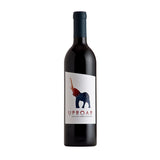
The same Napa Cabernet at a more accessible price point. Blackberry and spice in a drink-now style (very limited stock).
Uproar Napa Valley 2019Mark Herold
Frequently Asked Questions
Q. Is Cabernet Sauvignon too intense for beginners?
A. Not at all. Start with warm-climate examples from Chile or Australia: fruit-forward, moderate tannin, and available from around ¥1,500. Jump straight to a high-end Napa bottle and the tannins may surprise you, but the variety is very approachable at the right price point.
Q. How long does an opened bottle of Cabernet Sauvignon last?
A. Re-corked and refrigerated, 5 to 7 days. Its high tannin acts as a natural antioxidant, giving it better staying power than lighter reds or rosé. Many people find day two smoother than day one as the tannins settle.
Q. What is the difference between Cabernet Sauvignon and Cabernet Franc?
A. Cabernet Franc is the parent grape. It has softer tannins and elegant violet and raspberry aromas, starring in Bordeaux's Right Bank (Saint-Émilion) and the Loire Valley. Its offspring, Cabernet Sauvignon, is more tannic, more concentrated and generally longer-lived.
Q. What do "Left Bank" and "Right Bank" mean in Bordeaux?
A. They refer to opposite sides of the Gironde estuary. The Left Bank (Médoc, Graves) favours Cabernet Sauvignon-led blends; the Right Bank (Saint-Émilion, Pomerol) is Merlot territory. Left Bank wines tend to be firmer and slower to open up; Right Bank wines are softer and more approachable when young.
Q. Why is Cabernet Sauvignon used in "Super Tuscan" wines?
A. In 1968, Marchese Mario Incisa della Rocchetta planted French Cabernet cuttings in Bolgheri, Tuscany, to create Sassicaia. Italian DOC law at the time did not permit international varieties, so it was labelled a table wine, yet its quality won global acclaim. Eventually Bolgheri earned its own DOC. The blend of Cabernet's tannin with Sangiovese's acidity has become a distinctly Italian style.
References: Bowers, J.E. & Meredith, C.P. (1997) "The parentage of a classic wine grape, Cabernet Sauvignon," Nature Genetics 16, 84–87; UC Davis Department of Viticulture and Enology; Wine Folly, "Cabernet Sauvignon Wine Guide"


Comments (0)
There are no comments for this article. Be the first one to leave a message!