

Decanting means pouring wine from the bottle into a separate vessel (a decanter) to expose it to air, opening up its aromas and softening its texture. Waiting just a few minutes to an hour can transform a closed, tight wine into something surprisingly expressive. It sounds technical, but the tools are simple and the technique easy to make part of any evening routine.
When I lived in Italy, the osteria down the street always served house wine in a glass carafe called a caraffina. Guests would order a quartino (quarter-litre) or mezzo litro (half-litre), and the carafe would sit on the table while they ate slowly. It was completely ordinary in Rome. The wine touched air in the carafe and opened naturally, the same principle as decanting, practiced at working-class tables for centuries.
The myth: decanting is only for expensive wine
One of the most persistent misconceptions is that decanting is only necessary for aged or expensive bottles. It is true that the word "decantation" sometimes refers specifically to leaving sediment behind when pouring an old vintage, but that is just one use of the technique.
The wines that benefit most are actually young reds with firm tannins, the kind you drink every week. Even a mid-priced bottle improves noticeably after 20 to 30 minutes in a decanter: the texture softens, the fruit opens. My own experience is that inexpensive wines show the biggest transformation.
What decanting actually does
| Effect | How it works |
|---|---|
| Aroma release | Volatile aroma compounds are released when wine contacts air, opening up a closed nose |
| Tannin softening | Tannins in young reds polymerise with oxygen, making the texture smoother and less grippy |
| Sediment separation | Aged wines are poured carefully so sediment stays in the bottle |
| Temperature adjustment | A cold wine poured into a room-temperature decanter warms gently without needing a microwave |
Which wines benefit
| Wine type | Suggested time |
|---|---|
| Young tannic reds (Primitivo, Cabernet, etc.) | 30 to 60 minutes |
| Medium-bodied reds (Sangiovese, Merlot, etc.) | 15 to 30 minutes |
| Vintage reds (with sediment) | 30 minutes (for sediment separation) |
| Full-bodied whites (barrel-aged Chardonnay, etc.) | 10 to 20 minutes |
| Light reds, young whites, sparkling | Not needed (sparkling will lose its bubbles) |
SWIRL wines that benefit most from decanting
Below are the wines in the SWIRL range where decanting makes the most difference. The ones tagged "Decant: Strongly Recommended" are genuinely best with an hour in the decanter before you pour. "Decant: Recommended" means a 30-minute rest opens the wine significantly.
Strongly recommended (45 to 60 minutes minimum)
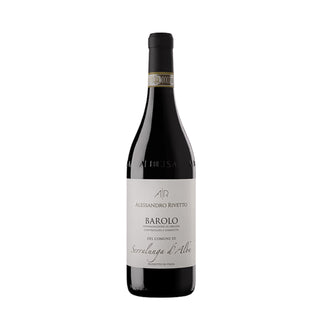
- Barolo del Comune di Serralunga (Nebbiolo, Piedmont 2019): One of the world's great decanting wines. One to two hours turns the tight tannins to silk and releases rose, cherry, and spice aromas in full.
- Oakville (Cabernet Sauvignon, Napa Valley Oakville 2017): A concentrated 16.1% ABV bottle that needs at least one hour to show its full depth and length.
- Uproar (Cabernet Sauvignon, Napa Valley 2019): Mark Herold's signature wine. Firm tannins dissolve in 45 to 60 minutes, giving way to blackcurrant and dark chocolate.
- Francesca Romana (Cabernet Sauvignon / Franc / Merlot, Maremma Tuscany 2018): A full-bodied Terenzi blend that releases its spice and red fruit after 45 minutes.
- Madrechiesa (Sangiovese, Morellino di Scansano DOCG Riserva 2020): 30 to 45 minutes reveals sour cherry and mineral complexity from this Riserva level Sangiovese.
- Filare 18 Cabernet Franc (Cabernet Franc, Tuscany, organic certified 2018): Casadei's single-variety. Forty-five minutes brings out cassis and violet aromas that stay hidden straight from the bottle.
Recommended (30 to 60 minutes)
- Serramarrocco (Cabernet Sauvignon / Franc, Sicily 2015): 30 to 45 minutes brings rich aged fruit and spice to the fore.
- Napa Valley Bon Ton Red (Cabernet-led blend, California 2022): A well-balanced Napa blend that rounds out noticeably after 30 minutes.
- Blend Numero Sette (Cabernet Sauvignon / Franc / Merlot, Tuscany 2021): Terenzi's Super Tuscan. Thirty minutes gives you silk instead of grip.
- De' Pazzi (Sangiovese / Syrah / Merlot, Tuscany 2017): Twenty to thirty minutes opens the fruit and softens the edges.
- Doppio Passo Primitivo (Primitivo, Puglia): The ideal entry-level decanting experiment. Thirty minutes and the before-and-after is unmistakable.
Practical tips for Japanese homes
You do not need a purpose-built decanter. A large glass pitcher or a clean wide-mouthed vase works fine. The key is surface area: the wider the base, the more the wine contacts air and the faster it opens.
In Japan's hot summers, a simple routine is to take the red out of the refrigerator, pour it into a pitcher on the kitchen counter, and start cooking. By the time dinner is on the table the wine is at the right temperature and the aromas are open.
At a Roman osteria the carafe arrives with your first order and sits on the table while you eat through antipasto. By the time the meat course appears the wine is at its best. The same rhythm works perfectly at a Japanese dinner table.
Federico's picks
If you want to understand what decanting actually does, start with the Barolo del Comune di Serralunga. Nebbiolo is one of the grape varieties that benefits most from decanting in the world: poured straight from the bottle, it often feels tight and closed. After one to two hours in a decanter, the rose, cherry and spice aromas open completely and the tannins turn to silk. No other wine in the range shows the transformation so clearly.
If you want to build the habit with something more everyday, the Doppio Passo Primitivo is the right starting point. At an accessible price, 30 minutes in a decanter produces an obvious before-and-after. Once that becomes routine, try the Francesca Romana or the Madrechiesa for what decanting does to a serious aged red.
Choosing a decanter
Three things matter: a wide base (surface area drives the effect), an easy-to-clean shape, and a capacity of around one litre (enough room for a 750 ml bottle). A simple glass model at 2,000 to 5,000 yen does the job perfectly.
Frequently asked questions
Q. What happens if I decant for too long?
A. Over several hours, excessive oxidation strips the aromas and leaves the wine flat. Even for young reds, aim to finish the bottle within two hours of decanting.
Q. Can you decant white wine?
A. Yes. Barrel-aged whites (Chardonnay, Viognier) open noticeably with 10 to 20 minutes in a decanter. Light, fresh whites and sparkling wines are better poured straight.
Q. What if I do not have a decanter?
A. A large glass pitcher or a clean wide-mouthed vase works well. Even pouring into a glass and waiting a few minutes exposes the wine to enough air to notice a difference.
Q. Is decanting worth it for inexpensive wine?
A. Particularly so. Young, tannic reds in the 2,000 to 3,000 yen range often show the most dramatic change. Decanting is not reserved for special bottles.
One decanter on the kitchen counter is enough to make every evening's wine noticeably better. Pour it before you start cooking, at the Roman osteria pace, and you will wonder why you ever opened a bottle straight to the glass.


Comments (0)
There are no comments for this article. Be the first one to leave a message!