

A wine's vintage (harvest year) is the year its grapes were picked, a record of "what that year was like," since a region's weather changes how the wine turns out. Because climate differs so much from region to region in Italy, the "best years" differ by region too. This article is a region-by-region quick chart to reach for when you are unsure.
I am Federico, and I pour Italian wine in Tokyo. One important thing first. A vintage is not an absolute score, it is a rough guide. Let me start with how to use it.
A common misconception: a great year does not always mean a great wine
"A top vintage is a safe bet," "avoid off vintages (poor years)." You hear it often, but it is only half true, for two reasons. First, the grower's skill matters more than the vintage. A master makes something wonderful even in a hard year, and a great year still produces plenty of ordinary wine. Second, the hotter a top year, the more powerful and age-worthy the wine, and the harder it can be to drink young. Often a "lighter year" is the one that tastes better now. A vintage chart is a map to keep you from going wrong, not a gate that rules everything else out.
Vintage quick chart by region (broad recent trends)
These are general guidelines only. They vary a great deal by grower and winemaking.
| Region | Main grape | Years worth remembering | Note |
|---|---|---|---|
| Piedmont (Barolo etc.) | Nebbiolo | 2016, 2019, 2020, 2021 highly rated | 2017 was hot, for earlier drinking. The north's finest open further with age |
| Tuscany (Chianti / Brunello) | Sangiovese | 2015, 2016, 2019 excellent | 2019 had stable weather. Many years sit well beside food |
| Veneto (Amarone etc.) | Corvina and others | 2015, 2016 rich | Warmer years make dried-grape Amarone more concentrated |
| Southern Italy and Islands (Puglia / Sicily) | Primitivo, Nero d'Avola | Small year-to-year difference | Reliable sun. Enjoy without worrying about vintage |
In recent years (from 2022) the weather has turned extreme, with drought and heavy rain, so the gap between years has grown. For newer vintages, it helps to consider the region and the grower together.
How "vintage weight" changes by region, and the white truffle of Alba
What is fascinating is how much the weight of the vintage changes by region. In northern Italy, and especially Piedmont's Nebbiolo (Barolo and Barbaresco), the climate is cool and weather-sensitive, so the difference between years shows clearly. That is exactly why the harvest year gets talked about.
In Piedmont's Langhe, from October when the Nebbiolo harvest begins, the town of Alba holds the White Truffle Fair (Fiera del Tartufo Bianco d'Alba). An autumn tradition running since 1929, it exists because the same hills grow both the truffle forests and the Nebbiolo vineyards, so when it comes to a wine for white truffle, locals reach without hesitation for Barolo: its tannin and scent of dried rose sit beside the truffle without covering it. In this season, when harvest and truffle overlap, the hills of the Langhe are wrapped in the best perfume of the year. The south, by contrast, in Puglia and Sicily, gets plenty of sun every year, so quality is steady and you can enjoy the wines without much thought for the vintage.
Enjoying it in Japan: when to mind the vintage
When buying in Japan, you do not need to squint at a vintage chart every time. My rule of thumb is this. Mind the year only when you buy a fine red to age (Barolo, Brunello, Amarone). For everyday wines, treat the near-latest vintage, drunk fresh, as the most delicious choice. Southern Italian reds in particular vary little by year, so choose by the "grower" and your "mood" rather than the vintage. The four-digit number on the label (for example 2024) is the harvest year. A "non-vintage" wine with no year is a blend of several years, often a sparkling or an everyday wine, and is also reliably steady for daily drinking.
Federico's pick: a bottle that never troubles you over vintage
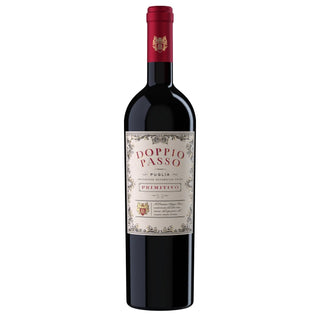
For anyone who would rather not agonize over years, what I pour first is southern Puglia's Doppio Passo Primitivo. Thanks to southern Italy's steady sun, every year is mellow and full of fruit. Without a thought for the vintage, it drinks beautifully from the day you open it. A perfect bottle for the everyday table.
If instead you want to taste the difference between vintages, try a Sangiovese like Tuscany's Morellino di Scansano, comparing years side by side. Central reds show the character of the year clearly, and you learn a lot.
Learn more, related guides
FAQ
Q. Where do I find the vintage?
A. The four-digit number on the label is the harvest year. If there is no number, it is a "non-vintage" blend of several years, usually a sparkling or an everyday wine.
Q. Is an older vintage always better?
A. No. Apart from fine reds built to age, everyday wines are often better drunk young and fresh.
Q. Can I ignore the vintage for southern Italian wines?
A. Largely, yes. Puglia and Sicily have steady sun, and the small year-to-year difference is part of their charm.
Q. A common mistake?
A. Buying a young fine red "because it is a great year" and opening it right away. The more powerful the year, the longer it needs to reach its window. If in doubt, cellar it a few years, or if you want to drink now, choose a lighter year.
A vintage is a story that makes wine more interesting. Do not get nervous about it, just use it lightly, like a map. Cheers.


Comments (0)
There are no comments for this article. Be the first one to leave a message!