

Millesimato means a single harvest year (a vintage), and on a Prosecco label it means at least 85% of the grapes came from that year. If the label reads "Millesimato 2024," the wine was built mainly from the 2024 harvest. The Italian word millesimato shares its root with the French millésime (vintage).
Prosecco is a familiar friend in Japan by now. Yet the meaning of this word on the label, and the story behind the name Prosecco itself, are less well known. As someone who brings this wine over from Italy, let me take you a little deeper, from the point of view of the Veneto.
A common misconception: "Millesimato" does not mean "premium"
First, millesimato is not an official quality grade. Most Prosecco blends wine from several years to keep the taste consistent. A millesimato, by contrast, is made from the grapes of a single year the producer judged to be good. So it does not signal luxury; it signals confidence in a strong year and extra care from the maker.
And here is something locals take for granted that is rarely known in Japan. "Prosecco" was originally the name of a place, not a grape. The grape's proper name is Glera. In a 2009 reform, to protect Prosecco as a place name, the grape was renamed Glera. Up to 15% of other varieties (Verdiso, Chardonnay, the Pinots and a few more) may be used in support.
The history of Prosecco: the Veneto's everyday glass
Prosecco's home is the hills of Conegliano and Valdobbiadene, in the Veneto region of north-east Italy. Rather than a "special occasion" wine like Champagne, it has always been the everyday glass on the local table.
The 2009 reform sorted Prosecco into two main tiers: Prosecco DOC, made across nine provinces including the plains, and Conegliano Valdobbiadene DOCG, which protects the prized hillside vineyards (DOC and DOCG are Italy's origin-and-quality designations). Most Prosecco is made by the Charmat (Martinotti) method, where the second fermentation that creates the bubbles happens in a large tank. Unlike the long in-bottle aging of Champagne, this captures the grape's fresh fruit directly.
| Aspect | Character |
|---|---|
| Body | Light |
| Acidity | Fresh, medium |
| Bubbles | Soft and fine |
| Aromas | Green apple, pear, white flowers |
| Serving temp | 6 to 9°C (well chilled) |
How style changes by place, and "Col Fondo"
Even within Prosecco, the plains DOC is lighter and more approachable, while the hillside DOCG (Conegliano Valdobbiadene, Asolo) carries more backbone, as much as the slopes themselves.
And there is a style the hill people have drunk for generations that you almost never see in Japan. It is called "col fondo", the old-fashioned Prosecco. The second fermentation happens in the bottle, and the lees (the spent yeast sediment) are left in rather than removed, so the wine is slightly cloudy, the bubbles gentle, and the taste very dry. Bottled the spring after harvest, it is a farmhouse table wine. It is a different creature from polished export Prosecco, rustic and savory, and plenty of people in Valdobbiadene will tell you, with pride, that this is the real Prosecco.
Enjoying it in Japan: bring the Veneto's "ombra" to your table
In the Veneto, Prosecco is not a wine saved for special days. Locals call a small glass of wine an "ombra," dialect for "shade." The story goes that a wine seller in Venice's Piazza San Marco used to shift his cart to stay in the shadow (ombra) of the bell tower, keeping the wine cool, so "a glass in the shade of the bell tower" became the nickname for a small glass. People call out "let's go for an ombra," hop between a few bars nibbling cicchetti (small plates), and the point is connection more than drinking.
That spirit fits the Japanese table well. Prosecco is often assumed to be "sweet and just for parties," but Brut (dry) is crisp and genuinely versatile with food. Its soft bubbles rinse away the oil of fried food, so it is superb with tempura and karaage. It sits lightly beside dashi-rich washoku, sushi and sashimi, edamame and prosciutto. When I pour wine around Tokyo, I often choose Prosecco for the very first glass; starting with cold bubbles somehow loosens the room.
The one tip at home: chill it well. No wine cellar needed. Stand it upright in the fridge a few hours ahead and serve at 6 to 9°C. As an aperitivo, give it the first toast of the meal.
Federico's pick
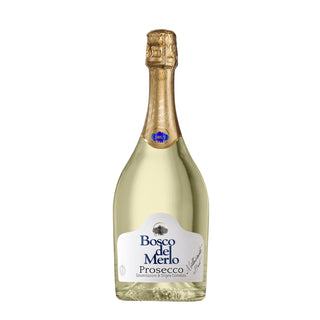
The bottle I most often open for that first glass is Bosco del Merlo's Prosecco Millesimato Brut, from the Veneto. As the name says, this is a millesimato (a single-year Prosecco), so the label on the bottle in your hand shows you the very word we have been talking about. Green apple and pear with a touch of white blossom, crisply dry, working well from aperitivo through the start of a meal.
For a more festive day, try the Prosecco Rosé Millesimato: a pale pink of Glera layered with a little Pinot Noir, also a single vintage, and a wine whose sales partly support breast-cancer prevention.
Choosing, serving, and similar styles
The sweetness labels are a little confusing, so remember just this. From dry to sweet, the order is Brut, then Extra Dry, then Dry. Against its name, "Dry" is the sweetest, so take care. For food, Brut is the easy all-rounder to start with.
Similar styles include Italy's own Franciacorta (bottle-fermented, richer and more complex), the sweet Asti, and Spain's Cava. Tasting them side by side makes Prosecco's fresh, friendly character stand out. For the Glera grape itself, see our Prosecco (Glera) grape guide.
FAQ
Q. Does "Millesimato" mean premium?
A. No. It is not an official grade; it shows the wine was made from a single harvest year (85% or more). Read it as a sign the producer was confident in a good year.
Q. What is the difference between Prosecco and Champagne?
A. The method (Prosecco mostly in tank, Champagne in bottle), the grapes (Glera vs Chardonnay and others), and the place (Veneto vs Champagne). Prosecco is fresher, more approachable, and easier on the wallet.
Q. Which is sweeter, Brut or Extra Dry?
A. Extra Dry is sweeter. This is the classic mix-up: Brut is the driest. For food, Brut is the versatile choice.
Q. How long does it keep once opened?
A. With a sparkling stopper in the fridge, two to three days is the guide. But it is best while the bubbles and aromas are lively, so do not wait too long.
Like the people of the Veneto, drop your shoulders and start with one cold glass. That is reason enough for a toast.


Comments (0)
There are no comments for this article. Be the first one to leave a message!