

Dozens of sparkling wine styles exist around the world, yet calling them all "Champagne" is simply wrong. Champagne is a specific sparkling wine produced only in the Champagne region of France — a protected geographical indication, not a generic brand name. More accurately, sparkling wine is the collective term for any wine containing dissolved CO₂; the combination of origin, production method, and grape variety creates an almost infinite range of styles. This guide covers every major type, from Prosecco to Champagne.
Common Misconception: "Sparkling = Champagne" Is Wrong
In Japan the terms "sparkling wine" and "Champagne" are used almost interchangeably — but they are fundamentally different. Champagne can only come from Champagne, France. EU law prohibits any other region from using the name. Prosecco (Italy), Cava (Spain), Franciacorta (Italy) and Sekt (Germany) each have their own independent names, regulations, and identities. A second misconception: "finer bubbles = higher quality" is not necessarily true. Bubble size and persistence vary by production method — it reflects a difference in style, not quality.
Sparkling Wine Comparison Table
| Type | Origin | Main grapes | Method | Character |
|---|---|---|---|---|
| Champagne | France, Champagne | Chardonnay, Pinot Noir, etc. | Traditional method | Complex, creamy, autolytic notes |
| Prosecco DOC/G | Italy, Veneto | Glera | Charmat / Martinotti method (tank) | Fresh, fruity, everyday |
| Cava | Spain, Catalonia | Macabeo, Parellada, etc. | Traditional method | Biscuit, citrus, excellent value |
| Franciacorta DOCG | Italy, Lombardia | Chardonnay, Pinot Nero, etc. | Classic method (in-bottle) | Complex, long-aged — Italy's Champagne |
| Sekt | Germany | Riesling, etc. | Charmat method | Green fruit, dry to off-dry |
How the Production Method Shapes the Style
There are three main approaches to creating sparkling wine's bubbles:
① Traditional Method (in-bottle secondary fermentation): Yeast and sugar are added to the base wine, which re-ferments inside a sealed bottle. After a minimum of 15 months on lees (36+ for vintage Champagne), the sediment is removed. Extended yeast contact creates the biscuit, brioche, and toast complexity that define Champagne, Franciacorta, and Cava.
② Charmat / Martinotti Method (tank secondary fermentation): Secondary fermentation happens in large pressurised tanks rather than individual bottles, taking 2–3 months rather than years. Fresh primary fruit aromas from harvest are preserved intact. Prosecco, Moscato, and most German Sekt use this method.
③ Ancestral Method (pétillant naturel): Wine is bottled mid-way through its first fermentation, completing it inside the bottle. Often left unfiltered and slightly cloudy. This ancient technique is popular among natural wine producers.
Enjoying Sparkling Wine in Japan
Sparkling wine fits every moment of a meal. As an aperitif: Prosecco or Cava are ideal — their bright fruit awakens the appetite. Add a splash of peach nectar and you have a Bellini, the classic Venetian cocktail. During the meal: Franciacorta or Champagne can hold their own with main courses too. Fried foods — tempura, karaage — paired with Prosecco trace back to Venice's bacaro wine-bar culture, where fritto misto and bubbles are inseparable. With dessert: Moscato d'Asti works beautifully with wagashi, fruit tarts, and custard.
- Everyday / aperitif → Prosecco
- Celebrations → Franciacorta or Champagne
- Premium quality at great value → Cava
- Dessert pairing → Moscato d'Asti
The Charmat method was invented by an Italian: The tank fermentation technique behind Prosecco's global popularity was first patented in 1895 by Italian oenologist Federico Martinotti. Eugène Charmat, a French engineer, independently patented his version in 1907, and the French name stuck internationally. In Italy the method is still correctly called the "Martinotti method" — a reminder that Italy gave the world not just Prosecco, but the production method that makes it possible.
Federico's Recommendation
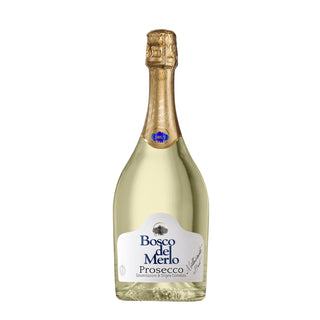
If you are new to sparkling wine, Prosecco DOC is the perfect starting point. Fresh white peach, apple, and acacia blossom on the nose; clean acidity and lively, persistent bubbles on the palate. Swirl carries Bosco del Merlo Prosecco Millesimato Brut 2024, a vintage-stated DOC Prosecco from a certified Veneto estate. Textbook aperitivo material and a clear window into what good Prosecco tastes like.
Buying Guide, Storage and Glassware
Sweetness levels: Brut Nature (driest) → Extra Brut → Brut (most common) → Extra Dry → Dry → Demi-Sec → Doux (sweetest). Most Prosecco sold in Japan as "dry" is labelled Brut.
Storage after opening: Seal with a sparkling wine stopper and keep refrigerated upright. Drink within 24–48 hours.
Glassware: A flute (tall, narrow) highlights the bubble stream. A coupe (shallow bowl) diffuses aroma. The tulip shape — close to a standard white wine glass — is now recommended even for Champagne, as it better captures the complex aromas.
FAQ
Q: What is the biggest difference between Prosecco and Champagne?
A: Method and origin. Champagne undergoes in-bottle secondary fermentation and ages for at least 15 months on its lees, building complex yeast and biscuit aromas. Prosecco ferments in tanks over 2–3 months, preserving fresh primary fruit. The price gap reflects these production costs.
Q: Is Franciacorta inferior to Champagne?
A: Not at all. Franciacorta was Italy's first DOCG sparkling wine and uses the same in-bottle traditional method as Champagne. Top estates produce wines that international critics rank alongside Grand Cru Champagne.
Q: Can sparkling wine work with dessert?
A: Dry Brut sparklings lack the sweetness to complement most desserts, but sweet sparkling wines — Moscato d'Asti, Demi-Sec Champagne — pair beautifully with wagashi, fruit tarts, and light creams.


Comments (0)
There are no comments for this article. Be the first one to leave a message!