

The wine to pair with beef stew is a medium to full-bodied red with acidity and savor, above all Sangiovese. The rich sweet-savory demi-glace and the umami of the beef are met neatly by a red's acidity and its notes of violet and red fruit. Heavier is not better; a red with acidity resets the sauce and the fat.
A common misconception: a rich stew does not need the biggest, boldest red
People often think, "a rich stew calls for a heavily tannic, full-bodied red." But if the tannin is too strong it clashes with the sweetness of the demi-glace and turns bitter and angular. What you want is a red with firm acidity to carry away the fat and the sweet-savory sauce, meeting the umami of the beef with its fruit. Italian Sangiovese is exactly suited to this role.
What matters in the pairing
| Element | What to look for |
|---|---|
| Acidity | A lead role. Carries away the fat and the sweet-savory sauce |
| Tannin | Medium. Not too strong |
| Body | Medium to slightly full |
| Fruit | Red fruit. Meets the sweetness of the stew |
| Serving temperature | 16 to 18C. Not too cold |
Choosing by type
| Type of beef stew | Recommended direction |
|---|---|
| Demi-glace sauce | Sangiovese (Morellino) or a Chianti style |
| Tomato-based stew | A fruit-rich southern red such as Primitivo |
| Hayashi rice, cream-leaning | A medium red, or a firmer rose |
| Red-wine braise (boeuf bourguignon style) | A red with acidity, close to the style used in the braise |
| Slow-braised beef shin | A Sangiovese with some age |
How style changes by region, and how to enjoy it in Japan
When I talk about the affinity between braised beef and red wine, the dish I always think of is Tuscany's peposo. It is a black-pepper-laden beef stew in red wine, born among the kiln workers of Impruneta near Florence, and its history reaches back to the 15th century. Those workers fired the terracotta tiles for the cupola of Florence Cathedral, the Duomo designed by Brunelleschi, and at the mouth of the kiln they set an earthenware pot of cheap cuts of beef, Chianti, and black pepper, letting it cook slowly for hours. The workers liked the dish so much that Brunelleschi is said to have set up the first canteen right on the scaffolding of the building site. The idea of stewing beef with black pepper and red wine is strikingly close to Japanese beef stew, and that is exactly why a red with acidity, like Sangiovese, suits it so well.
Beef stew in Japanese homes is led by the sweetness of the demi-glace and the richness of the beef. Serve the red at room temperature, 16 to 18C, and open it about 30 minutes before drinking so the aromas open and layer with the umami of the stew. Too cold and the tannins feel hard, so take care there.
Federico's picks
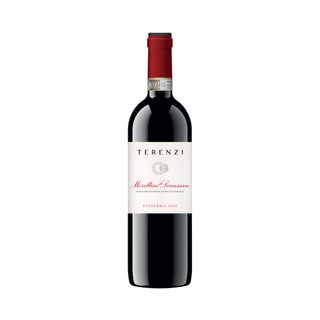
For a demi-glace beef stew, the one I most often reach for is Terenzi's Morellino di Scansano. A Sangiovese from Tuscany's Maremma, it has fresh aromas of red fruit and violet and a soft, medium-bodied palate. Its firm acidity carries away the sweet-savory sauce cleanly and sits alongside the umami of the beef. It is an unpretentious bottle you will want to drink any day.
For a brighter, tomato-forward stew, a fruit-rich southern Italian red such as Puglia's Doppio Passo Primitivo is also a fine match.
How to choose and serve
If in doubt, use "a medium red with acidity, medium tannin" as your baseline. Serve at 16 to 18C, not too cold. For choosing a red for steak or roast beef, see also Wine with steak and Wine with roast beef.
Frequently asked questions
Q. Does white wine not work?
A. For a cream-leaning stew or hayashi rice, a richer white or a rose can work. For the dark, red demi-glace sauce, a red with acidity is the better match.
Q. What is the common mistake?
A. Choosing a heavily tannic, full-bodied red. It clashes with the sweetness of the sauce and turns bitter. A medium red with acidity is the safe choice.
Q. Does the cut of beef change the choice?
A. For slow-braised shin, a red with some age; when lean meat leads, a red with a good balance of fruit and acidity.
Q. What temperature?
A. Around 16 to 18C. Opening it about 30 minutes ahead lets the aromas open.
On a cold day, add a red with acidity to your beef stew, channel the kiln workers of Tuscany, and take your time over it.


Comments (0)
There are no comments for this article. Be the first one to leave a message!