

The wine to pair with gratin is, as a rule, a crisp dry white with clean acidity and little oak. The milk fat of the bechamel (white sauce) and the richness of the cheese are washed away neatly by the acidity of a well-chilled white. The richer the dish, the more you want a white with a clean edge rather than a heavy one.
A common misconception: rich food does not mean a heavy wine
People often think, "gratin is rich, so a full-bodied white or red." In fact it is the opposite. A heavily oaked white piles butter on butter and feels heavy on the palate. The tannin in red wine clashes with the dairy in a white sauce and can leave a metallic aftertaste. What you want is a white with the acidity to reset the fat and richness, plus a moderate amount of fruit.
What matters in the pairing
| Element | What to look for |
|---|---|
| Acidity | The star. Firm acidity that cuts the fat of the bechamel |
| Body | Light to medium. Not too heavy |
| Oak | Restrained is safest. Use it only when the filling is rich |
| Serving temperature | 8 to 10C. Not too cold |
| Adjust by filling | White for seafood; a light red also works for meat |
Choosing by filling and type
| Type of gratin | Recommended direction |
|---|---|
| Macaroni, white sauce | A dry white with acidity, such as Soave |
| Seafood gratin (shrimp, scallops) | A saline-edged white such as Vermentino or Soave |
| Rich cheese, mushrooms | A light red (Barbera) or a slightly fuller white |
| Meat sauce, lasagne style | A medium red (Sangiovese) |
| Kabocha (pumpkin) gratin | A gently aromatic white with a little fruit left in |
For seafood gratin, see also Wine with seafood, and for pumpkin, Wine with kabocha.
How style changes by region, and how to enjoy it in Japan
Among whites, the one I most often pour with gratin is Soave from the Veneto. Made from the Garganega grape, this white has aromas of lemon and white flowers with a faintly bitter, almond-like finish. That bitterness and its straight line of acidity cut cleanly through the sweet fat of a bechamel.
Near the Soave zone, around Verona, there is a winter custom called soppressa e vin. From November to February the whole village gathers to butcher the pig, and around the bacan, the master butcher, they share freshly made soppressa (a large fresh salami) with white wine. It is almost unknown in Japan, but the idea of gathering around rich food with wine in the cold season has something in common with enjoying a piping-hot gratin with a white.
Gratin in Japanese homes usually means macaroni or seafood in a white sauce. Take a well-chilled white out of the fridge a little before drinking and let it come up to around 8 to 10C, and the aromas open while it keeps enough power to cut the fat. Serve it too cold and only the acidity stands out, so take care there.
Federico's picks
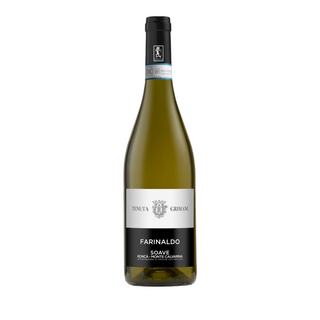
For both macaroni gratin and seafood gratin, the one I most often reach for first is Tenuta Grimani's Farinaldo Soave. Made from old vines over a century old, it has soft aromas of citrus and tropical fruit carried on clean acidity. It sits alongside the richness of the bechamel while keeping the finish light.
For a richer plate such as meat sauce or lasagne style, a medium-bodied red, the Sangiovese of Morellino di Scansano, is also a fine match.
How to choose and serve
If in doubt, use "a light to medium dry white, restrained oak" as your baseline. Serve at 8 to 10C, not too cold. A white wine glass that is not too large suits gratin, since it keeps the aromas from spreading too much.
Frequently asked questions
Q. Does red wine not go with gratin?
A. For meat-sauce or lasagne-style gratin, a medium red with acidity (such as Sangiovese) works well. When the dish is mainly white sauce, a low-tannin red or a white is safer.
Q. What is the common mistake?
A. Reaching for a "heavy, oaky white because the dish is rich." Butter piles on butter and it feels heavy. A white with acidity comes together more lightly.
Q. What white for seafood gratin?
A. A saline dry white such as Soave or Vermentino. It lifts the sweetness of shrimp and scallops.
Q. What temperature is best?
A. Around 8 to 10C. The aromas open better after letting it sit a little rather than straight from the fridge.
In the cold season, adding a single white to a hot gratin turns an everyday dinner into something a little special. Do give it a try.


Comments (0)
There are no comments for this article. Be the first one to leave a message!