

Primitivo di Manduria is the protected designation (DOP) for the rich, powerful red made from the Primitivo grape on the Salento peninsula of Puglia, in southern Italy. Sun-soaked fruit and a soft, mellow sweetness are its charm, and it is a name you cannot skip when talking about the reds of Puglia.
Even to me, an Italian working the floor of a Tokyo shop, Primitivo has been one of the southern reds that has most won over our customers in recent years.
A common misconception: it is not "just sweet and heavy"
Because it is high in alcohol and dense in fruit, people assume it is "cloying and heavy," but that is only half right. The dry Primitivo di Manduria has a minimum alcohol of 13.5%, the highest minimum for any dry wine denomination in the world. Yet this is not fortification (adding alcohol afterward); it is the result of grapes ripening fully under intense sun. What you taste is not sugar but the concentration of ripe fruit. Styles range from the easygoing Puglia IGT (a broader regional category) to the serious Manduria DOP.
Taste profile
| Element | Tendency |
|---|---|
| Body | Full |
| Acidity | Medium |
| Tannins | Medium, mellow |
| Aromas | Ripe plum, black cherry, sweet spice, chocolate |
| Serving temperature | 16 to 18°C |
How style changes by place
| Category | Style |
|---|---|
| Puglia IGT (regional) | Juicy and approachable. An everyday bottle, friendly on price |
| Primitivo di Manduria DOP | Concentrated and serious. Deep flavor from old vines |
| Manduria Dolce Naturale DOCG | Naturally sweet. For after dinner |
The tradition around Manduria lies in a distinctive training method called alberello, the Apulian "little tree": the vine is grown as a low bush with no stakes or wires, a very Mediterranean approach. Yields are low, but old vines give grapes of high quality. These old alberello plots survive on the red soils around the town of Sava, forming special parcels that behave almost like grand crus.
How to enjoy it in Japan
Primitivo's mellow texture and ripe fruit are a superb match for sweet-savory Japanese seasoning. Yakitori (with tare sauce), braised pork kakuni, teriyaki, sukiyaki, and summer barbecue all work beautifully. Surprisingly, it also loves Chinese dishes like gyoza and mapo tofu. If you find big reds too much, a well-chilled Primitivo (around 16°C) goes down with astonishing ease.
On the tables of its home in Salento there is a humble local dish, fave e cicoria. Dried fava beans are simmered until soft and pureed smooth, then topped with sauteed wild chicory, the slightly bitter greens, a classic of the old cucina povera ("cooking of the poor"). The gentle sweetness of the beans against the bitterness of the greens. With an unpretentious plate like this, locals reach, as a matter of course, for their own land's red, Primitivo. A wine that belongs beside home cooking: that is its true nature.
Federico's pick
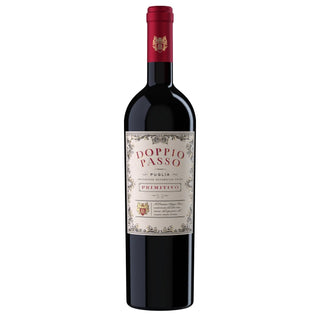
For a first bottle, I often recommend the Primitivo from Doppio Passo. It has the juicy, approachable fruit of a Puglia IGT with a light touch of sweetness, at a friendly price, perfect as an entry into red wine. Chill it lightly and enjoy it on a weeknight.
The concentrated style from old Manduria DOP vines is a rare, intermittently available treasure. If you spot one, try it as the "next level deeper" of Primitivo.
Choosing, drinking, and similar grapes
For the everyday table choose a light Puglia IGT; for a special day, a concentrated Manduria DOP. Primitivo is genetically the same grape the Americans call Zinfandel, and both make richly fruity reds. Among southern Italians, it shares an expression with Sicily's Nero d'Avola and Puglia's own Negroamaro. To learn more, see our guides to Primitivo (the grape) and the wines of Puglia.
FAQ
Q. Is Primitivo different from Primitivo di Manduria?
A. Primitivo is the grape; Primitivo di Manduria is the protected designation (DOP) for that grape grown in a specific area of the Salento peninsula. The latter is mostly the more concentrated, serious style.
Q. Is it sweet or dry?
A. Almost always dry. It has the sweet aroma of ripe fruit, but the taste is dry. There is also a separate sweet type, Dolce Naturale.
Q. A common mistake?
A. Because the alcohol is high, it feels heavy if served too warm. In summer, chill it a little (around 16°C) and the fruit comes alive and drinks more easily.
Q. What food does it suit?
A. Yakitori (tare), kakuni, teriyaki, barbecue, gyoza, and other sweet-savory, hearty dishes.
A glass of Puglia, full of remembered sun. Start with an easy bottle and taste the warmth of southern Italy.


Comments (0)
There are no comments for this article. Be the first one to leave a message!