

Garganega is Italy's most important indigenous white grape variety, born in the hills of Veneto. The principal grape behind the world-famous dry white wine "Soave," it brings over 700 years of history to the glass along with delicate floral aromas and refreshing acidity. Every visit to the hillside vineyards east of Verona reminds me of the quiet, steady power this variety holds.
The Most Common Misconception About Garganega
Garganega is often dismissed as "thin and cheap white wine." After the 1968 DOC expansion, production spread to the vast plains and volume-driven Soave flooded the market. But Garganega grown in the hillside Classico zone (Soave Classico DOC) is an entirely different wine. It delivers minerality and layered complexity at a world-class level. The producer and the subzone matter enormously with this grape.
Flavor Profile
A late-ripening variety with thick skins, Garganega at its best offers aromas of almond, white flowers (acacia), lemon and grapefruit, and a distinctive pleasantly bitter finish. High-quality Classico wines add notes of honey and mineral depth.
| Attribute | Profile |
|---|---|
| Body | Light to medium |
| Acidity | Medium to high (fresh) |
| Aromas | White flowers, almond, citrus, minerals |
| Alcohol | 11.5–13.5% |
| Serving temp | 8–12°C |
How Style Changes by Region
| Zone | Style | Character |
|---|---|---|
| Soave Classico (hillside) | Delicate, complex | Minerality, almond finish, long aging potential |
| Soave DOC (plains) | Fresh, light | Everyday drinking, youthful and crisp |
| Recioto di Soave | Sweet, concentrated | Rare dessert wine by appassimento (dried grape) method |
The most celebrated Garganega comes from the Classico zone, where volcanic basalt and limestone soils coexist. Recioto di Soave — made by air-drying harvested clusters before pressing — is a jewel of a sweet wine where Garganega's concentrated sugars and vibrant acidity find perfect balance.
A Surprising Fact: The Genetic Thread Linking Veneto and Sicily
DNA studies in 2003 and 2008 confirmed that Grecanico Dorato — widely grown in Sicily — is genetically identical to Garganega. A single gene connects two wine regions over 1,200 kilometers apart. In Veneto it plays the leading role in Soave; in Sicily it lends a lighter local white wine character. Combined plantings across both regions exceed 11,000 hectares, making Garganega one of Italy's most-planted white varieties.
Pairing with Japanese Cuisine (How I Serve It in Tokyo)
Garganega's bright acidity and mineral freshness pair brilliantly with Japanese food.
- Sashimi and carpaccio: The citrusy acidity amplifies umami in lemon-dressed fish
- Tempura (white fish, vegetables): Light body and high acidity cut through frying oil for a clean finish
- Dashimaki tamago and chawanmushi: Gentle sweetness and almond notes complement dashi umami in a surprisingly elegant pairing
- Cold shabu-shabu with ponzu: Citrus-forward wine with citrus-based sauce, a classic harmonic match
In summer, chill to 8°C and pour as an aperitif alongside a fresh salad. Few white wines match Japan's humid summers as well as Garganega.
Federico's Pick: Garganega at Swirl
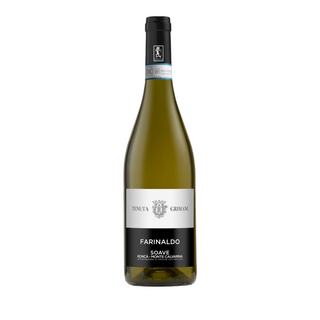
The bottle we carry right now is Farinaldo Soave by Tenuta Grimani, a historic Verona hillside estate. 100% Garganega from limestone slope vineyards, it delivers pure aromatics and refined minerality. At ¥3,700, this is exactly where Veneto shows its strength.
How to Choose and When to Drink
Look for the "Soave Classico" designation — it guarantees production from the stricter hillside appellation. Young vintages (1–2 years) offer vivid floral freshness; quality Classico from top producers can be cellared 5–7 years, developing honey and mineral complexity. The closest comparison is Pinot Grigio's lighter register, but the pleasantly bitter almond finish is uniquely Garganega's.
FAQ
Q. Are Garganega and Soave the same thing?
A. Soave is a wine appellation (DOC name); Garganega is the principal grape variety used to make it. Soave regulations require a minimum of 70% Garganega.
Q. Is Garganega sweet or dry?
A. Standard Soave is dry. Recioto di Soave is a sweet version made from air-dried Garganega grapes.
Q. Is it suitable for wine beginners?
A. Absolutely. No heavy oak, zero tannin, and a gentle non-aggressive acidity make Garganega one of the most approachable white wines for newcomers. An ideal first dry white.
Q. How does it compare to Chardonnay?
A. Chardonnay is highly "customizable" — style varies enormously by producer and region. Garganega is more terroir-driven — the soils and hillside microclimate of Soave speak directly through the wine. The pleasantly bitter almond finish is Garganega's signature that no Chardonnay can replicate.


Comments (0)
There are no comments for this article. Be the first one to leave a message!