

What Is Viognier?
Viognier is a white grape variety originating in Condrieu in the northern Rhône Valley of France, producing wines of intense floral aromatics, ripe apricot, and lingering spice. Today it is grown around the world, but in 1968 barely 8 hectares survived in all of France — a variety on the edge of extinction. Through the passion of a single grower, it staged one of wine's most dramatic revivals, and now covers more than 16,000 hectares globally. Viognier is the only major variety with a verifiable near-extinction story to tell.
Common Misconception: It Is Not Heavy or Sweet
The idea that Viognier is sweet comes mostly from cheap, overripe examples. A well-made Condrieu or Maremma Viognier is dry — high in alcohol but with no residual sugar. It is also nothing like Chardonnay. Where Chardonnay offers apple and vanilla, Viognier opens up with violet, jasmine, apricot, and white peach — a warm, expansive character sometimes described as a wine you drink with your nose as much as your palate. There is nothing quite like it from Bordeaux or Burgundy.
Flavor Profile
| Characteristic | Profile |
|---|---|
| Body | Medium to full |
| Acidity | Relatively low (a defining varietal trait) |
| Tannins | Virtually none (white wine) |
| Aromas | Violet, jasmine, apricot, white peach, spice |
| Serving temperature | 10-12°C (slightly warmer than most whites) |
Styles by Region — and the Man Who Saved Viognier
| Region | Style |
|---|---|
| Condrieu (France, Northern Rhône) | The world's finest Viognier. Steep granite and schist slopes. Intense minerality and floral concentration. Prices can be high. |
| Languedoc (Southern France) | Relaxed southern style. Fruit-forward and approachable, more affordable than Condrieu. Great as an aperitif. |
| Maremma (Italy, Tuscany) | The warm Tuscan coastal climate draws out ripe, generous fruit. Terenzi and other respected producers work here. |
| Australia (Eden Valley and beyond) | Cooler sites produce delicate floral notes; warmer sites give a tropical, full-throttle style. Quality varies widely. |
Why did Viognier almost disappear? In the 1960s, growers in Condrieu were walking away from the steep terraces above the Rhône. Low yields, susceptibility to disease, poor profitability — none of it made sense economically. By 1968, barely 8 hectares remained in the entire appellation. The man who kept it alive was Georges Vernay. He took over one hectare of family vines in 1953 and continued planting while everyone around him gave up. As Condrieu's reputation grew internationally in the late 1970s, Viognier was rediscovered as a rare treasure. Today, more than 16,000 hectares exist worldwide. One grower's stubbornness saved an entire variety.
Enjoying It in Japan: A Wine Led by Its Aroma
The key to Viognier is aroma. More expressive than Chardonnay, more lushly fruit-forward than Riesling — but still dry. That combination works surprisingly well at a Japanese table.
- Salted grilled white fish or saikyo-zuke miso fish. The apricot-like fruit softens the fat, and the floral notes work beautifully with sweet miso-based sauces.
- Teriyaki chicken or salt-seasoned yakitori. The full body holds its own against the umami, and the floral finish cleans the palate.
- Thai green curry or other aromatic spiced dishes. Viognier's fruit weight matches the spice without being overwhelmed — an unexpected but reliable pairing.
Serve slightly warmer than most whites — 10 to 12°C. Chilled too cold, the floral aromatics close up. Use a large Burgundy-style bowl to help the aromas open. In summer, take it from the fridge about ten minutes before pouring.
Federico's Pick
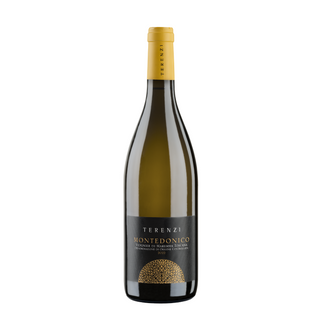
The one I reach for most often is the Montedonico by Terenzi from Tuscany. The warm Maremma climate draws out the ripe fruit and florals that Viognier is famous for, but without the weight of some Condrieu examples — it sits beautifully at a Japanese table. Apricot and violet on the nose, a long finish. Whether you're trying Viognier for the first time or you already love the variety, this is a bottle I recommend with confidence.
How to Choose, When to Drink, Similar Varieties
Condrieu can be expensive (from roughly ¥8,000 to ¥30,000 or more), but it is worth experiencing at least once to understand what the variety can achieve. For everyday drinking, southern French, Italian, and Australian Viognier offer strong value. Drink within one to three years of release — this grape's signature florals are at their best young. Some top Condrieu ages beautifully for five to eight years, but that is the exception. The closest variety in style is Gewürztraminer: both are aromatic whites with intense perfume. The difference is that Viognier leans toward apricot and spice rather than lychee and rose, and typically has less body than Gewürz.
FAQ
Q: Why is Viognier so expensive?
Condrieu's steep terraces cannot be worked by machine, and yields are low. Prices can rival top Burgundy. Good southern French or Italian Viognier, however, can be found in the ¥3,000-6,000 range.
Q: Can I drink Viognier instead of Chardonnay?
They are very different styles, so think of it as a different experience rather than a substitute. Fans of oaky Chardonnay often find Viognier's florals refreshing. Fans of crisp unoaked Chardonnay may find it a touch heavy.
Q: Does a screwcap on Viognier mean lower quality?
Not at all. For a fresh, aromatic style meant to be drunk young, screwcap actually protects the delicate florals better than cork in many cases. It is a closure choice, not a quality signal.
Q: Can Viognier be made as a rosé?
Almost never on its own. But blending a small amount of Viognier into Syrah is a historic tradition in Côte-Rôtie in the northern Rhône — the Viognier adds floral fragrance to the red wine. Some producers still follow this practice today.
Q: Viognier is hard to find in Japan — where can I get it?
Import volumes are small, and specialist importers are usually your best source. At Swirl Wine we carry Terenzi's Viognier from Tuscany — a well-balanced bottle that pairs naturally with Japanese food, ready to ship across Japan.


Comments (0)
There are no comments for this article. Be the first one to leave a message!