

Nebbiolo is the noble red grape of Piedmont in northwestern Italy. It is the sole variety behind Barolo ("the king of wines") and Barbaresco ("the queen of Italian wine"). Its name comes from nebbia, the autumn fog that settles over the Langhe hills during harvest — and despite its pale ruby colour, the wine delivers formidable structure with aromas of rose, tar, and dried cherry.
How Does Nebbiolo Taste?
Rose, violet, dried cherry, leather, and tar make up the complex aromatic profile. High acidity and firm tannins provide the backbone, and with time in bottle these unfold into something magnificent.
| Characteristic | Profile |
|---|---|
| Body | Full |
| Acidity | High |
| Tannins | High |
| Style | Dry |
| Serving temperature | 16–18°C |
Barolo vs Barbaresco: The Two Great Expressions
Both are 100% Nebbiolo DOCGs — named for the hills they come from — but they have distinct personalities.
| Barolo | Barbaresco | |
|---|---|---|
| Villages | 5 communes (La Morra, Barolo, Serralunga, etc.) | 4 communes (Barbaresco, Treiso, Neive, etc.) |
| Minimum ageing | 38 months (Riserva 62 months) | 26 months |
| Style | Tannic, powerful, built for long ageing | Relatively silkier, opens earlier |
| Aromas | Tar, cherry, roasted tomato | Rose, cherry, spice |
| Price range | ¥6,000+ (top crus ¥20,000+) | ¥5,000+ (top crus ¥30,000+) |
What Food Pairs with Nebbiolo?
Roast and braised red meats, dishes with mushrooms or truffles, and aged hard cheeses are the classic matches. In the Japanese kitchen, sukiyaki and strongly flavoured meat dishes work beautifully.
Barolo Chinato: Langhe's Secret Digestif
A piece of Piedmont's inside knowledge: in the Langhe, the wine region that produces Barolo, there exists a digestif made from that same Barolo — called Barolo Chinato. In the 1890s, a pharmacist named Giuseppe Cappellano in Serralunga d'Alba infused red wine with china bark (the medicinal bark once used as a fever remedy), herbs, and spices to create it. Originally a health tonic, it is still the customary way to close a meal in the Langhe — a single glass, slowly savoured.
My favourite pairing is dark bitter chocolate. Piedmont is also the homeland of gianduja — hazelnut confectionery — and the bittersweet chocolate meets the sweet, spiced, slightly bitter Chinato in a way that's genuinely moving. Barely known in Japan, but for anyone who wants one last encounter with Nebbiolo's depth, it's the perfect Langhe finale.
SWIRL's Nebbiolo Pick
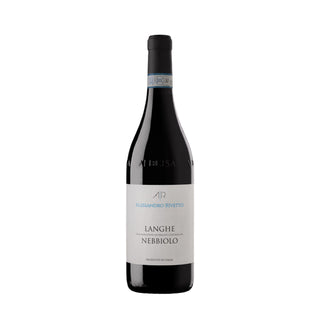
Langhe Nebbiolo from Rivetto, a producer in Serralunga d'Alba, Piedmont. An accessible introduction to what Nebbiolo does. For the summit of the variety, our Barolo guide is a good next read.
Frequently Asked Questions
Q. Is Nebbiolo suitable for beginners?
A. Its tannins and acidity are quite firm, so starting with a Langhe Nebbiolo is recommended. It gives a clear impression of the variety at a more approachable price and earlier drinking window.
Q. Is Nebbiolo the same as Barolo?
A. Nebbiolo is the grape variety; Barolo is a wine made entirely from Nebbiolo. Think of it as the difference between "Chardonnay" and "White Burgundy."
Q. What's the right serving temperature?
A. 16–18°C. For younger wines, decanting for 30–60 minutes softens the tannins and opens up the aromatics considerably.
Q. Barolo or Barbaresco — which should I try first?
A. Barbaresco is the smoother entry point into serious Nebbiolo. Barolo has more ageing potential — ideally wait at least five years after the vintage, ten or more for the best producers.
Q. How long can Nebbiolo age?
A. Langhe Nebbiolo is enjoyable from about three to five years after release. Great Barolo from a top producer can develop for 10–30 years, and the best single-vineyard (cru) wines have even more potential.


Comments (0)
There are no comments for this article. Be the first one to leave a message!