

Negroamaro is an ancient indigenous red wine grape variety grown primarily in the Salento peninsula of Puglia, southern Italy. Its name derives from the old Salento dialect "niuru maru," combining the ancient Greek "mavro" (black) with Latin/Italian "negro" (black) — literally a double-black name. Greek settlers brought the grape to Salento as part of Magna Graecia in the 8th century BC, making it one of Europe's oldest cultivated varieties with over 2,800 years of continuous history in this sun-drenched land.
Common Misconceptions
Because "amaro" (bitter) appears in its name, Negroamaro is often avoided as "the bitter wine." This is a misconception. Quality Negroamaro balances firm tannins with generous dark fruit sweetness — "depth" is a far more accurate descriptor than "bitterness." Negroamaro is also frequently confused with Primitivo, another Puglia grape, but they are entirely different varieties. Where Primitivo (genetically identical to Zinfandel) leads with rich fruit sweetness, Negroamaro offers more structure, grippy tannins, and savory herb character.
Flavor Profile
| Attribute | Character |
|---|---|
| Body | Medium to full |
| Acidity | Medium |
| Tannins | Firm with a distinctive dry texture |
| Aromas | Black cherry, plum, dried fig, violet, tobacco, Mediterranean herbs |
| Serving temp | 16-18°C (61-64°F) |
| Aging potential | 5-15 years (quality DOC level) |
Style by Region
Negroamaro is concentrated almost entirely in the Salento peninsula (provinces of Lecce, Brindisi, Taranto). Style varies by sub-zone.
| Region | Character |
|---|---|
| Southern Salento (Lecce) | Hottest and driest. More concentrated, higher alcohol, dried fruit nuances |
| Northern Salento (Brindisi) | Adriatic sea breezes moderate the heat. Slightly more elegant and fruity |
| Negroamaro Rosato | Salmon-pink rose with plum, dried rose, and a saline mineral finish |
Extended maceration is essential for color and tannin extraction. Oak aging adds vanilla and spice, smoothing the texture considerably.
Cultural note: The name Negroamaro carries 2,800 years of history. The old Salento dialect form "niuru maru" fuses Greek mavros (black) with Latin nigro (black) — a doubly-black name from two ancient languages. Greek settlers are said to have carried the vine to Salento when they landed as part of Magna Graecia in the 8th century BC. One of Europe's longest-cultivated varieties, yet barely known in Japan: a hidden ancient grape waiting to be discovered.
Pairing with Japanese Cuisine
Negroamaro's firm tannins and Mediterranean herb character pair surprisingly well with Japanese food. It excels alongside salt-grilled yakitori, charcoal-grilled beef tongue, and spiced lamb skewers. The wine also matches well with braised pork kakuni and soy-braised dishes, where its structure cuts through the rich, sweet-savory sauce. Try it with nasu dengaku (miso-glazed eggplant) too.
Home serving tip: Pour into a large glass 30-60 minutes after opening. Simply letting the wine breathe — no decanter needed — softens the tannins considerably and opens up the fruit.
Federico's Recommendation
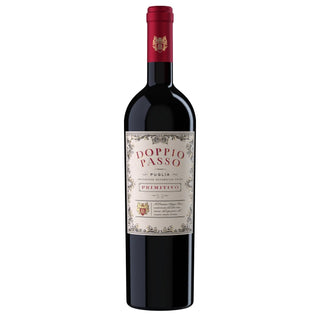
At Swirl, we currently carry a Primitivo from the same Salento terroir in Puglia — the same sun-baked land that produces Negroamaro. We often pour Doppio Passo, whose appassimento (dried-grape) method concentrates the fruit beautifully, delivering the earthy depth that defines great Salento red wine.
How to Choose, When to Drink, Similar Grapes
Look for "Salento IGT," "Salice Salentino DOC," or "Brindisi DOC" on the label. Younger vintages (2-3 years) are fruit-forward and approachable; aged bottles (7+ years) develop more complex aromas and silkier tannins. Compared to Aglianico (Campania), another great southern Italian indigenous grape, Negroamaro is more immediately approachable with friendlier fruit.
Related: What Is Primitivo? Campania Wine Guide
FAQ
Q: Are Negroamaro and Primitivo the same grape?
A: No, they are completely different varieties. Primitivo has been confirmed by DNA testing to be genetically identical to Zinfandel. Negroamaro has its own distinct ancient lineage.
Q: What does Negroamaro rosato taste like?
A: Negroamaro Rosato (rose) shows a beautiful salmon-pink color with red fruit, Mediterranean herbs, and a faint saline mineral note. It's light-bodied enough to appeal to white wine lovers and pairs nicely with seafood starters.
Q: Why is Negroamaro rarely seen in Japan?
A: For decades, Puglia's wines were shipped north as anonymous bulk blending wine for producers in northern Italy and France. Single-variety bottlings only became common from the 1970s-80s onward, and Japan imports have grown only recently.
Q: What is the ideal serving temperature?
A: 16-18°C. Remove from the refrigerator 15-20 minutes before opening.
Q: What's a common mistake?
A: Opening a young Negroamaro and drinking it immediately — the tannins can feel rough and astringent. Simply pour into a large glass and wait 30-60 minutes; the difference is dramatic.


Comments (0)
There are no comments for this article. Be the first one to leave a message!