

Pinot Grigio vs Pinot Gris: A Spectrum of Styles
Pinot Grigio is a white wine grape with grayish-pink skin, born from a natural mutation of Pinot Noir, and one of Italy's most popular white wines. The name "grigio" means "gray" in Italian, a nod to the grape's distinctive skin color. Light, crisp, and dry, Pinot Grigio is a versatile white that pairs beautifully with everything from Japanese cuisine to Italian classics, and is loved worldwide. In France it goes by "Pinot Gris" and tends toward a richer style, but it is exactly the same grape. Few varieties can produce such dramatically different wines simply from where and how they are made.
Common Misconception: "Pinot Grigio and Pinot Gris Are Different Grapes"
One of the most common questions from wine newcomers is: "Are Pinot Grigio and Pinot Gris different grapes?" The answer is simple: they are exactly the same variety. It is called Pinot Grigio in Italy, Pinot Gris in France (especially Alsace), and Grauburgunder in Germany.
The real difference lies not in the name but in the winemaking philosophy. In Italy (particularly Veneto and Alto Adige), the skins are removed quickly and the juice is fermented at cool temperatures in stainless steel, producing a fresh, light style. In Alsace, late harvesting and barrel fermentation add notes of peach, honey, and spice, creating a fuller, richer wine. The fact that the same grape can produce such different results is what makes this variety so fascinating.
Tasting Profile
A typical Italian Pinot Grigio offers aromas of pear, green apple, lemon zest, and white flowers. On the palate it is light-bodied, refreshingly dry, and sometimes finishes with a subtle almond-like bitterness that adds a pleasant accent. Its clean, uncomplicated character makes it a perfect first glass of white wine. Serve it well chilled and it is wonderfully refreshing on a hot day.
Specification Table
| Attribute | Typical Range |
|---|---|
| Body | Light (Italian), medium (Alsatian) |
| Acidity | Medium (crisp and refreshing) |
| Tannin | None to very slight (Ramato shows a hint) |
| Aromas | Pear, green apple, lemon, white flowers, almond |
| Serving Temperature | 6-9 °C (43-48 °F), well chilled |
| Alcohol | 12-13% (standard Italian) |
How Style Changes by Region
Pinot Grigio is grown around the world, and the style changes dramatically from one region to the next.
| Region | Local Name | Style | Characteristic Aromas & Flavors |
|---|---|---|---|
| Veneto (Italy) | Pinot Grigio | Light, dry | Citrus, green apple, crisp and refreshing |
| Alto Adige (Italy) | Pinot Grigio | Slightly fuller, mineral | White peach, pear, stony minerality |
| Friuli (Italy) | Pinot Grigio (Ramato) | Mid-weight, textured | Dried apricot, almond, a hint of tannin |
| Alsace (France) | Pinot Gris | Full-bodied, rich | Honey, spice, white peach, smoky |
| Baden (Germany) | Grauburgunder | Medium to full | Pear, nuts, gentle acidity |
| Oregon (USA) | Pinot Gris | Medium, fruity | Apple, peach, melon |
How Winemaking Shapes the Wine
Winemaking technique is the biggest factor in how a Pinot Grigio turns out. The Italian mainstream is cool-temperature fermentation in stainless steel with direct pressing (removing the skins immediately). This prevents oxidation and preserves fresh, translucent character. In Alsace, barrel fermentation and late harvesting (vendange tardive) add honey and spice flavors, producing a richer, fuller style. Friuli's "Ramato" sits in between: the skins stay in contact with the juice for several hours to several days (skin-contact method), creating a beautiful copper color and a hint of tannin. In simple terms, the longer the juice spends with the skins, the deeper the color and the richer the flavor.
Enjoying Pinot Grigio with Japanese Cuisine
What makes Pinot Grigio such a natural fit for Japanese food is its quiet elegance: it never overpowers, letting delicate flavors shine. In Italy, it is the everyday white for appetizers and fish, but even as an Italian, I am constantly surprised at how well it works on a Japanese table. In Italy we have a culture of "vino da tavola," the table wine that belongs at every meal. In Japan, I think of Pinot Grigio as the perfect second drink after the customary first beer, especially in izakaya settings where you are picking at sashimi, tempura, and grilled dishes all at once. A white wine that stays in the background is exactly what that style of eating calls for.
Pinot Grigio × Japanese Food Pairing Table
| Dish | Match | Why It Works |
|---|---|---|
| White fish sashimi (sea bream, flounder) | ◎ | Light acidity cuts through the fat and highlights the fish's natural sweetness |
| Tempura (shrimp, vegetables) | ◎ | Crisp acidity complements the crunch of the batter; even better with salt instead of sauce |
| Grilled salted salmon | ○ | Citrus aromas act as a natural lemon substitute |
| Edamame, chilled tomato | ◎ | Summer staples with chilled Pinot Grigio, Italian aperitivo style |
| Chawanmushi (savory egg custard) | ○ | The dashi umami and the wine's gentle acidity harmonize softly |
| Caprese, prosciutto | ◎ | A classic Italian pairing: tomato acidity and cured meat's salt are a perfect match |
| Karaage (fried chicken with lemon) | ◎ | Cuts through fried-food richness, a refreshing alternative to beer |
Tips for Enjoying at Home
No wine cellar? No problem. Chill the bottle thoroughly in the refrigerator (6-9 °C / 43-48 °F) and pour just before your meal. On hot summer days, the Italian "con ghiaccio" style, a single ice cube dropped into the glass, is something you will see all over Italy (I do it myself on a terrace when it is really hot). After opening, seal with the cork or cling wrap and return to the fridge; it will stay delicious for two to three days. In Italian households, leftover Pinot Grigio often goes straight into risotto as a finishing splash. It is a truly versatile white, both at the table and in the kitchen.
Mini Tasting Flight
To really understand where Pinot Grigio sits among white wines, try this three-glass comparison.
Glass 1: Pinot Grigio (Veneto, the crisp baseline) → Glass 2: Sauvignon Blanc (the aromatic dry white benchmark) → Glass 3: Soave (same Veneto, but the fuller Garganega grape). Line these three up and you will feel, on your palate, exactly what "light and crisp" means in Pinot Grigio.
The Memory of Friuli's Ramato
Pinot Grigio became known worldwide as a "crisp white" in the 1960s, when Italy's Santa Margherita winery established a light, export-friendly style. Before that, in the northeastern region of Friuli Venezia Giulia, Pinot Grigio looked quite different: a copper-colored wine called "Ramato."
Ramato means "copper-colored" in Italian (from "rame," copper). The grayish skins of Pinot Grigio grapes are left in contact with the juice for several hours to several days, producing a distinctive copper-orange hue and a hint of tannin. This style is so old that it appears in historical merchant records, a centuries-old Friulian tradition. It was nothing exotic, just the everyday white on the local table.
Today, producers like Gravner and Radikon have revived this tradition, and Ramato is now recognized worldwide as one of the archetypes of orange wine. In Japan it is often seen as a "rare natural wine," but for the people of Friuli it is simply a taste of home. Every time I see that coppery-pink color, it takes me back to the Friulian table.
Pinot Grigio at SWIRL, Plus More Whites to Try
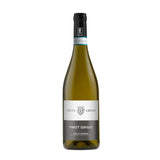
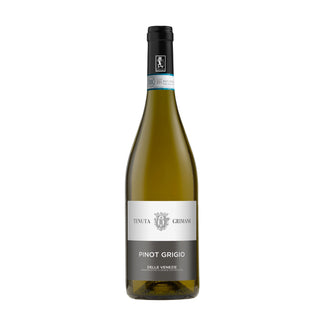
Organic Veneto Pinot Grigio, the textbook crisp dry white. The star of this guide
Pinot Grigio 2024Tenuta Grimani
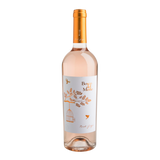
Copper-hued rosé in the Ramato tradition. Lovely with appetizers and salmon
Pinot Grigio Rosé 2024Bosco del Merlo
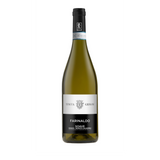
Same Veneto, Garganega grape. Your tasting-flight second glass
Farinaldo Soave 2024Tenuta Grimani
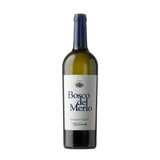
The aromatic dry-white benchmark. A must for comparison tasting
Sauvignon Blanc Turranio 2024Bosco del Merlo
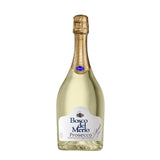
Veneto sparkling. After Pinot Grigio, this is your next aperitivo
Prosecco Millesimato Brut 2024Bosco del Merlo
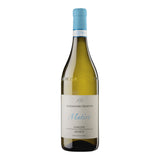
Piedmont's floral white. For those who love aromatic wines
Langhe Arneis 2024Alessandro Rivetto
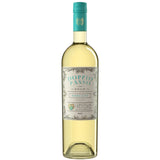
Dry Sicilian white. Experience the sun-drenched side of Italian whites
Doppio Passo Moscato 2024Doppio Passo
| Wine | Grape | Region | Type | Price (tax incl.) |
|---|---|---|---|---|
| Pinot Grigio 2024 | Pinot Grigio | Veneto | Dry white | ¥3,700 |
| Pinot Grigio Rosé 2024 | Pinot Grigio | Veneto | Dry rosé | ¥4,300 |
| Farinaldo Soave 2024 | Garganega | Veneto | Dry white | ¥3,700 |
| Sauvignon Blanc 2024 | Sauvignon Blanc | Veneto | Dry white | ¥4,510 |
| Prosecco 2024 | Glera | Veneto | Dry sparkling | ¥3,300 |
| Langhe Arneis 2024 | Arneis | Piedmont | Dry white | ¥4,500 |
| Doppio Passo Moscato 2024 | Moscato | Sicily | Dry white | ¥2,200 |
How to Choose, When to Drink, and Similar Grapes
Choosing Your Pinot Grigio
When choosing a Pinot Grigio, start by thinking about the occasion. For an aperitivo or light appetizers, a crisp Veneto-style is a sure bet. For grilled seafood or cream-based pasta, look for an Alto Adige bottling with more mineral depth. Skin-contact Ramato is worth trying with cheese or smoked fish, where its subtle tannin and texture come alive.
Price can also guide your choice. Italian Pinot Grigio is generally affordable, which is part of why it has become one of the world's most popular everyday whites. Look for "DOC" or "IGT" on the label as an assurance of regional quality standards. "Alto Adige DOC" signals a particularly high-quality, cool-climate Pinot Grigio known for exceptional mineral-acid balance, at a slightly higher price point. Organically farmed (biologico) producers are increasingly common for those who want an environmentally conscious choice.
Peak Drinking
Pinot Grigio is typically a drink-young wine. Enjoy it within one to two years of purchase. Serve at 6-9 °C (43-48 °F), well chilled. Taking it out of the fridge about 30 minutes before your meal brings it to the ideal temperature. Use a smaller white-wine glass or tulip shape to focus the aromas. A large Burgundy glass disperses the scent too much and loses this wine's delicate character.
If You Like Pinot Grigio, Try →
Recommendations for exploring similar grapes.
- Sauvignon Blanc: More aromatic than Pinot Grigio, with grapefruit and herbal nuances. → Sauvignon Blanc Guide
- Vermentino: A Mediterranean white with saline, herbal minerality, tailor-made for seafood. → Vermentino Guide
- Garganega (Soave): Born in the same Veneto. Just a touch fuller than Pinot Grigio, with an almond finish. → Garganega Guide
- Arneis: Piedmont's white-flower aromatic variety. More perfumed than Pinot Grigio. → Arneis Guide
Frequently Asked Questions
Q. Is Pinot Grigio sweet?
A. Italian Pinot Grigio is a crisp, dry wine. Alsatian Pinot Gris does have late-harvest (vendange tardive) styles that are off-dry, but the standard food-pairing versions from both regions are dry.
Q. What is the difference between Pinot Grigio and Chardonnay?
A. Both are dry whites, but Pinot Grigio is simpler, lighter, and defined by its freshness. Chardonnay ranges widely by region and style, and can become rich and buttery with oak aging. For a clean, uncomplicated first white wine, Pinot Grigio is the easier starting point. → Chardonnay Guide
Q. Is Ramato the same as orange wine?
A. Ramato is a type of orange wine, but not all orange wines are Ramato. Ramato specifically uses Pinot Grigio skins in the traditional Friulian method. Orange wine is a broader term for any white grape fermented with skin contact.
Q. Is Pinot Grigio good for beginners?
A. Absolutely. Its mild, uncomplicated character and crisp freshness make it an excellent first white wine. It is affordably priced and pairs with virtually any food. SWIRL's Grimani Pinot Grigio (¥3,700) is a perfect introduction.
Q. How should I store Pinot Grigio?
A. Before opening, store on its side in a cool, dark place away from direct sunlight and temperature swings. After opening, re-cork or cover with cling wrap and refrigerate; it will stay fresh for two to three days. Pinot Grigio is a drink-young wine, not meant for long aging. Enjoy it soon after purchase while it is at its freshest.
Sources: Wine Spectator "Pinot Grigio vs. Pinot Gris," Decanter "Pinot Grigio: A complete guide," Oxford Companion to Wine (Jancis Robinson) "Pinot Gris"


Comments (0)
There are no comments for this article. Be the first one to leave a message!