

Vermentino is a white wine grape grown along Italy's coasts, producing fresh, mineral-driven wines that carry the character of the sea. Sardinia and the Maremma coast of Tuscany are its heartland. Raised on sea breezes, these wines deliver a pleasantly saline minerality that makes them ideal partners for seafood.
How does Vermentino taste?
Think lemon, grapefruit, white flowers, and herbs. There's bright acidity, a clean dry finish, and a characteristic pleasant bitterness on the back palate. Light and refreshing — exactly what you want on a warm day.
| Attribute | Profile |
|---|---|
| Body | Light to medium |
| Acidity | High |
| Tannins | None to negligible |
| Style | Dry |
| Serving temp | 6–9°C (well chilled) |
What food pairs well with Vermentino?
Seafood in any form: sashimi, steamed clams, acqua pazza, tempura, or anything with a squeeze of lemon. Its gentle saline edge also harmonises beautifully with delicate Japanese dashi-based dishes.
Sardinia vs Tuscany — two expressions
Sardinian Vermentino tends to be more structured with a salty, savory depth; the Tuscan Maremma version leans lighter and more floral. Same grape, very different personalities.
Within Sardinia, the Gallura sub-zone in the north produces Vermentino di Gallura DOCG (awarded 1996), the island's first DOCG — Italy's highest quality designation. Granite soils give these wines a powerful, age-worthy minerality. In southern France and Liguria, the same variety is known as Rolle, used for crisp whites and rosés.
Sardinia at the table: Bottarga and Vermentino
Bottarga — cured, dried mullet roe — is woven into everyday coastal life in Sardinia, much as karasumi is in Japan. The finest, Bottarga di Muggine from the Cabras lagoon near Oristano, holds IGP protected status and is a source of enormous local pride.
The simplest local way: thinly sliced or finely grated, finished with lemon and olive oil, alongside a well-chilled Vermentino di Gallura. Wine and ingredient were born of the same sea and wind — they amplify each other's umami and minerality. Spaghetti alla bottarga (pasta with grated roe) is a normal weekday lunch in Sardinian homes, not a restaurant treat. I remember sitting at a counter in Cagliari, discovering that a dish this simple could be this perfect.
Vermentino vs Sauvignon Blanc vs Pinot Grigio
When choosing a fresh, dry white, these three varieties often come up. All are easy-drinking and dry, but each has a distinct personality.
| Variety | Aromas & Character | Best with | Price range |
|---|---|---|---|
| Vermentino | Sea salt minerality, citrus, pleasant bitter finish | Seafood, sashimi, acqua pazza | ¥3,000–¥5,000 |
| Sauvignon Blanc | Herbs, fresh grass, grapefruit | Oysters, goat cheese, washoku | ¥2,500–¥5,000 |
| Pinot Grigio | Pear, green apple, light-bodied | Seafood, prosciutto, tempura | ¥2,500–¥4,500 |
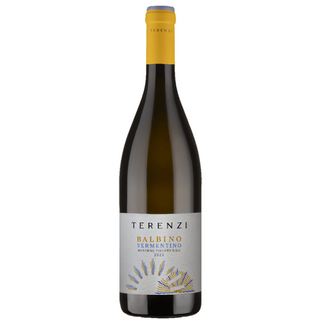
SWIRL's recommended Vermentino

Vermentino from the Maremma coast of Tuscany. A subtle pétillant texture and vibrant minerality — one of our bestsellers.
¥4,400 (tax incl.)
Buy nowWant to compare with other whites? See our Pinot Grigio guide.
FAQ
Q. Is Vermentino sweet?
A. No — it's a clean, dry white. The hallmark is bright acidity and minerality, not sweetness.
Q. What food does it go with?
A. All kinds of seafood, especially sashimi, shellfish, and anything with lemon. It also works with delicate Japanese dashi dishes.
Q. What temperature should I serve it at?
A. Well chilled, 6–9°C. It makes a wonderful aperitif on a warm evening.
Q. How is it different from Sauvignon Blanc?
A. Both are crisp and dry, but Vermentino has more saline minerality and a pleasant bitter finish; Sauvignon Blanc leans more toward herbs and fresh grass. For seafood, Vermentino is particularly recommended.
Q. What is Vermentino di Gallura DOCG?
A. Vermentino grown in the Gallura zone of northern Sardinia, holding Italy's highest wine designation DOCG (awarded 1996, the first DOCG in Sardinia). Granite soils and sea winds give it a distinctively powerful, mineral-driven character.
Q. Where can I buy Vermentino and what does it cost?
A. SWIRL stocks Balbino, a Tuscan Maremma Vermentino, at ¥4,400 (tax included). It also makes a great seafood-pairing gift.


Comments (0)
There are no comments for this article. Be the first one to leave a message!