

Primitivo is the signature red wine grape of Puglia, in the heel of southern Italy. It is known for rich, ripe fruit (think plum and blackberry) and soft, rounded tannins. It shares its DNA with America's popular Zinfandel, and its roots go back to an old Croatian grape called Tribidrag. Because the fruit is so generous, people often call it "sweet", but almost all Primitivo is a dry red wine.
I am Italian, and I import Italian wine in Tokyo. When someone tells me they "don't like red wine because it's too astringent", Primitivo is the first glass I usually suggest. In this guide I untangle the common misconceptions, then walk through how Primitivo tastes, its relationship with Zinfandel, the everyday wine culture of its home town Manduria, how to pair it with Japanese food from yakiniku to teriyaki, and Doppio Passo Primitivo, which Swirl imports to Japan first and exclusively.
The common misconception: is Primitivo a sweet wine, and is it different from Zinfandel?
I hear the same misunderstandings about Primitivo in Japan and abroad. Let's untangle the three most common ones.
Myth 1: Primitivo is a sweet wine
This is the big one. Primitivo ripens fully under the southern sun, so its aromas and texture carry a jammy, sweet-seeming richness. That impression comes from ripe fruit and a soft texture, not from leftover sugar. Most Primitivo on the market is dry. What makes it confusing is that Manduria also makes a genuinely sweet wine, "Primitivo di Manduria Dolce Naturale", which must contain at least 50 g of residual sugar (the sugar left after fermentation) per liter. Unless the label says "Dolce" (sweet), think of Primitivo as a dry red for the dinner table.
Myth 2: Primitivo and Zinfandel are different grapes
"Primitivo" in Italy, "Zinfandel" in America, "Tribidrag" (also called Crljenak Kaštelanski) in Croatia. Three names, but DNA testing shows they are the same grape. What differs is not the variety but the place and the winemaker's style. Many California Zinfandels are big wines that go above 15% alcohol, and in America a sweet rosé called "White Zinfandel" is drunk in huge volumes. Those images get projected onto Primitivo, which is why people assume it must be "sweet and heavy".
Myth 3: Affordable Primitivo must taste thin
Puglia gets plenty of sunshine and the grapes ripen easily. That means even affordable Primitivo tends to be deeply colored and full of fruit. The gap between price and satisfaction is arguably Primitivo's greatest strength.
What Primitivo tastes like
In the glass it is a deep, purple-tinged ruby. On the nose: blackberry, plum, black cherry and dried fruit, with spice like black pepper and cinnamon, plus vanilla and toast when oak is used. On the palate the fruit swells, the tannins are soft and round, and the acidity is gentle, so it drinks smoothly with no sharp edges.
| Element | Tendency |
|---|---|
| Sweetness | Almost always dry (sweet only when labeled "Dolce") |
| Body | Medium to full |
| Acidity | Gentle (low to medium) |
| Tannin | Soft and round |
| Aromas | Blackberry, plum, black cherry, dried fruit, black pepper, cinnamon |
| Alcohol | Around 13 to 15% (California Zinfandel can be higher) |
| Serving temperature | 14 to 18°C (in summer, chill slightly to 14 to 16°C) |
| When to drink | Most are enjoyable young; long aging is not required |
The name means "early ripening"
"Primitivo" comes from the Latin "primativus" and the Italian "primaticcio" (early), describing the grape's habit of ripening before other varieties. In the 18th century, Don Francesco Filippo Indellicati, a clergyman and botanist in Gioia del Colle in Puglia, is said to have selected the grape for its early ripening and named it "Primativo". In hot Puglia, it is one of the first grapes picked at the end of summer.
What is "Doppio Passo" (double harvest)?
Primitivo is known for ripening unevenly, even within the same bunch. That is the idea behind "Doppio Passo" ("double step"). According to the producer, the grapes are picked in two passes during the harvest: first when they are just fully ripe, then again later to collect riper grapes, and the two are blended. The earlier pick brings lively fruit, the later pick brings concentration and roundness, and the result is a soft, well-balanced wine. The brand name Doppio Passo comes from this double harvest.
One grape, three names: the Primitivo family tree
The first evidence that Primitivo and Zinfandel are the same grape came in the 1970s, when American researcher Wade Wolfe found that their enzyme (isozyme) patterns matched. In the 1990s, Professor Carole Meredith and colleagues at UC Davis confirmed it with DNA fingerprinting. Then in 2001 an old vine in Croatia's Kaštela area, Crljenak Kaštelanski, turned out to share the same DNA, pointing to Croatia's Dalmatian coast as the grape's homeland. Under the name "Tribidrag", the variety already appears in a document from 1444.
The same grape changes character when it crosses the ocean. Here is Puglia's Primitivo side by side with California's Zinfandel.
| Point | Primitivo (Puglia, Italy) | Zinfandel (California, USA) |
|---|---|---|
| Main areas | Manduria, Gioia del Colle, Salento | Sonoma, Lodi, Napa and more |
| Style | Round and fruity, made for the table | Concentrated, spicy and powerful |
| Alcohol | Around 13 to 15% | Around 14 to 16%, often above 15% |
| Sweet relative | Manduria Dolce Naturale (sweet red) | White Zinfandel (sweet rosé) |
| Best with | Tomato stews, meat sauce, yakiniku tare | Barbecue, smoked ribs |
A style map: from lighter to fuller, and the sweet ones
The same Primitivo (Zinfandel) covers a wide range depending on place and winemaking. Lighter on the left, fuller on the right.
Producers in Gioia del Colle describe their Primitivo as "thinner, more elegant", while Manduria, closer to the sea, is known for the traditional fuller, richer style. Historically, Primitivo was shipped north in bulk as a "blending wine" to add color and power to other wines, and it has only fairly recently gained attention as a quality bottled wine.
Everyday life in Manduria: buying wine "by the liter" with a damigiana
The heart of Primitivo country is the area around the town of Manduria in Puglia. Here you find a local habit you rarely see in Japan: "vino sfuso", wine sold loose, by the liter. People carry a large glass bottle called a "damigiana" to the cantina sociale (the cooperative winery) and have Primitivo poured straight from the tank, liter by liter. It costs just a few euros per liter. It is the most ordinary way to buy wine for the everyday table.
The Manduria cooperative has been protecting the local Primitivo since 1932. Primitivo was once mostly a "blending wine" used to add depth to wines from other regions, or sold loose, and it is only fairly recently that it has stepped into the spotlight as a quality bottled wine. Carrying a bottle to the cooperative is simply part of daily life there. The bottle Swirl brings you lets you enjoy that everyday taste in a well-made bottled form.
Primitivo and its "relatives" at Swirl
Swirl's Primitivo is Doppio Passo Primitivo, imported to Japan first and exclusively by Swirl. Around it I have placed a Napa red that includes Zinfandel, a spicy Syrah, fresher Sangiovese, and Nero d'Avola from Italy's south. Choose by taste and occasion.
| Wine | Origin | Style | Role in this guide | Price (tax incl.) |
|---|---|---|---|---|
| Doppio Passo Primitivo 2024 | Puglia, Italy | Round and dry, medium to full | The star. Japan's first and exclusive import | ¥2,200 |
| Napa Valley Bon Ton Red 2022 | Napa, USA | Blend including Zinfandel, full | The "American side" relative | ¥8,250 |
| Syrah Seduzione 2021 | Veneto, Italy | Spicy and elegant | Next bottle for spice lovers | ¥4,400 |
| Morellino di Scansano 2023 | Tuscany, Italy | Sangiovese, lively medium body | For those who want more acidity | ¥3,850 |
| Madrechiesa 2020 | Tuscany, Italy | Sangiovese Riserva, full | Sangiovese for special days | ¥8,800 |
| Baglio di Serramarrocco 2022 | Sicily, Italy | 100% Nero d'Avola, fruit and structure | Compare southern Italian reds | ¥4,400 |
| Nero d'Avola Bio 2023 | Sicily, Italy | Organic, fresh and elegant | A lighter southern red (limited stock) | ¥4,180 |
| Nero di Serramarrocco 2021 | Sicily, Italy | Nero d'Avola, deep purple and complex | For barbecue and tomato dishes | ¥6,160 |
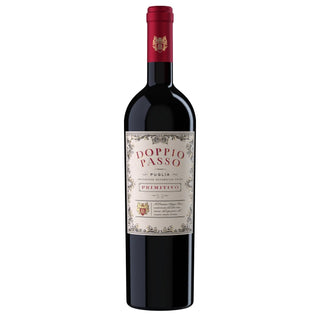
Start here: Doppio Passo Primitivo
Aromas of blackberry, mulberry, plum and morello cherry (a sour dark cherry), with touches of oak, vanilla and toast. At 13% alcohol it is on the lighter side for a Primitivo. It has a screw cap, so you can open it without a corkscrew.
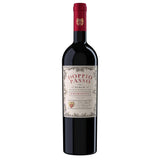
Japan's first and exclusive import. A round, double-harvest Puglia red
Doppio Passo Primitivo 2024Doppio Passo
The same grape from the American side: a Napa blend
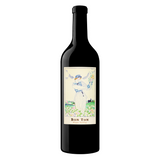
Napa Valley Bon Ton Red blends Zinfandel with Merlot, Cabernet Sauvignon and Syrah. It is not a single-variety wine, but it shows how the grape that shares Primitivo's DNA expresses itself under the California sun. Pour it next to Doppio Passo for a small "same grape, different place" comparison.
If you want a little more acidity: Tuscan Sangiovese
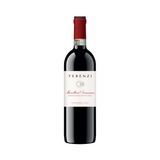
Primitivo's roundness is its charm, but some people prefer a crisper red. For them, the answer is Sangiovese, Italy's signature grape. Morellino di Scansano from coastal Tuscany has red fruit, violets and lively acidity, and is easy to match with tomato dishes and Japanese food.
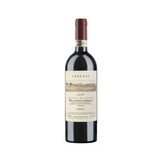
Compare southern Italian reds: Sicilian Nero d'Avola
Like Puglia, Sicily is blessed with sunshine, and its signature grape is Nero d'Avola. It shares Primitivo's generous fruit with a little more structure, making it perfect for exploring the range of southern Italian reds.
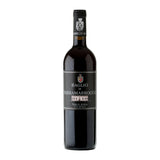
100% Nero d'Avola. Fruit with pleasant structure
Baglio di Serramarrocco 2022Barone di Serramarrocco

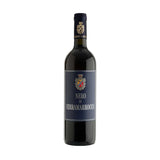
Deep purple and complex. Great with barbecue
Nero di Serramarrocco 2021Barone di Serramarrocco
Why choose Swirl's Primitivo
You can buy wine anywhere these days. Here, honestly and with numbers, is why I can confidently recommend Swirl's Doppio Passo Primitivo.
1. Only Swirl imports it to Japan
Doppio Passo is a brand Swirl imports to Japan first and exclusively, under contract with the producer Botter. It is already a major brand in Europe: by 2021 the brand as a whole had grown to 2.6 million cases a year. In Japan, Swirl is the only official source. Because we handle it directly as the importer, we know the condition of every shipment from Italy and exactly when the vintage changes.
2. About ¥440 a glass
A 750 ml bottle gives about five standard glasses (about 150 ml each). At ¥2,200, Doppio Passo Primitivo works out to about ¥440 a glass. That makes a proper Italian red at home far more casual than ordering a glass when you eat out.
| Wine | Bottle price (tax incl.) | Per glass (about 150 ml) | Alcohol |
|---|---|---|---|
| Doppio Passo Primitivo | ¥2,200 | about ¥440 | 13% |
| Morellino di Scansano | ¥3,850 | about ¥770 | 14% |
| Syrah Seduzione | ¥4,400 | about ¥880 | 13.5% |
| Napa Valley Bon Ton Red | ¥8,250 | about ¥1,650 | n/a |
3. From a weekday dinner to a weekend barbecue
With soft tannins and generous fruit, it never feels too heavy, whether you drink it on its own or with food. Monday's hamburg steak, Friday's yakiniku, Sunday's barbecue. The screw cap makes it easy to open outdoors or on the balcony, and if you don't finish it, close the cap, put it in the fridge and enjoy it the next day.
4. A good gift
"An Italian wine that only Swirl imports to Japan" is a nice conversation starter when you bring a bottle as a gift. Its gentle style is easy to appreciate even for people new to red wine. Swirl also offers gift wrapping.
5. Honest notes on stock and vintage
We currently ship the 2024 vintage, and stock is ample, in the hundreds of bottles, so you can order several for a party with confidence. The vintage changes to the next year only once the current one sells out, and we update the product page when that happens. Some wines in this guide, such as Nero d'Avola Bio, are in short supply, so if one catches your eye, I recommend not waiting too long.
Enjoying Primitivo in Japan: why it works with yakiniku, teriyaki and demi-glace
The reason Primitivo fits the Japanese table is simple. The sweet-seeming ripe fruit points in the same direction as sweet-savory seasoning made with sugar and mirin, and the soft tannins handle the fat in meat. Because its acidity is gentle, it is happier with the depth of soy sauce, miso and rich sauces than with very tomato-sharp or vinegary dishes.
| Dish | Why it works |
|---|---|
| Yakiniku (with tare) | The sweetness of a tare made with fruit, soy sauce and sugar overlaps with plum-like fruit; round tannins handle the fat |
| Chicken or yellowtail teriyaki | The glossy sweet-savory glaze blends with ripe fruit, and the charred edges echo the wine's spice |
| Hamburg steak with demi-glace | The depth and slight bitterness of the reduced sauce suit the wine's vanilla and toast notes |
| Karaage | Lightly chilled, the fruit lifts the crisp coating and keeps the oiliness in check |
| Kakuni, dongpo pork (Chinese braised pork belly) | Star anise and soy sweetness overlap with the wine's cinnamon and black-pepper spice |
| Japanese curry (up to medium heat) | The curry's body and sweetness merge with ripe fruit; avoid very hot curry, as alcohol amplifies heat |
| Meat sauce, pizza | A classic in Puglia too: tomato umami and fruit in harmony |
For more on curry, see wines that go with curry.
Perception vs reality
- Perception: dark reds are astringent and heavy → In reality the tannins are soft, making it a good entry point for people who think they don't like red wine.
- Perception: red wine doesn't go with Japanese food → Sweet-savory Japanese dishes are exactly where Primitivo shines.
- Perception: red wine should be served at room temperature → A Japanese summer "room temperature" is far too warm. A little chill makes it taste better.
In summer, 20 to 30 minutes in the fridge: tips for drinking well without a cellar
The European idea of "room temperature" means roughly 16 to 18°C. Japanese summer rooms can pass 30°C, and at that temperature the heat of the alcohol comes forward and the fruit goes blurry. In warm weather, put the bottle in the fridge for 20 to 30 minutes before opening. At around 14 to 16°C the fruit tightens up and it becomes remarkably easy to drink. In winter there is no need to chill it; just keep it somewhere cool. After opening, close the cap and refrigerate: it stays good for 2 to 3 days. Take it out a little before pouring and the aromas come back.
How to choose: follow your taste to the next bottle
Whether you already love Primitivo or have never tried it, use your taste to find the next bottle.
- If you are just starting with red wine → Begin with Doppio Passo Primitivo. Soft tannins, and about ¥440 a glass to try it.
- If you like California Zinfandel → Doppio Passo is the Italian version of the same grape, in a more food-friendly style. For a taste of Napa, try Bon Ton Red.
- If you love Primitivo's spice → Syrah Seduzione.
- If you want more acidity and lightness → Morellino di Scansano (Sangiovese).
- If you want to explore southern Italian reds → Sicilian Nero d'Avola (Baglio di Serramarrocco).
- For anniversaries and entertaining → Madrechiesa, a single-vineyard Sangiovese.
For the region, see Puglia wine; for the brand's story, What is Doppio Passo?; and for a red with more acidity, What is Sangiovese?
Frequently asked questions
Q. Is Primitivo sweet?
A. Almost always dry. The fruit is so generous that some people taste it as sweet, but very little sugar remains. The only truly sweet Primitivo is Manduria's special wine labeled "Dolce Naturale". This is the most common misconception about Primitivo.
Q. Are Primitivo and Zinfandel the same?
A. They are the same grape by DNA. It is called "Primitivo" in Italy, "Zinfandel" in America and "Tribidrag" in its Croatian homeland. Puglia's versions tend to be round and food-friendly, California's higher in alcohol and more powerful.
Q. What does "Primitivo" mean?
A. It comes from words meaning "early" or "early ripening", describing how the grape ripens before other varieties. In hot Puglia, the harvest starts at the end of summer.
Q. What temperature should I serve it at, especially in summer?
A. Aim for 14 to 18°C. In summer, 20 to 30 minutes in the fridge before opening tightens the fruit and makes it easier to drink.
Q. What is Primitivo di Manduria?
A. It is the protected designation (DOC) for Primitivo from around Manduria in Puglia, known for a rich, full style. The sweet version became its own DOCG (Italy's top classification), "Primitivo di Manduria Dolce Naturale", in 2011.
Q. Is it easy for red wine beginners?
A. Yes. Soft tannins and generous fruit make it a perfect introduction to red wine. Start with Doppio Passo Primitivo alongside yakiniku or teriyaki.
Q. How long does it last once opened?
A. With the cap closed and kept in the fridge, it stays good for 2 to 3 days. With this much fruit, you may even find it rounder on day two.
A gentle yet powerful red, grown under the southern Italian sun. Start with one glass at dinner tonight.
Sources: Wikipedia, "Zinfandel" (Wolfe's isozyme analysis, Meredith et al. DNA fingerprinting, 2001 identification in Kaštela, 1444 Tribidrag record); Wine Spectator, "A Zin Too Far? Elusive and Elegant Primitivos in the Puglian Heights" (Indellicati; Gioia del Colle vs Manduria styles); Italian Wine Central, "Primitivo di Manduria Dolce Naturale DOCG"; Produttori di Manduria, "History of firm" (founded 1932); Wine Industry Advisor, "Rotkäppchen-Mumm and Botter Mondodelvino Launch Doppio Passo Primitivo in the US" (2022; double harvest and sales figures).


Comments (0)
There are no comments for this article. Be the first one to leave a message!