

The word "sommelier" traces back to the Old French "bête de somme" — keeper of the pack animals. The role first appeared in French royal court documents in 1316 as a steward of baggage and supplies, and by the court of Louis XIV in the 17th century had evolved into the person responsible for wine and table service. A sommelier, at root, is not simply someone who pulls corks; they are someone who escorts the guest toward the finest possible experience.
That spirit lives in every cork you pull. With the right tools and a little technique, you can open any bottle cleanly, safely, and with a touch of ceremony. As an Italian sommelier, here is everything I use in professional service — for wine lovers in Japan.
What You Will Learn
- Still wine with a cork: how to use a sommelier knife correctly
- Screw caps: the right direction and technique
- Sparkling wine wire cages (muselets): how to remove them safely
- Broken cork: what to do when it happens
- How to choose a sommelier knife
1. Opening a Corked Still Wine: The Sommelier Knife
What you need: a sommelier knife (two-step lever style recommended)
Step 1: Cut the foil
Using the small blade (foil cutter) on your sommelier knife, place it just below the top ring (saddle) of the bottle neck and rotate the bottle one full turn. The goal is a clean cut, not a pull — rotate the bottle, not the knife. Pocket the removed foil.
Step 2: Insert the screw
Position the tip of the worm (spiral) at the center of the cork and turn clockwise — slowly and steadily — for 7 to 8 full rotations. Stop before the tip of the worm breaks through the bottom of the cork; fragments in the wine are avoidable.
Step 3: Lever and lift
Hook the first notch of the lever onto the bottle rim and pull the handle upward. When the cork is about halfway out, move the second notch to the rim and complete the lift. Finish by gripping the cork itself and easing it out gently.
Step 4: Wipe the cork and rim
Lightly wipe the extracted cork with a napkin, then wipe the inside of the bottle mouth. A small habit that marks a professional pour.
2. Opening a Screw Cap
A screw cap looks simple but the correct direction surprises many people: it is counterclockwise (to the left). Hold the cap lightly and turn counterclockwise; the internal safety ring (bridge) will break and the cap will open cleanly.
After opening, the cap threads back on clockwise for storage. Screw caps create an excellent seal and eliminate the risk of cork taint (bouchonné / TCA contamination), making them an ideal closure for fresh, early-drinking white wines.
3. Opening Sparkling Wine: Removing the Muselet
The internal pressure of sparkling wine runs between 3 and 6 atmospheres. Without the right approach, the cork can fly out with surprising force.
Non-negotiable rule: keep one hand on the cork from start to finish.
Step 1: Tilt the bottle
Hold the bottle at a 45-degree angle, pointing the cork away from people and breakables.
Step 2: Remove the muselet — the six-turn rule
Twist the wire loop of the muselet counterclockwise exactly six turns (an international standard found on every bottle of Champagne and sparkling wine). Once loose, keep the muselet and cork held together under your thumb.
Step 3: Rotate the bottle, not the cork
Hold the cork still and slowly rotate the bottle. The internal pressure will ease the cork upward naturally. The goal is a quiet hiss, not a loud pop — that is the professional way.
4. Choosing a Sommelier Knife
| Type | Description | Best For |
|---|---|---|
| Two-step lever | Less force needed; stable and reliable | All levels, from beginner to expert |
| Single-step lever | Simple and compact | Experienced users |
| Wing corkscrew | Both arms press down simultaneously | Those unsure about lever technique |
| Electric corkscrew | Button-operated; fully automatic | High-volume use or limited grip strength |
Almost every professional sommelier uses the two-step lever style. The established brands are French Laguiole and Spanish Pulltex.
When the Cork Breaks
It happens to everyone eventually. Stay calm.
If more than half the cork remains: Re-center the worm in the remaining cork and pull again carefully.
If only a small piece remains: An AhSo (two thin prongs that grip the cork from either side) is ideal. Without one, push the cork into the bottle using a thin implement, then pour through a fine-mesh strainer or decant.
Last resort: Push the cork fully into the bottle. Cork fragments will be in the wine, so decant through a strainer or cheesecloth.
Swirl Recommends: The First Bottle to Open with Your New Skills
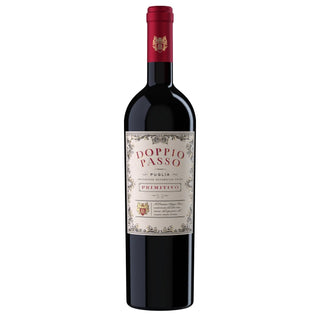
Once you have mastered the technique, the next step is choosing a bottle worth looking forward to. Doppio Passo Primitivo — 100 percent Primitivo from Puglia — delivers a rush of dark berries, chocolate, and spice the moment the cork clears the rim. Rich fruit, silky tannins, and a long finish. It works with yakitori, steak, cheese, almost anything. This is Botter's flagship wine, and Swirl is its first and exclusive importer in Japan.
Frequently Asked Questions
Q: How much should I spend on a sommelier knife?
A: For everyday use, a two-step lever model in the ¥2,000–5,000 range is more than sufficient. The Pulltex Basic series (around ¥2,000) offers an excellent balance of quality and ease of use. A Laguiole above ¥5,000 also makes a wonderful gift.
Q: Are screw cap wines lower quality than corked wines?
A: Not at all. Screw caps eliminate the risk of cork taint (TCA contamination / bouchonné), which makes them an excellent choice for fresh, fruity whites and early-drinking rosés. Almost all New Zealand Sauvignon Blanc is now bottled under screw cap — a quality decision, not a compromise.
Q: How long does wine keep after opening?
A: Still wine stored in the refrigerator stays in good shape for 2–4 days. Sparkling wine, sealed with a pressure-type Champagne stopper, will retain its bubbles for 1–2 days. For a deeper guide to storing opened wine, see the Complete Wine Storage Guide.
Q: Is there a polite way to open wine at the table?
A: Present the label to your guests as you open. Aim for a quiet sound when the cork comes out. In restaurants, the cork may be placed on the table for the guest to inspect; at home, this is not necessary. Dispose of the foil discreetly rather than leaving it on the table.


Comments (0)
There are no comments for this article. Be the first one to leave a message!