

Rosé wine is wine made by letting the juice of dark-skinned grapes stay in contact with the skins for only a short time, giving it a color that ranges from pale pink to salmon. It is not a blend of red and white sitting in between the two: it is its own category, with its own winemaking and its own flavor, and most of it is, surprisingly, properly dry.
I am from Italy, and I import Italian wine in Tokyo and pour it almost every day. In summer people often ask me, “Rosé is sweet, right?” But most of the rosé drunk at the table back home is bone-dry and well chilled. In this guide I walk through rosé’s color and taste, the three ways it is made, how styles change by region, how to enjoy it at a Japanese table, and the rosés you can actually drink from Swirl’s cellar.
A common misconception: is rosé “red and white mixed together”?
The most common misconception is that rosé is made by blending red and white wine. In fact, under EU wine law, making still (non-sparkling) rosé by blending red and white is, as a rule, prohibited. When the EU tried to allow this blending in 2009, producers in Provence and elsewhere fought hard to protect quality, and the plan was withdrawn. The color of a still rosé must come directly from the skins of dark grapes.
The exception is sparkling rosé. In Champagne rosé and in Veneto’s Prosecco Rosé, adding a little red wine to white (or co-fermenting dark grapes) to give color and aroma is permitted. The rules differ for sparkling and still, which is a fun detail to keep in mind.
The other big misconception is “rosé equals sweet.” The old image of sweet American White Zinfandel may still linger. But the mainstream of the world’s rosé today is dry. Let us start with color.
The color and taste of rosé: from pale pink to copper
A rosé’s color is set mostly by how long the skins of the dark grapes stayed in contact with the juice. The shorter the contact, the paler the pink; the longer, the closer it gets to deep salmon or pale red. Importantly, a deeper color does not mean sweeter. Color is mainly about “time on skins,” while sweetness is about “how much sugar was left during fermentation.” They are two separate rulers.
Here are the typical flavor characteristics in a table.
| Item | Tendency |
|---|---|
| Color | Wide range: pale pink, salmon, copper |
| Body | Light to medium. Easy to drink |
| Acidity | Firm. Crisper when chilled |
| Aroma | Strawberry, raspberry, plum, citrus, sometimes salinity or florals |
| Sweetness | Mostly dry; some off-dry or lightly sparkling |
| Serving temp | 8 to 12°C (well chilled) |
The three ways rosé is made
There are three main ways to make a still rosé. All of them draw color from the skins of dark grapes, but the time on skins and the purpose differ.
Dark grapes are harvested and gently pressed right away, and only the lightly colored juice, briefly in contact with the skins, is fermented. Provence’s pale rosés use this method. The color is pale and the result is delicate and refined.2. Short maceration (skin contact)
Crushed dark grapes soak with their skins for a few hours up to about a day, and once the desired color appears the skins are removed and the juice is fermented. This is the most common method, designed specifically for rosé.3. Saignée (bleeding)
From a tank destined for red wine, some pink juice is drawn off early in fermentation to make rosé. The word is French for “to bleed,” and the remaining juice becomes a more concentrated red.All three take color from the skins of dark grapes. None of them involve mixing red and white.
With the same grape, color and aroma change depending on how it touches the skins. Remember that pale pink leans delicate and apericial, while a slightly deeper rosé can stand up to heartier dishes, and choosing gets easier.
How style changes by region
Rosé is made all over the world, but color and flavor take on a different character in each region. Let us compare four of the most representative.
| Region | Color and style | Flavor tendency |
|---|---|---|
| Provence (southern France) | Very pale pink, dry | Delicate and mineral. The world benchmark for rosé |
| Veneto / Friuli (northeast Italy) | Salmon to copper | Fruit and gentle acidity. Made for the table |
| Languedoc (Pays d’Oc, southern France) | Bright pink, dry | Generous red fruit, great value |
| California (New World) | Slightly deeper, dry to lightly sweet | Rich fruit, easy to approach |
In northeast Italy’s Friuli there is a tradition called “ramato” (Italian for copper). Pinot Grigio berries actually have a grayish-pink skin, and when this is left in long contact with the juice, the wine turns into a pale, copper-tinted white that looks almost like a rosé. Today the pale international style of Pinot Grigio dominates worldwide, but for producers in Friuli and Veneto this copper color is the old, authentic face of the grape. It is still little known in Japan, yet on the ground there are plenty of producers who present it proudly as “this is real Pinot Grigio.” Swirl’s Pinot Grigio Rosé is a bottle in the spirit of that copper tradition, made to show off the skins.
In the cellar, the paler the target color, the shorter the skin contact and the cooler and slower the fermentation, to protect the grape’s delicate aromatics. A slightly deeper rosé, by contrast, is made to pull out fruit and body. The climate of the region (cool or warm) and the color the winemaker aims for together decide a rosé’s expression.
How to enjoy it in Japan (this is where rosé shines)
Rosé’s greatest strength is its range. Not as light as a white, not as heavy as a red, so a single bottle covers everything from Japanese to Western food. Here are the pairings I most often recommend.
| Dish | A rosé that works | Why |
|---|---|---|
| Sashimi, temaki sushi | Pale dry rosé | Delicate acidity lifts the fish and even suits lean tuna |
| Tempura, karaage | Prosecco Rosé (sparkling) | Bubbles and acidity cut through the oil |
| Yakitori (tare), teriyaki | Slightly deeper rosé | Fruit stands up to the sweet-savory glaze |
| Prosciutto, salami, cheese | Salmon-colored rosé | Salt and fat meet the fruit and acidity beautifully |
| Tomato pasta, pizza | Italian dry rosé | The acidity of the tomato and the rosé move together |
In the Riviera and Provence of southern France, when summer comes you see a way of drinking called “rosé piscine” (pool rosé) as if it were the most natural thing in the world. You pour rosé into a glass full of ice and drink it down ice-cold, a grown-up version of shaved ice, so to speak. Among wine purists it has its critics, but at the beach and poolside everyone enjoys it: it is an everyday summer habit of the south of France. It suits Japan’s humid summer perfectly, and being slightly diluted by the ice feels just right. Do give it a try.
People tend to assume “rosé is sweet and does not go with food,” but the truth is the opposite. A dry rosé tightens up with acidity as it chills, and pairs with both the delicate flavors of Japanese cuisine and richer, oilier dishes. You do not need a wine cellar in a Japanese home: put it in the fridge about 30 minutes before drinking, then keep it in an ice bucket or wine cooler while you drink, and the last glass will still be at a delicious temperature.
Federico’s picks: the rosés you can drink at Swirl
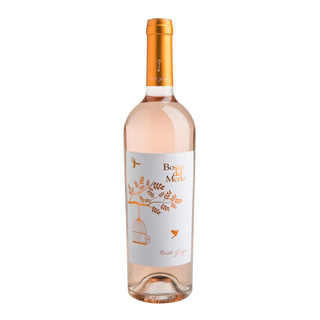
If you want a first bottle, the one I most often pour is Veneto’s Pinot Grigio Rosé. Made in the spirit of the ramato (copper) tradition I mentioned, it shows a faintly tinted salmon pink, aromas of plum and white flowers, gentle fruit and clean acidity, and it settles easily into both Japanese and Western tables. If you like bubbles, the Prosecco Rosé Millesimato from the same house, Bosco del Merlo, is perfect as an aperitif.
For those who want to compare close styles side by side, here are the rosés you can drink at Swirl right now. Stock and prices are on each product page.
| Type | Wine | For when |
|---|---|---|
| Still / copper | Pinot Grigio Rosé (Veneto) | Everyday meals, including Japanese food |
| Sparkling | Prosecco Rosé Millesimato (Veneto) | A toast, an aperitif, a celebration |
| Still / New World | Napa Valley Bon Ton Rosé | When you want fruit, with BBQ or the grill |
| Still / south of France | La Belle Angele Rosé | A casual evening, a picnic |
How to choose: pick a rosé by the taste you already like
If you are not sure which to choose, start from a taste you already enjoy.
- You like delicate and crisp → a pale dry rosé (Provence style), the Pinot Grigio Rosé
- You like bubbles and toasts → Prosecco Rosé Millesimato
- You want clear fruit → the New World Napa Valley Bon Ton Rosé
- You want an easy, casual bottle → La Belle Angele Rosé from the south of France
- You like dry whites → rosé is a natural next step from white; start with any of these
If you love the freshness of white wine, a dry sparkling or white is also a good idea. Going from the Prosecco Millesimato Brut or the organic Pinot Grigio toward rosé makes the differences easy to taste.
If you want to choose by dish, see food that goes with rosé, and if the bubbles caught your interest, how to choose sparkling wine is worth a read too.
Frequently asked questions
Q. Is rosé made by mixing red and white wine?
A. No. Under EU wine law, making a still (non-sparkling) rosé by blending red and white is prohibited as a rule. The color is drawn directly from the skins of dark grapes. Sparkling rosés such as Champagne and Prosecco are the exception, where blending in red wine is permitted.
Q. Is rosé a sweet wine?
A. Most are dry. Depth of color and sweetness are separate things: color comes from time on the skins, sweetness from how much sugar is left during fermentation. There are plenty of dry rosés even in deeper pinks.
Q. How do deeper and paler rosés differ in taste?
A. In general, paler colors tend to be more delicate and light, while deeper colors tend to show clearer fruit. Pale rosé for starters and sashimi, a slightly deeper one for teriyaki or the grill: choosing this way makes pairing easy.
Q. At what temperature is rosé best?
A. 8 to 12°C, that is, well chilled. Put it in the fridge about 30 minutes before drinking. If it gets too warm the acidity slackens, so keep it cold in a wine cooler or ice bucket and it stays delicious to the last glass.
Q. What is the most common mistake or misconception?
A. The assumption that rosé is cheap, sweet, and does not go with food. In reality dry rosé is the mainstream, and because it holds the best of both white and red, a single bottle covers everything from Japanese to Western food. You could call it the most useful wine on the table.
Open a well-chilled rosé and the table instantly feels brighter. Please enjoy it casually, alongside your everyday meals.
Sources: Decanter, “EU drops rosé blending plans”; Decanter, “What is ramato wine?”; Wine Spectator (rosé piscine / Provence); Vins de Provence (how rosé is made).

Comments (0)
There are no comments for this article. Be the first one to leave a message!