

A wine's closure is the "lid" that seals the bottle, and the main types are natural cork, agglomerated cork, synthetic cork, screwcap and glass stopper, each with a different seal and a different way of letting tiny amounts of oxygen through. And, contrary to a common belief, a screwcap is not a mark of cheapness. More and more, it is chosen precisely to protect quality.
I am from Italy, and I import Italian wine in Tokyo, pouring it almost every day. I am often asked, "Is this red lower-grade because it has a screwcap?" or "Does it only age under cork?" In this article I explain, from an importer's point of view, the types and roles of wine closures, why producers choose different closures, and the tips for opening and storing each at home.
A common misconception: "screwcap means cheap" is wrong
The most common misunderstanding is assuming the screwcap (the cap you twist open) is only for cheap wine. In reality, in New Zealand and Australia most premium white wines use a screwcap, and French and Italian producers use it actively for whites and roses where freshness is everything.
Why? Natural cork can occasionally give off an unpleasant musty smell called "cork taint" (like damp cardboard), caused by a trace compound in the cork (a substance called TCA). Screwcaps bring this accident, which can strike perhaps one bottle in a batch, down to nearly zero. So a screwcap is not "cutting corners," it is a rational choice to protect the wine from an accident.
In fact, in New Zealand many producers switched to screwcaps in the early 2000s, and today it is completely normal even for premium whites. The same trend has spread in Australia, Germany and Austria. The reason you see screwcaps across everything from 1,000-yen wines to several-thousand-yen whites in Japanese supermarkets is a reflection of this global shift. Instead of "twist-open means cheap," think "twist-open because they want to protect freshness," and the view changes.
Of course cork has great virtues too. It is supple, it has a proven record of standing up to decades of aging, and there is a culture of enjoying the small ritual of pulling it. What matters is not ranking closures against each other, but seeing whether the closure suits that particular wine.
The types of wine closure and their features
There are five main closures. Here is how to tell them apart and which wines they suit.
| Closure type | Features | Suited to |
|---|---|---|
| Natural cork | Punched from cork oak bark. Supple, proven for long aging. Rare risk of cork taint | Reds for long aging, premium wines |
| Agglomerated cork (DIAM etc.) | Cork granules bound together. Consistent quality; high-grade types suppress cork taint | Mid-priced reds and whites, early-drinking wines |
| Synthetic cork | Made of resin. Cheap and easy to handle, but not suited to long aging | Everyday wines drunk within one or two years |
| Screwcap | Metal cap. High seal, almost no cork taint. Easy to open | Fresh-is-everything whites and roses, everyday wines |
| Glass stopper (Vinolok etc.) | Beautiful to look at and easy to reseal. Higher cost | Whites and gifts where looks matter |
The main axis in choosing a closure is "how much oxygen it lets into the bottle." A very small amount of oxygen slowly raises a wine, but too much oxidizes and spoils it. The closure is also a device for adjusting that amount of oxygen. The diagram below is an image of how much oxygen each one lets through.
Why producers choose different closures
In a word, the producer's criterion is "what kind of time do I want this wine to spend."
For a wine meant to be drunk right away, a vivid young white or rose, or bubbles like Prosecco, you want to let in as little oxygen as possible. So you use a screwcap, or for sparkling a sturdy cork held down by a wire cage (the muselet). On the other hand, a premium red you want to raise slowly over years has long been given natural cork, which lets a trace of oxygen through. This "raising a wine slowly with a trace of oxygen" is called, in technical terms, micro-oxygenation.
What I often show at a tasting is the difference in closure between the same producer's "fresh white" and "aged red." The vivid young white locks its aromas under a screwcap, the red laid down for years breathes slowly under cork. When I explain that even one estate uses different closures to match each wine's character, people are surprised: "so the closure meant something." The closure is also a message from the maker, saying "this is how I want this wine enjoyed."
Here is something reassuring to know: the "cork taint" from before. If, the moment you open a bottle, it smells of damp cardboard or a wet rag and the fruit aromas seem gone, that is not a bad wine but possibly an accident caused by the cork. It is a separate thing from whether you like the taste, so it is fine to raise it with the shop you bought it from. With a screwcapped wine, this worry is essentially absent.
Opening and storing at home in Japan (handling changes with the closure)
The closure type also matters for how you handle the bottle at home. Here are the points worth knowing in a Japanese home, by closure.
| Closure type | How to open | Storage tip |
|---|---|---|
| Natural/agglomerated cork | Draw it up slowly with a sommelier knife | Lay it on its side to keep the cork moist, preventing it from drying and shrinking |
| Screwcap | Hold the base of the bottle and turn the cap | You may store it upright. Space-saving, well suited to Japanese homes |
| Sparkling (cork + muselet) | Hold the cork with your thumb, turn the bottle, and ease it out quietly | Store upright and chilled. After opening, a stopper keeps it a few days |
The screwcap is especially handy in a Japanese home. There is no need to lay it down, and you can even stand it in the fridge door. Cork-closed wine, for long storage, is basically laid on its side to keep the cork moist. When cork dries and shrinks, air gets in through the gap and oxidation sets in more easily.
Here is one Italian story about closures. The place known for wine cork is the island of Sardinia, the Gallura region in the north-east. Its central town, Calangianus, is called the "town of cork," surrounded by forests of cork oak (sughero in Italian). From the 19th century the town thrived on cork processing, and there was a time when nearly every resident was involved in the cork industry. The town still has a cork museum, and behind the small closure of a single bottle of wine stretches the history of a Mediterranean forest and its craftspeople. It is a connection between wine and land that is hard to picture from Japan.
Where does cork come from? A sustainable material that does not fell the tree
Another reason natural cork is being reconsidered is its kindness to the environment. Cork is made from the bark (the outer skin) of the cork oak. What surprises people is that the tree is not cut down. The bark of a mature tree is carefully stripped roughly every nine years. The stripped bark regrows, and a single tree keeps producing cork for over 200 years. What is more, the first harvest is possible only after the tree has grown for about 25 years, and only after several more cycles does it yield good cork fit for wine. Much of the world's cork is made along the Mediterranean, especially in Portugal, and a wine's closure is supported by long time and handwork.
Furthermore, a cork oak that has had its bark stripped is said to absorb more carbon dioxide as it recovers. Cork forests are also home to wildlife, and in Portugal, Spain and Italy's Sardinia the cork industry has supported both forest conservation and local employment at once. Screwcaps and glass stoppers have the separate merit of being easy to recycle, but as "a natural material harvested without felling the tree," cork has a value of its own. Choosing a closure is, in fact, also choosing how we relate to the forest.
The cork left after you finish a bottle is worth keeping rather than throwing away. It works for trivets, pin boards and small handicrafts, and plenty of Italian households save their old corks. In a single small closure, a story continues from the forest to the table.
Common closure troubles and what to do
Finally, here are the closure troubles that tend to happen at home, and how to deal with them without panicking.
- The cork broke halfway: Do not rush; stick the sommelier knife into the rest again at an angle and draw it up. Even if small fragments fall in, strain them through a tea strainer and it is perfectly fine to drink.
- The cork fell into the bottle: It does not affect the taste. Pour into a decanter or another container and enjoy it.
- The cork has dried and shrunk: A sign it was stored upright for a long time. Lay it on its side from now on. If the contents are fine, it is fine to drink.
- The screwcap will not open: Hold the base of the bottle (the lower half) firmly and turn, and it separates cleanly.
- A chemical or plastic smell on opening: Very rarely a smell can come from a synthetic cork. If it does not fade after a little while, consult the shop you bought it from.
In none of these troubles is the wine itself usually ruined. Knowing that the closure is a tool for protecting the contents lets you handle it calmly.
Why is a sparkling closure mushroom-shaped?
Have you ever noticed, after pulling the cork of a Prosecco or Champagne, that it has opened out into a mushroom shape? It was not that shape from the start. Before it was put in the bottle, it was a plain cylinder like an ordinary cork.
Inside a sparkling wine bottle there is high pressure of several atmospheres from the strong carbon dioxide. To resist that pressure, a thick cork is pushed in hard and fixed from above with a wire cage (the muselet) and a cap. Because only the lower half stays compressed in the bottle, it swells into a mushroom shape when pulled. When opening, it is safest to turn the bottle rather than the cork, holding the cork with your thumb and easing it out quietly rather than letting it "pop." A cork that flies off with force is dangerous, so take care not to point it at people or glasses. Swirl's Prosecco protects its bubbles with this very mechanism.
Swirl wines by closure type
Here are examples from the Swirl cellar by closure type. Because the actual closure can vary by producer and vintage, please read this as a style guide. Check price and stock on each product page.
| Usually this closure | Suited style | Examples at Swirl |
|---|---|---|
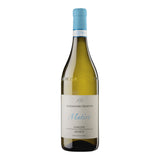
| Natural/agglomerated cork | Reds to savor slowly, aging types | Morellino, Madrechiesa, Langhe Nebbiolo |
| Cork or screwcap | Everyday reds, early-drinking reds | Doppio Passo Primitivo |
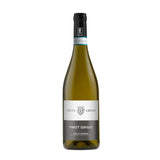
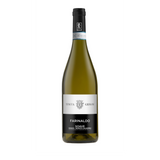
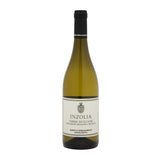
| Screwcap, freshness-first | Fresh whites and roses | Pinot Grigio, Soave, Inzolia, Langhe Arneis |
| Cork + muselet | Sparkling | Prosecco Millesimato Brut |
As a red to savor slowly, the one I often pour is the Sangiovese of Maremma.
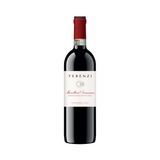
Sangiovese. Rich in fruit, a red you can also lay down a little
Morellino di Scansano 2023Terenzi
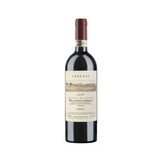
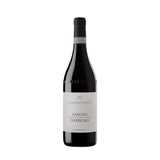
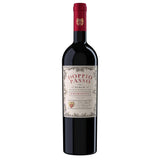
Puglia's everyday red. Delicious as soon as you open it (first and exclusive import in Japan)
Doppio Passo Primitivo 2024Doppio Passo
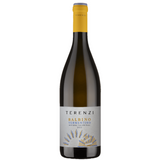
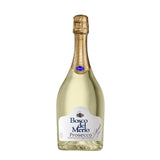
Veneto bubbles. Sealed firmly with cork plus muselet
Prosecco Millesimato Brut 2024Bosco del Merlo
Choose by closure: this bottle for this moment
From the character of the closure, choose by the occasion.
- To open easily outdoors or on a picnic → screwcapped Pinot Grigio or Soave
- To pull a slowly raised red on an anniversary → cork-closed Madrechiesa or Langhe Nebbiolo
- A quick glass on a weeknight, easy to open and reseal → Doppio Passo Primitivo
- A toast for a celebration → Prosecco Millesimato Brut
To learn more about opening and storing, see our how to open wine and how to store wine guides.
Frequently asked questions
Q. Is a screwcapped wine cheap?
A. No. Because a screwcap has a high seal and almost no risk of cork taint (a cork-derived musty smell), it is chosen worldwide for wines that value freshness. It does not indicate high or low price or quality.
Q. Do screwcapped wines not age?
A. Many are meant for a drink-early style, but recently liners that adjust oxygen transfer have been developed, and premium wines made to age under a screwcap are appearing too.
Q. I opened it and there was a cardboard smell. Is it a bad wine?
A. Not the wine itself, but possibly an accident called "cork taint" from natural cork. It is separate from your taste preference, so consult the shop you bought it from. It essentially does not happen with a screwcap.
Q. Why are cork-closed wines laid on their side?
A. To keep the cork slightly moist and prevent it drying and shrinking. When it dries and shrinks, air gets in through the gap and oxidation advances. Screwcapped wine can be stored upright.
Q. What about glass stoppers and synthetic corks?
A. A glass stopper is beautiful and easy to reseal, good for gifts. A synthetic cork is cheap and easy to handle but not suited to long aging. Both are used to match the aim of the wine.
Once you understand the difference in closures, choosing wine and handling it at home becomes much easier. There is no need to brace at a screwcap, nor to feel formal at a cork. Rather than being swayed by how a closure looks, choose by the contents and the occasion. And if anything is unclear, please feel free to ask Swirl anytime.
References: "Calangianus" (English Wikipedia, on Gallura's cork industry and cork museum); general winemaking explanations of cork taint (TCA). Closure specifications vary by producer and vintage.

Comments (0)
There are no comments for this article. Be the first one to leave a message!