

The difference in wine prices comes down to the costs that stack up from grape growing through winemaking, packaging, shipping, taxes and distribution, plus how much time and labor went into the bottle. The reason one red can be 1,000 yen and another 10,000 yen is not only quality, but the completely different cost of how it is made and how it reaches you.
I am from Italy, and I import Italian wine in Tokyo, pouring it almost every day. The question I get asked most is about price: "Are expensive wines really better?" and "Are cheap wines okay?" In this article I explain, from an importer's point of view, what actually sets the price of a wine and why imported wine looks expensive in Japan. Then I round up which wines in the Swirl cellar I recommend at each price band.
A common misconception: "expensive means good, cheap means bad"
The most common misunderstanding is assuming that price tracks "how delicious this is for me." Price is set by cost and scarcity, which is a separate matter from whether a wine suits your taste.
There is a famous episode. At the 1976 "Judgment of Paris," a blind tasting, California wines that were then unknown and cheap beat prestigious, expensive French wines and took first place. Every judge was a French professional. With the price labels hidden, even the experts did not line price up with quality.
Of course, expensive wines have their reasons (more on that below). But that is a different axis from "does it make me happy every day." It is not unusual for a wine in the 2,000-yen range to be the real workhorse at the dinner table. What matters is learning what is inside the price, so you can choose by occasion.
The six things that set a wine's price
Roughly speaking, the price of one bottle is built from these six layers, stacking from the bottom up.
The point is that the share of the price that is "tied to flavor" is smaller than you think, and the rest is the cost of delivery. Imported wine always carries 4 and 5, so the same quality looks dearer than its on-shelf price back home. Put the other way, a wine that spends well on 1 and 2 while keeping 4 to 6 lean is exactly what becomes a high value-for-money bottle.
Scarcity, the invisible surcharge
One more thing pushes price up, separate from flavor: scarcity. Small production, a high score from a critic, a wine everyone is fighting over. These are priced by supply and demand, unrelated to cost. The great names of Burgundy and the classified chateaux of Bordeaux are expensive because, on top of quality, this scarcity factor is large.
The reverse is also true: at the same quality, lesser-known regions and grapes can stay underpriced. The reason there are so many "hidden gems" among producers from southern Italy and Sicily, or makers not yet famous in Japan, is that the price reflects a gap in fame, not in taste. As an importer, finding wines whose price has not caught up with their ability is where the job gets interesting.
Why the gap gets so wide between regions and methods
Even within the same country, who makes the wine and how changes the price a lot. It helps to split producers into three rough types.
| Type | How they make it | Price tendency |
|---|---|---|
| Cooperative (cantina sociale) | Grapes from many growers pooled and vinified in volume | Steadily affordable. The backbone of everyday wine |
| Small estate producer | Only their own vineyard's grapes, small volumes, much by hand | Mid to high. Personality and the maker's face come through |
| Top producer in a prestige zone | Severely limited yields, long barrel aging, scarce | High. Scarcity is layered on top of quality |
The two things in winemaking that most move the price are "oak" and "length of aging." A new oak barrel can cost over 100,000 yen each, and every year a wine rests in the cellar ties up both storage and money. A fresh white fermented in stainless and shipped within a few months is affordable, while a red aged long in barrel tends to be dear, largely because of this difference. The industry terms "new-oak ratio" and "years of aging" feed straight into the price.
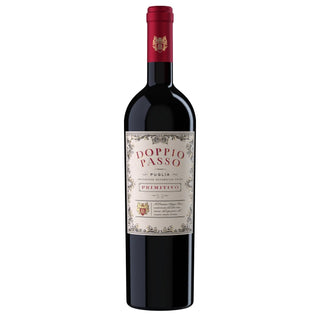
That is exactly why the key to finding a cheap wine that still tastes good is "does it use good raw material even with an affordable method." For example the Doppio Passo Primitivo from Puglia, which Swirl imports as the first and exclusive importer in Japan, draws concentrated fruit from a double harvest (doppio passo means "two passes") while still coming in under 3,000 yen. That comes from an efficient method and from us importing directly, cutting out the extra middle steps.
Why wine looks expensive in Japan (this part is uniquely Japanese)
Have you ever been surprised on a trip that "wine is cheap here"? That is not your imagination. By the time it reaches Japan, costs that are specific to Japan are always added.
- Shipping and the reefer: Italy to Japan is roughly a one to two month sea voyage. In summer we move wine in a reefer (temperature-controlled) container so it is not damaged by heat. It costs more than ordinary shipping, but it is essential to protect quality.
- Liquor tax: In Japan, wine (fruit liquor) is subject to liquor tax too. The October 2023 revision raised the rate, and it is gradually being unified with sake and others. It is not as high as on beer, but it is added to every bottle.
- Customs duty actually does not apply: Less well known, the Japan-EU Economic Partnership Agreement (EPA) that took effect in February 2019 abolished the tariff on EU wine. In other words the tariff on Italian wine is zero. The main cause of the markup is not customs, but shipping, liquor tax, exchange rates and distribution.
- Exchange rate (a weak yen): We buy in euros, so when the yen weakens the purchase cost rises directly. Much of the recent apparent price rise in wine comes from this.
- Layers of distribution: The more steps from importer to wholesaler to retailer, the more each margin is added. The more a shop imports directly from the producer, the more this can be compressed.
Here is one Italian story about "packaging and price." Tuscany has a distinctive bottle called the fiasco (the round-bottomed Chianti bottle wrapped in straw). The straw basket protects the bottle from knocks and lets the glass keep a round bottom, which is simpler to blow, so the glass was easier to make. They also stack efficiently for transport. In the early 20th century about 30,000 people worked on weaving these straw baskets, centered in Empoli near Florence. The fiasco of Chianti sat on the tables of "peasants and popes alike," a true symbol of the everyday bottle (in 1965 its status was revisited as a container reserved for DOC wine). Even a container holds both price and the life of its land.
The conclusion for a Japanese home is simple. Everyday meals are plenty delicious with wine in the 2,000 to 3,000 yen range, and in fact that is the band each brand pours the most effort into. For a weekend when you want something a little better, or for a gift or an anniversary, choose from 4,000 yen and up. This split is the best balance of satisfaction and your wallet.
The grape variety changes the price too
Even with the same region and the same producer, the grape variety shifts the price's "starting point." This has nothing to do with taste and everything to do with how easy the grape is to grow and how much it yields.
For example, Nebbiolo in Piedmont (the grape of Barolo) and Pinot Noir in Burgundy are prone to disease, hard to time at harvest, and do not yield much. Because they take so much work, they are inevitably expensive. On the other hand Primitivo from Puglia and the white grapes of southern Italy soak up the sun and ripen healthily and fully, so good quality is easy to deliver at an affordable price.
So "cheap" does not mean "cut corners." Often it means a way of growing and making that is natural for that land and grape, which comes out at an affordable price. The reason southern Italian and Sicilian wines are praised for value is a solid one: the good match between climate and grape. Paying for the delicacy of Pinot Noir, and enjoying the sunny fruit of Primitivo affordably, are both smart choices.
Critic scores, such as the well-known Robert Parker points, also affect price. A high score sends demand soaring and lifts the price regardless of cost. Scores are useful as a reference, but it is worth remembering that a score is not the same as your taste.
How to think about "fair price": choose by satisfaction
So, how much is "right"? What I tell customers is to think not about price itself but "satisfaction for the occasion, divided by price." Opening a 10,000-yen wine on a weeknight, then being too tense to enjoy its real flavor, is not high satisfaction. Conversely, a 1,000-yen wine on an anniversary feels a little thin. In other words the fair price is set by the occasion, not by the wine's rank.
At home, I recommend keeping three price tiers on hand. A weekday 2,000-yen range by the case (buying in bulk drops the per-bottle price further), a few bottles in the 3,000 to 4,000 yen range for weekends and guests, and one special bottle for an anniversary. With that in place, you choose naturally by the mood and budget of the day. Even if you cannot finish a bottle, a vacuum pump or decanting into a small bottle keeps it good for two or three days, so you can open a slightly better wine without hesitation.
And whatever the price, temperature is what tells in the end. A white over-chilled closes its aromas, a red too warm shows only alcohol. In summer, Sangiovese and Primitivo become remarkably better at even the 2,000-yen level if you chill them in the fridge for just 20 to 30 minutes to around 15 to 18 degrees. Drinking the bottle you already have at the right temperature often lifts satisfaction more than buying a dearer one.
Swirl's picks by price band
Here is the lineup from the Swirl cellar by price band. Prices are tax-included; check the latest stock and price on each product page.
| Price band | For which occasion | Recommended bottle |
|---|---|---|
| 2,000s yen | Everyday table, an easy bottle to open | Doppio Passo Primitivo / Moscato |
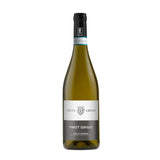
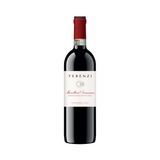
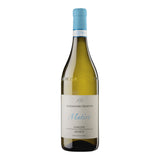
| 3,000s yen | Weekends, guests, a slightly better everyday | Prosecco, Soave, Pinot Grigio, Morellino |
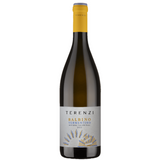
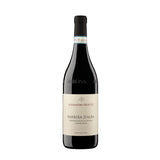
| 4,000s yen | A small treat, an entry-level gift | Balbino, Langhe Arneis, Barbera d'Alba |
| 7,000s yen and up | Anniversaries, special gifts | Petaluma Gap Pinot Noir, Napa Valley Bon Ton Red |
As the everyday bottle, the one I recommend first is the Primitivo from Puglia.
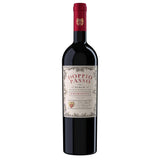
2,000s yen. Concentrated fruit, the value benchmark (first and exclusive import in Japan)
Doppio Passo Primitivo 2024Doppio Passo
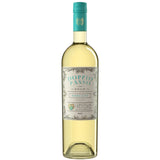
2,000s yen. Sweet, gentle and lightly sparkling, for dessert or after dinner
Doppio Passo Moscato 2024Doppio Passo
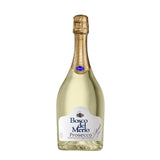
3,000s yen. The aperitif bubbles, a versatile staple
Prosecco Millesimato Brut 2024Bosco del Merlo
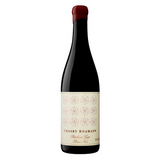
7,000s yen. A delicate cool-climate California Pinot, for a special day
Petaluma Gap Pinot Noir 2022Crosby Roamann
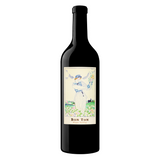
8,000s yen. Napa's confident red, a gift for an anniversary
Napa Valley Bon Ton Red 2022Crosby Roamann
How to choose without missing (by price)
When price has you stuck, working back from the occasion keeps you from going wrong. Start from the direction you like.
- Pure value, buying by the case → Doppio Passo Primitivo (the 2,000-yen red staple)
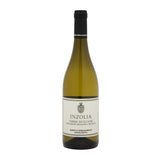
- An affordable everyday white → Pinot Grigio or Soave
- Lifting the weekend table a notch → Morellino or Barbera d'Alba
- An anniversary or gift you cannot get wrong → Petaluma Gap Pinot Noir or Bon Ton Red
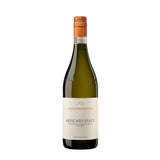
- Something sweet and comforting after dinner → Moscato d'Asti or Doppio Passo Moscato
To learn more about thinking in price tiers, see our how to choose wine and everyday Italian wine guides.
Frequently asked questions
Q. Are more expensive wines always better?
A. Not necessarily. Price is set by cost and scarcity, and whether it suits your taste is a separate thing. Even at the 1976 Judgment of Paris, professionals rated a cheap wine above an expensive one. For everyday satisfaction, the 2,000 to 3,000 yen range is often the star.
Q. Is it true that cheap wine is bad for you or gives you a headache?
A. There is no direct link between price and a hangover. Most headaches come from drinking too much or not enough water. Regardless of price, the best measure is to enjoy it slowly alongside the same volume of water.
Q. Is there a tariff on Italian wine?
A. No. The Japan-EU EPA that took effect in February 2019 abolished the tariff on EU wine. The main reasons it looks dear in Japan are shipping, liquor tax, exchange rates and distribution cost, not customs.
Q. Why is it more expensive in Japan than locally?
A. Because sea freight (a reefer in summer), Japan's domestic liquor tax, the exchange rate on euro-denominated purchases, and the layers of distribution are all added. The more a shop imports directly from the producer, the more that markup can be held down.
Q. How do I spot a good wine in the 2,000-yen range?
A. The key is "does it use good raw material even with an affordable method." Choose something that streamlines harvest and winemaking yet still shows the character of its region. Primitivo from Puglia and the whites of Sicily are top of the class in this band.
Once you understand what is inside the price, choosing wine becomes much more relaxed. Pick by the occasion, and choose with your shoulders loose.
References: Ministry of Foreign Affairs, "Japan-EU Economic Partnership Agreement (EPA)" (in force February 2019); National Tax Agency, "Materials on Liquor Tax"; "Judgment of Paris" (1976) and "Fiasco (bottle)" (English Wikipedia, on the history of the container). Liquor tax rates and exchange rates change over time.


Comments (0)
There are no comments for this article. Be the first one to leave a message!