

The biggest difference between white and red wine is not the color but the method. Red is fermented with the grape skins and seeds left in the juice, which gives it color and tannin (that drying grip). White is fermented from the juice alone, so it is pale and has almost no tannin. People assume it comes down to black grapes versus white grapes, but the real fork in the road is whether the skins are macerated with the juice. I am Federico, and I pour Italian wine in Tokyo. Once you grasp this one point, both the taste differences and the food pairings fall neatly into place.
A common misconception: "red with meat, white with fish" is not a law
It is the rule everyone hears, but taking it literally costs you. The heart of pairing is not meat versus fish; it is matching the weight of the dish, its fat and the intensity of its seasoning to the weight and tannin of the wine. A rich teriyaki yellowtail can sit better with a soft red than a light white. Conversely, a delicate dish like chicken mizutaki lets a fine white shine. Treat the rule as a starting point, then fine-tune by matching weight.
The taste differences at a glance
| Item | White wine | Red wine |
|---|---|---|
| Color | Pale yellow to gold | Ruby to deep purple, brick with age |
| Tannin (grip) | Almost none | Present (varies a lot by grape) |
| Main aromas | Citrus, green apple, white flowers, herbs | Red fruit, black fruit, spice, oak |
| Serving temperature | 8 to 12C (well chilled) | 14 to 18C (slightly cool is the modern style) |
| Range of body | From light and dry to rich, oak-aged | From light reds to full-bodied and powerful |
So "white is light, red is heavy" is too simple. An oak-aged Chardonnay is a substantial white, and light reds certainly exist. That is exactly why choosing by the yardstick of weight leads to fewer misses.
The difference in how they are made (in plain terms)
For red wine, crushed black grapes go into the tank together with their skins and seeds and ferment that way. During this stage, called maceration, pigment and tannin dissolve out of the skins. For white wine, the grapes are usually pressed straight away and only the juice ferments, so the color stays pale and no grip develops. Incidentally, if you macerate white grapes on their skins too, you get an amber, gently grippy orange wine. It clicks once you see that skin-contact time is what sets the color.
How the style changes by region
Even within one country, the balance of white and red shifts with the climate of the region. In the sunny south, Puglia and Sicily, the reds are rich in fruit with rounded tannins, and the whites gain body too. In the cooler north, Veneto and Friuli, the whites are defined by crisp acidity and suppleness. At the Italian table, red or white is chosen quite naturally by the dish and the season, with no rigid rules.
Enjoying it in Japan: match the weight first
To pair with Japanese home cooking, I look at the weight of the dish first. For delicate washoku like sashimi, yudofu or tempura, a crisp dry white. For richly flavored dishes like sukiyaki, teriyaki or simmered stews, a soft red. That single move, matching weight, carries almost any table. Chill whites well, and in summer give reds about twenty minutes in the fridge. Worth remembering.
Veneto's local cooking shows what a white is really capable of. Venice has a specialty called baccala mantecato, salt cod whipped with olive oil into a pure-white mousse, served on a slab of grilled polenta (set cornmeal porridge) as a standing-bar snack, a cicchetto. Locals reliably pair it with their own Garganega white, Soave. A clean-acid white leans into the powerful savor of the fish. In Japanese terms it is close to pairing a chilled white with dried fish or sake-steamed clams, an idea you will want to copy the moment you hear it.
Federico's picks
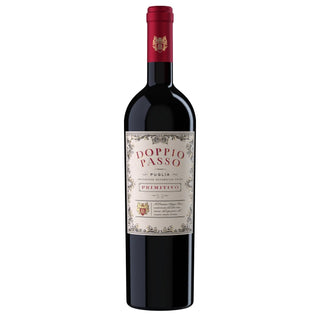
For a first red, the bottle I most often pour is Doppio Passo Primitivo. A black grape soaked in the sun of Puglia in the south of Italy, it has soft tannins and plump, ripe fruit. It is an easy way to feel the "skin-derived depth" of red, and it goes well with richly flavored Japanese dishes like sukiyaki and teriyaki.
For white, try the Veneto Soave (Garganega) mentioned above, or the light, food-friendly Pinot Grigio. Set out one red and one white, drink them against the same dish, and your body learns the difference.
How to choose, and temperature tips
- Match the weight of the dish. Light food to white, rich food to red is the core axis.
- Chill whites well (8 to 12C). Too cold shuts down the aromas, so take the bottle out a little before serving.
- Serve reds slightly cool (14 to 18C). In summer, a quick 20-minute chill makes them surprisingly easy to drink.
- When in doubt, start with one of each. Tasting them against the same dish is the fastest way to learn the difference.
For how to think about body (weight), see what wine body means, and for a detailed temperature chart, our wine serving temperature guide.
Frequently asked questions
Q. Are white and red wine made from different grapes?
A. Whites usually come from white grapes and reds from black grapes, but the deciding factor is whether the skins are macerated. You can even make a white from black grapes (blanc de noirs).
Q. I do not like the grip of red wine. How should I choose?
A. Pick grapes with gentle tannin. Primitivo and Merlot have soft grip and make good entry points into red.
Q. Should I follow "red with meat, white with fish"?
A. It is a handy starting point but not absolute. Matching the wine's weight to the dish's weight and seasoning is more reliable.
Q. Should I serve white and red at different temperatures?
A. Yes. Chill whites well at 8 to 12C, and serve reds slightly cool at 14 to 18C, which is the current norm. Temperature changes the impression a great deal.
Q. One common mistake to avoid?
A. Serving red at room temperature (Japanese indoor temperature). In summer especially it runs too warm and turns blurry. Just a little chilling transforms it.

Comments (0)
There are no comments for this article. Be the first one to leave a message!