

Once you can read four things on an Italian wine label, the producer, the appellation (place), the classification, and the vintage, you already know about eighty percent of what a bottle is. Italian labels look harder than French ones because there are more appellations and a lot of local dialect, but if you fix the order in which you read them, the time you spend stuck in front of the shelf drops fast. I am Federico, and I import and pour Italian wine in Tokyo. Here is the exact way I read a label on the buying floor.
A common misconception: DOCG is not "better" and IGT is not "lower grade"
The most frequent mistake is treating the classification as a quality ranking. DOCG, DOC and IGT only certify which region a wine comes from and which rules it was made under. They are not a score for taste. In fact, some of Italy's most expensive wines deliberately sit outside the top tier and label themselves "IGT Toscana" (the so-called Super Tuscans). Read the classification as a certificate of origin, and read quality as the work of the producer. That separation is the first step.
What is always on the label
There is a front label and a back label. Start with the front.
| Item | How it appears, and what it means |
|---|---|
| Producer | The single most worthwhile thing to remember. Knowing one trustworthy producer protects you more than knowing the grape. |
| Wine name / appellation | Often the place name is the wine name, as in "Morellino di Scansano." |
| Classification | Four tiers: DOCG, DOC, IGT, Vino. Printed small, usually just under or beside the appellation. |
| Vintage | The year the grapes were harvested. A guide to drinking window and aging. |
| Extra terms | Riserva, Classico, Superiore and the like. More on these below. |
| Alcohol / volume | Alcohol hints at body. As a rule of thumb, 13.5% or higher means a fuller style. |
The back label usually carries the bottler (Imbottigliato da), the grape variety, and tasting or pairing notes. In Japan the importer's Japanese sticker goes here too.
The classification pyramid, and three words worth knowing
Italy's classification runs in four tiers. Higher does not mean more luxurious; think of it as how tightly the origin is defined and how strict the rules are.
| Tier | What it means (in plain terms) |
|---|---|
| DOCG | Controlled and Guaranteed Designation of Origin. Place, grapes and method are the most tightly defined, with an official tasting check before release. |
| DOC | Controlled Designation of Origin. The tier below DOCG, with a defined region and rules. |
| IGT | Protected Geographical Indication. A looser regional frame that lets producers express their own style. Super Tuscans live here. |
| Vino | Wine with no regional limit. The unpretentious everyday bottle. |
And these are the three extra terms you will see most often. Riserva is an upper cuvee aged longer than standard. Classico means the wine comes from the historic heartland of its region (for example, Chianti Classico). Superiore means it clears a higher bar, often in alcohol. Reading just these three words already reveals the grade differences within the same shelf.
How the naming changes by region
Each region has its own habit for naming. Tuscany and Piedmont tend to name the wine after the place (Morellino di Scansano, Barolo), while Veneto and Friuli tend to put the grape up front (Pinot Grigio, or Garganega in Soave). So if the grape is not printed, do not panic. Once you know the place, the main grape is usually fixed. When you can read "Morellino di Scansano" as "Sangiovese," the label turns into a treasure chest of information.
Enjoying it in Japan: how to choose in three seconds at the shelf
When choosing in a Japanese shop or online, I always look in this order: producer, then appellation (place), then vintage. Many people start from the grape, but if you have the producer and the region, you will rarely go wrong. The importer line on the back label is also a clue to whether the company takes temperature-controlled shipping seriously.
There is a whole way of life hidden in the names on a label. The home of the Morellino di Scansano I carry, the Maremma in Tuscany, is still cattle country where cowboys (called butteri) work the herds on horseback. In fact, "Morellino" is said to come from the "morelli," the dark bay horses that once pulled the carriages of officials summering in Scansano. It is a nickname that reads the horses' strength and the deep color of their coats into the color and character of the wine. Behind a single word on the label sits a Maremma landscape where horses and vineyards share the same ground. Once you know that, the same glass feels a great deal closer.
Federico's picks
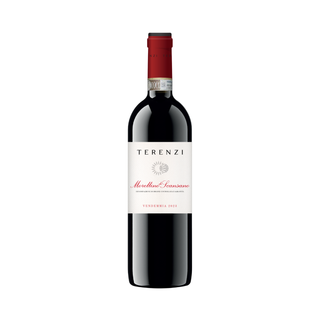
To practice reading a label, the bottle I most often pour is Terenzi's Morellino di Scansano. The label carries the "Morellino di Scansano" appellation, the "DOCG" mark and a Sangiovese place name all together, which makes it an ideal teaching bottle. Inside, it is a dry red with red-fruit aromas and soft tannins that sits happily alongside Japanese food.
To see what "Riserva" actually does, try Terenzi's Madrechiesa. Tasting it beside the standard bottle shows clearly how the extra aging adds depth.
How to choose: a fail-safe reading order
- Look at the producer first. If you recognize even one name, start there and build out.
- Then the appellation (place). The region tells you the likely grape.
- Judge the drinking window by the vintage. Fresh years for light whites and roses; a few years of age can suit fuller reds.
- Use Riserva / Classico / Superiore to read grade differences within the shelf.
- Treat the classification tier as origin information, not a guarantee of taste.
For more on the tiers, see our introduction to Italian wine classification, and for the story of the region, our Morellino di Scansano guide.
Frequently asked questions
Q. Is a DOCG wine always better than a DOC?
A. No. The classification is a category for origin and method, not a quality score. There are many excellent DOC and IGT wines.
Q. Why is the grape sometimes not on the label?
A. In Italy the appellation already fixes the permitted grapes by rule, so it is often left off. If you know the place, you can almost always identify the grape.
Q. What is the difference between "Riserva" and a standard bottling?
A. Riserva is aged longer than the rules require and is usually rounder and more complex. It also costs a step more.
Q. Is a newer vintage always better?
A. It depends on the wine. Light whites and roses are attractive fresh, while fuller reds can be at their best after a few years.
Q. One common mistake to avoid?
A. Writing off an "IGT" as lower grade based on the tier alone. Remembering one producer's name is a far more reliable shortcut.


Comments (0)
There are no comments for this article. Be the first one to leave a message!