

Wine blending is the winemaking technique of combining multiple grape varieties or vineyard plots to create a more complex and stable wine. It is often contrasted with "single-varietal" wines (monovitigno in Italian), but neither approach is inherently superior — the choice is shaped by the winemaker's philosophy and regional tradition. Having imported Italian wines to Japan for years, this is the question I have encountered most often.
A Common Misconception: Is Blending Low Quality?
Many people wonder whether blending is a way to "disguise" grape varieties. Yet some of the world's most expensive wines are blends. Bordeaux's Grand Crus combine Cabernet Sauvignon and Merlot; Champagne blends Pinot Noir, Pinot Meunier, and Chardonnay. Blending is about complementation, not deception. On the other side, producers crafting wines like Puglia's Primitivo or Tuscany's Morellino deliberately choose to maximize a single grape's character. Both are valid approaches.
Why Blend?
| Purpose | What Blending Achieves |
|---|---|
| Structural reinforcement | Adds acidity or structure to low-tannin varieties |
| Aromatic complexity | Layers multi-dimensional aromas a single variety cannot achieve alone |
| Stability and yield | Mixes weather-resistant varieties to reduce bad-harvest risk |
| Style consistency | Smooths vintage variation to maintain a house character |
Styles by Region
| Region | Signature Style | Key Composition |
|---|---|---|
| Bordeaux (France) | Bordeaux Blend | Cabernet Sauvignon + Merlot (plus or minus Cabernet Franc) |
| Champagne (France) | Non-Vintage | 3 varieties + multi-year reserve wines for consistent quality |
| Tuscany (Italy) | Super Tuscan | Sangiovese + Cabernet and other international varieties |
| Puglia (Italy) | Monovitigno | 100% Primitivo: powerful single-varietal style |
There is a fascinating historical fact about Italian blending worth knowing. Tuscany's celebrated Chianti was legally required to include white grapes (Trebbiano Toscano, Malvasia) from the 1967 DOC regulations until 2006. The recipe was proposed by 19th-century Baron Bettino Ricasoli and written into law, originally intended to make the wine more approachable. Ironically, it also contributed to producing pale, weak Chianti at scale. The rule is still a cherished story among local producers today, yet almost no one in Japan knows about it. Since the regulation was abolished in 2006, the quality of Tuscan reds has improved dramatically.
How to Enjoy in Japan
The easiest way to explore blending in Japan is to taste a single-varietal and a blend from the same region side by side. When pairing with Japanese food, single-varietal delicacy (for example, the light red-fruit quality of 100% Sangiovese Morellino) tends to work well with simmered dishes and grilled fish, while a blend's roundness and complexity often meshes better with hot-pot dishes and multi-ingredient cooking.
If you do not have a wine cellar, serve reds around 15 to 17 degrees Celsius (take them out of the fridge about 20 minutes ahead), and serve sparkling blends well chilled at 6 to 8 degrees. For everyday drinking, single-varietal Italian wines with a clear region and grape offer excellent value.
Federico's Recommendation
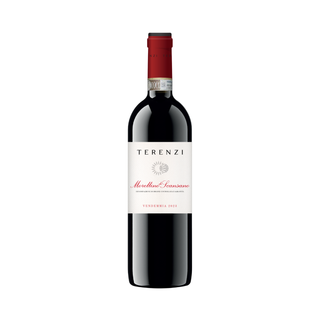
To understand blending, it helps to experience its opposite: the pure power of a single variety. One wine I often pour is Morellino di Scansano by Terenzi, from the Maremma in Tuscany. 100% Sangiovese, fermented in temperature-controlled stainless steel: fresh red-fruit aromas and an elegant tannic backbone. It is the bottle for when you want to taste the grape's honesty rather than complexity. As a standard-bearer of a Tuscan region that once carried the weight of mandatory white-grape blending, it embodies the liberation that single-varietal wines now enjoy.
Tips for Choosing and Comparing
- To taste varietal character: choose a monovitigno (single varietal)
- To broaden food-pairing options: choose a blend
- For everyday drinking: single-varietal Italian wines deliver excellent value
Related articles: Introduction to Italian Wine Classifications (DOCG, DOC, IGT), What Are Super Tuscans?
Frequently Asked Questions
Q. What is the difference between a single-vineyard wine and a blend?
A. A single-vineyard wine uses grapes from one specific plot only. The variety can be singular or multiple. Blending refers to combining grape varieties, plots, or sometimes vintages.
Q. Do blended wines list grape varieties on the label?
A. In Europe there is no mandatory requirement to display variety proportions. Appellation designations such as Bordeaux AOC serve as a general guide. Check the back label if variety information is listed there.
Q. Are all Super Tuscans blends?
A. Most are blends of Sangiovese and Cabernet, but some are made entirely from Cabernet or Sangiovese within the IGT designation.
Q. Is "cuvee" the same as a blend?
A. The French word cuvee literally means contents of a vat and often refers to a blended lot, but it can also be used for single-varietal batches.
Q. Is a blend the same as a house wine?
A. House wines are often mass-produced blends, but blending spans everything from Bordeaux first growths to everyday wines. Using the region and producer as a guide will help you choose well.


Comments (0)
There are no comments for this article. Be the first one to leave a message!