

"Tasting is only for sommeliers" — sound familiar? In fact, even professional wine evaluation comes down to 4 fundamental steps. By observing appearance, aroma, palate, and finish in that order, you can read a wine's quality, origin, and food pairing potential. No special tools or expertise required — just one glass.
The 4 Fundamental Steps of Wine Tasting
Step 1: Observe Appearance
Hold the glass against something white (a napkin or white paper) and assess color and clarity. In red wines, a deep purple hue indicates youth, while an orange-tinged brick color signals maturation. White wines deepen from pale lemon to gold as body increases or as the wine ages. If the rim (edge) is lighter than the center, color evolution has begun.
Step 2: Assess Aroma
First smell the wine without swirling — that is your first impression. Then swirl gently clockwise and smell again. The difference before and after is called "opening." In reds, look for dark fruit, spice, earth, and leather. In whites, focus on flowers, citrus, butter, and mineral notes.
Step 3: Evaluate Palate
Take a small sip and let it coat your entire tongue. Assess 5 elements: sweetness, acidity, tannin (reds only), alcohol (warmth), and body (weight). In Japan, astringency and tannin are often confused — tannin is the drying, gripping sensation on tongue and gums, quite distinct from bitterness. High acidity naturally stimulates salivation.
Step 4: Note the Finish
The length of flavor remaining after swallowing is the "finish." Higher-quality wines have longer finishes, sometimes 15 to 30 seconds or more. A short finish signals easy drinking; a long one indicates complexity. The quality of the finish is one of the most important indicators of a wine's caliber.
What Tasting Reveals About Italian Regions
| Region | Appearance | Aroma Profile | Tannin / Acidity |
|---|---|---|---|
| Puglia | Deep ruby to purple | Dark plum, spice, chocolate | Rich tannin, gentle acidity |
| Piedmont | Lighter ruby | Rose, tar, cherry, earth | Firm tannin, high acidity |
| Veneto | Bright ruby (red) / lemon to gold (white) | Fruity, herbal, mineral | Light to medium |
| Tuscany | Medium ruby | Cherry, leather, violet, tobacco | Well-balanced |
Italian Wines Must Pass an Official Tasting Panel
Italy's DOCG system is a prime example of tasting as quality assurance. Every DOCG wine, including Chianti Classico, must pass a mandatory blind tasting by an official committee (Comitato di Degustazione) before release. Fail, and no DOCG seal is awarded — the wine cannot call itself DOCG. This "mandatory sensory evaluation" system has no equivalent in the Japanese wine market, and is a vivid reminder of how professional tasting shapes the quality of what ends up in your glass.
Federico's Recommendation for Practice
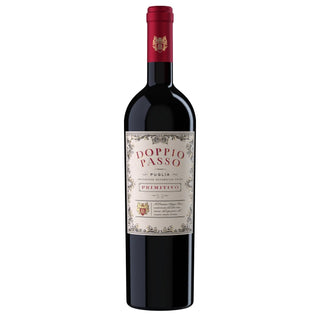
To work through all 4 steps, choose something expressive but not overwhelming, like Doppio Passo Primitivo. Grown on the fertile soils of Puglia, this Primitivo delivers deep ruby color, aromas of dark plum and spice, velvety tannins, and a long finish. All 4 steps come alive in a single bottle. A great daily wine that doubles as a tasting classroom.
Serving Temperature and Pairing Tips
For tasting practice, reds at 15 to 18 degrees Celsius and dry whites at 8 to 10 degrees are the most workable temperature ranges. If tannins linger, pair with beef or aged cheese; if acidity persists, go for seafood or vegetable dishes. For a deeper dive into wine vocabulary, see our Wine Tasting Terms Guide.
Frequently Asked Questions
Q. Does it matter which direction I swirl?
Clockwise is conventional, but there is no formal rule. The goal is simply to release aromas.
Q. What glass should I use for tasting?
A tulip-shaped universal wine glass is the most versatile option. Aim for 280 to 400ml capacity.
Q. Can I spit instead of swallowing?
Professional tasters routinely spit. The finish lingers in the mouth regardless, so full evaluation is possible without swallowing.


Comments (0)
There are no comments for this article. Be the first one to leave a message!