

What Is Friuli-Venezia Giulia Wine?
Friuli-Venezia Giulia is a small but exceptional white wine kingdom tucked in the far northeast corner of Italy. Bordered by Austria and Slovenia, and facing the Adriatic Sea, this compact region accounts for just a few percent of Italy's total wine production. Yet from legendary sub-zones like Collio and Colli Orientali comes some of the country's most acclaimed white wine: Pinot Grigio, Friulano, and Ribolla Gialla. If southern Sicily defines Italy's great reds, northeast Friuli defines its finest whites.
Common Misconception: Pinot Grigio Is Not Thin or Cheap
In Japan, many people assume Pinot Grigio means light, watery, inexpensive wine. That impression comes from mass-produced Veneto-plain styles. Friuli's Collio and hillside Pinot Grigio is a completely different animal: mineral, layered, and complex. What's less well-known is that Pinot Grigio grapes have a naturally copper-tinged skin. Soak those skins just a little longer and you get a beautiful natural rosé. The very name "grigio" (Italian for grey) refers to the variety's distinctive skin color.
Flavor Profile
| Characteristic | Profile |
|---|---|
| Body | Light to medium |
| Acidity | Moderately high (Alpine air keeps it bright) |
| Tannins | Virtually none |
| Aromas | White peach, almond, citrus blossom, gentle spice |
| Serving temperature | 8-10°C (well chilled) |
Styles by Sub-Zone
| Sub-Zone | Soil and Style |
|---|---|
| Collio | Hillside zone on the Slovenian border. Sandy marl called "Ponca" delivers tension and minerality. Friulano and Ribolla Gialla shine here. |
| Colli Orientali del Friuli | Southeast of Collio. Home to native Verduzzo and the sweet Picolit wine. Also a red wine zone worth exploring. |
| Grave del Friuli | Flat alluvial gravel soils. The largest Pinot Grigio and Chardonnay zone. Fresh, easy-drinking styles. |
| Carso | Limestone plateau near Trieste. The native Vitovska grape delivers a salty, distinctive bitterness. Home of the osmizza tradition. |
A note on winemaking: many Friuli whites are made at low temperatures to preserve aromatics. The region is also a pioneer of orange wine (extended skin-contact whites in clay amphorae or large barrels). Winemakers like Radikon brought this style to global attention in the 1990s.
Enjoying It in Japan: The Osmizza Tradition
There's a unique tradition from Friuli I love sharing: the osmizza. In 1784, Emperor Joseph II of the Habsburg dynasty gave farmers in the Carso a special right: they could sell their homemade wine and farm produce tax-free, for eight days each year. The name comes from the Slovenian word osem, meaning eight. Even today, every spring and autumn, farmhouses near Trieste hang a frasca, a green branch, outside their door. Locals follow these branches to simple tables, sharing prosciutto and a glass of the new vintage. No reservation, no sign, just word of mouth. That is the spirit of Friuli wine: unpretentious and rooted in daily life.
In Japan, I recommend Friuli whites with:
- White-fish sashimi or carpaccio. The delicate acidity and minerality harmonize beautifully with soy and dashi.
- Steamed chicken or tofu dishes. The wine stays in the background and lets the ingredients speak.
- Well chilled (below 8°C) in summer. In winter, try 12°C to coax out the almond and roasted-tea nuances.
Federico's Pick
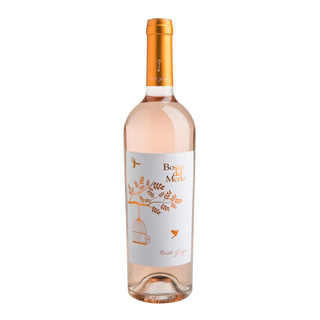
My go-to is the Bosco del Merlo Pinot Grigio Rosé. Technically from the Piave DOC in Veneto, this estate sits close to the Friuli border and perfectly captures the northeast Italian Pinot Grigio rosé spirit. The copper skin of the Pinot Grigio grape is expressed honestly here as a pale rosé. Less like a rosé, more like Pinot Grigio showing its true face. A great food wine that never gets tiring.
I also often pair it with the Tenuta Grimani Pinot Grigio (Venezie DOC), an organically certified producer making clean, fruit-forward wine. Fresh and accessible for everyday drinking.
How to Choose, When to Drink, Similar Regions
For a rosé, look for Pinot Grigio Rosé from the Piave or Venezie DOC. For an almond-citrus white, seek out Friulano or Grave del Friuli Pinot Grigio. Drink within one to three years of release for the freshest aromatics. For a similar experience, try Alsace Pinot Gris from France: same grape, richer style. Friuli is the lighter, crispier entry point.
FAQ
Q: What is the difference between Friuli and Veneto Pinot Grigio?
Friuli's hillside Collio wines have greater minerality and complexity from their layered soils. Veneto plain wines are fresher and lighter. Both are excellent food wines; choose by the occasion.
Q: How does Pinot Grigio Rosé happen naturally?
Pinot Grigio has copper-pink pigment in its skin. Press immediately and you get white wine. Leave the skins in contact a little longer and you get a natural rosé, with additional polyphenols that add complexity.
Q: What is the link between Friuli and orange wine?
Friuli is one of the birthplaces of modern orange wine (white wine made with extended skin contact). However, most standard Friuli whites are made in the classic clear style. Look for the words "ramato" or "skin contact" if you want the orange style.
Q: Where can I buy Friuli wine in Japan?
Imports are limited and often specialist-shop only. At Swirl Wine we carry a Pinot Grigio Rosé from northeast Italy adjacent to Friuli. Great acidity-to-umami balance, and a very approachable starting point.


Comments (0)
There are no comments for this article. Be the first one to leave a message!