

Maremma — the vast marshlands and pastures along Tuscany's Tyrrhenian coast — has always had a dish at the center of its table: acquacotta, which literally means "cooked water." A simple peasant soup of stale bread, tomatoes, celery, eggs, and olive oil, it was the daily meal of the buttero, Maremma's legendary cowboys, and the charcoal workers who roamed these wetlands for centuries. The wine locals have always poured alongside it? Vermentino. Its bright acidity cuts right through the richness of the broth. Outside Italy this pairing is virtually unknown, and it tells you exactly what kind of wine Vermentino is.
What You'll Learn
- What Vermentino is as a grape variety
- The character and background of Maremma Toscana DOC
- Flavor profile and food pairings
- How to enjoy Terenzi "Balbino," available at Swirl
What Is Vermentino?
Vermentino is a white wine grape grown along the Ligurian coast of northwest Italy, throughout Sardinia, and along the Tuscan shoreline. In Provence, France, it goes by "Rolle." Grown close to the sea, it picks up a saline, mineral character that gives it a freshness quite unlike landlocked varieties like Chardonnay. Think sea breeze and limestone rather than oak and butter.
Flavor Profile
| Attribute | Character |
|---|---|
| Color | Pale gold with green reflections |
| Aromas | Grapefruit, green apple, white flowers, herbs, sea salt |
| Palate | Dry, light-to-medium body, crisp acidity, slight bitter finish |
| Tannins | None (white wine) |
| Alcohol | Approx. 12.5–13.5% |
| Finish | Medium length, fresh and clean |
About Maremma Toscana DOC
Maremma runs along Tuscany's southern coast, and while it's best known for bold reds like Morellino di Scansano and Bolgheri, the salty sea winds and limestone soils make it equally ideal for Vermentino. The Mediterranean climate, with warm dry days and cool nights, concentrates aromatics while preserving natural acidity.
Maremma Toscana DOC, established in 2011, is a relatively recent appellation that encompasses Vermentino alongside several other white varieties. As a broad framework for the region's diversity, it has been gaining attention among Italian wine enthusiasts.
Pairing With Japanese Food
Vermentino is a seafood white. It shines alongside sashimi, white fish carpaccio, acqua pazza, salt-grilled fish, and steamed shellfish — essentially anything from the Japanese sea table. Its saline minerality finds a natural home in dishes with olive oil-based dressings.
A pairing that went down particularly well at a Swirl tasting: chilled tofu with salted kombu seaweed and a drizzle of extra-virgin olive oil. The wine's salty mineral edge amplifies the umami of the kombu beautifully.
Federico's Pick: Terenzi "Balbino"
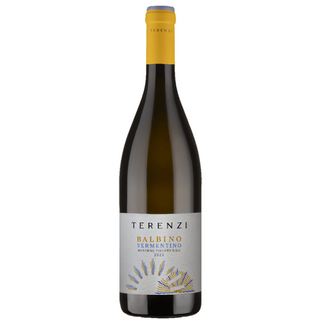
The wine we have brought to Japan is Balbino by Terenzi, a family estate based in Scansano at the heart of Maremma. The Terenzi family has a deep attachment to local varieties and a farming approach that prioritizes terroir over intervention.
Balbino is fermented in stainless steel at low temperatures to preserve its fresh aromas: grapefruit and Williams pear layered with a whisper of sea-salt minerality from those Maremman winds. The pleasantly bitter finish is exactly what a wine lover wants. Serve well-chilled (8–10°C) as an aperitivo and let it speak for itself.
How to Choose
When selecting Vermentino, check the origin first. Sardinian versions (such as Vermentino di Sardegna DOCG) tend to be fuller and richer; Maremma Toscana wines are sharper with more pronounced herbal notes. For Japanese seafood, the leaner Maremma style is the better match. As a fresh-style wine, always choose the most recent vintage available.
Frequently Asked Questions
How is Vermentino different from Pinot Grigio?
Pinot Grigio tends toward neutral and mild; Vermentino has a more distinctive personality: saline minerality, herbal notes, and a slight bitter finish. If you find most white wines blend together, Vermentino is the one to try.
What is the ideal serving temperature?
8–10°C. Take it out of the fridge 15–20 minutes before serving, or cool it briefly in an ice bucket. Too cold and the aromas close up.
Is it sweet or dry?
Dry. The fruity aromas can suggest sweetness, but the palate is firmly dry and crisp.


Comments (0)
There are no comments for this article. Be the first one to leave a message!