

Sardinian wine is the remarkable wine culture of Italy's largest island, floating in the Mediterranean. Cannonau — a powerful red — and Vermentino — a refreshing white — define the island's identity. Centuries of Spanish, French, and African influence have shaped a wine character like nowhere else on earth. Every visit to Sardinia leaves me with a sense of time moving at its own unhurried pace.
The Most Common Misconception About Sardinian Wine
"Southern Italian wine must be heavy and overwrought" — that's the assumption. It's wrong. Cannonau is indeed full-bodied, but Sardinia's characteristic Mediterranean sea breezes and wide diurnal temperature swings give the wines a remarkable freshness and acidity you'd never expect from such a warm climate. Vermentino — the island's signature white — is saline, mineral-fresh, and far lighter than the latitude suggests.
The Two Key Varieties
Cannonau
Cannonau is genetically related to Spain's Garnacha (Grenache) and ripens powerfully in Sardinia's hot, dry limestone terrain. It offers cherry and dried plum fruit, leather-like complexity, and a long aging potential.
| Attribute | Cannonau |
|---|---|
| Body | Medium to full |
| Tannins | Medium, silky texture |
| Aromas | Cherry, plum, spice, leather |
| Alcohol | 13.5–15% |
| Serving temp | 16–18°C |
Vermentino
Vermentino is grown across the entire Mediterranean coast. In Sardinia, Vermentino di Gallura holds the island's only DOCG designation — a mark of how essential this grape is to the island's identity.
| Attribute | Vermentino |
|---|---|
| Body | Light to medium |
| Acidity | Medium to high, saline |
| Aromas | Grapefruit, white peach, herbs, sea spray |
| Alcohol | 12–14% |
| Serving temp | 8–12°C |
The Island of Longevity: The Blue Zone Secret
Here is a remarkable fact. In 2014, demographers Gianni Pes and Michel Poulain identified Sardinia's Nuoro province as having the highest concentration of male centenarians in the world. This research became the founding case study for what National Geographic later termed "Blue Zones." Notably, many of Nuoro's long-lived residents share the daily habit of drinking a small amount of Cannonau. Research suggests that Cannonau from the Nuoro highlands may contain two to three times the flavonoids of other wines, functioning as antioxidants that support vascular elasticity. Wine alone is not the secret to longevity — daily movement, purpose, strong family bonds, and plant-forward diets all play a role. But moderate Cannonau as part of daily life is indisputably woven into the island's culture.
Pairing with Japanese Cuisine (How I Serve These in Tokyo)
Cannonau's boldness pairs surprisingly well with Japan's umami-rich dishes.
- Yakitori (thigh, skin, negima): Charcoal smokiness and Cannonau's spice resonate beautifully
- Kakuni (pork belly) and chashu: Pork fat's sweetness melts into the plum-like fruit
- Beef tataki with salt and lemon: Medium body complements the delicacy of thinly sliced rare beef
Vermentino is outstanding with Japanese seafood.
- White fish sauté and sea bream acqua pazza style: Saline minerality draws out seafood umami
- Bite-size gyoza and prawn spring rolls: Bright acidity cuts through frying oil cleanly
- Hiyayakko (cold tofu with dashi soy): Gentle herbal notes complement the soy and tofu's delicacy
Federico's Pick: A Taste of Vermentino at Swirl
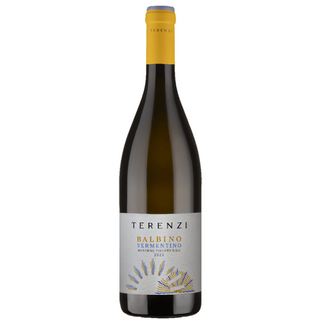
Vermentino is grown not only in Sardinia but across the Mediterranean coast. Terenzi's Balbino Vermentino (¥4,400) — from Maremma, Tuscany — captures the same saline freshness and herbal character as Sardinian Vermentino. The sea breezes off the Tyrrhenian coast give it that coastal Mediterranean soul. A great entry point to understanding what this grape is all about.
Key DOCs and How to Choose
| DOC/DOCG | Variety | Character |
|---|---|---|
| Cannonau di Sardegna DOC | Cannonau | The island's benchmark red, fruit-forward |
| Vermentino di Gallura DOCG | Vermentino | Island's only DOCG, saline and floral |
| Carignano del Sulcis DOC | Carignan | Distinctive red from the south |
When choosing Sardinian wine, start by confirming the appellation name — Cannonau di Sardegna or Vermentino di Gallura. Respected producers include traditional Olianas and modern Argiolas.
FAQ
Q. How does Sardinian wine differ from Sicilian wine?
A. Sicily is famous for heavy reds like Nero d'Avola. Sardinia's sea breezes produce wines with more freshness and acidity. Cannonau, being Grenache-family, has a silkier tannin structure than Sicily's indigenous black varieties.
Q. Is Cannonau the same as Garnacha or Grenache?
A. DNA studies show high genetic similarity. Sardinia's evolution of the variety has resulted in higher acidity and more mineral character compared to Spanish or French Garnacha.
Q. Is Vermentino di Gallura sweet or dry?
A. Dry. Fresh citrus acidity and saline minerality are its hallmarks, with virtually no sweetness. It works from aperitif through the entire fish course.
Q. Can I find Sardinian wine in Japan?
A. Direct imports are limited, but Vermentino-variety wines from the Mediterranean coast are available in Japan. They are a perfect entry point for experiencing what this grape is all about.


Comments (0)
There are no comments for this article. Be the first one to leave a message!