

Soave is a dry white wine produced near Verona in Italy's Veneto region, made primarily from the Garganega grape. Its name comes from the Italian word meaning "graceful and elegant," and it is characterized by soft fruit flavors and a refreshing acidity. Once synonymous with Italian white wine around the world, Soave remains a staple on Japanese restaurant menus and wine lists today.
"Thin" Is Ancient History: Clearing Up the Misconceptions About Soave
If you heard "Soave" and thought "that cheap, watery wine," hold on a moment. During the mass-production boom of the 1970s and 80s, thin, characterless wines flooded the market under the Soave name. But Soave Classico from quality-focused producers is an entirely different animal: complex, mineral-driven wine born from the historic volcanic basalt hillsides east of Verona, with Garganega's signature almond-like finish.
The Flavor Profile and Character of Garganega
Garganega, the soul of Soave, opens with green apple, citrus, and white peach, then develops white flower, almond, and hints of honey as it ages. The acidity is firm but never sharp, and the finish is graceful and long. Two main styles exist: a fresh, stainless-steel-fermented version, and an oak-aged version with added weight and complexity.
| Attribute | Profile |
|---|---|
| Body | Light to medium |
| Acidity | Medium to high, fresh and smooth |
| Tannins | Virtually none (white wine) |
| Aromas | Green apple, citrus, white peach, white flowers; almond and honey with age |
| Serving Temperature | 8–12°C (slightly colder for an aperitif) |
Style by Zone: Three Faces of Soave
| Type | Soil / Zone | Style |
|---|---|---|
| Soave Classico (DOC) | Steep volcanic basalt hillsides, historic zone | Rich minerality, complexity of almond and white flowers, aging potential |
| Soave DOC (extended zone) | Alluvial and clay plains | Fruity, approachable, fresh drinking style |
| Recioto di Soave DOCG | Classico zone, dried grapes (passito) | Sweet white wine with concentrated honey, apricot, and dried fruit |
Stainless steel fermentation dominates to preserve freshness, but a handful of producers age their wines in large casks (botti) for long-term complexity and structure. Because Garganega accumulates sugar easily, harvest timing and fermentation temperature management are the critical quality levers.
Enjoying Soave in Japan: A Marriage with Venice's Hidden Delicacy
Soave is unbeatable with delicate seafood dishes: sashimi, salt-grilled white fish, sake-steamed clams, clam vongole pasta. Its refreshing acidity lifts the umami of the ingredients while cleanly erasing any fishiness.
And this Veneto-born wine has a legendary pairing that is almost completely unknown in Japan: moleche. These tiny soft-shell crabs live only in the Venetian lagoon (laguna), and can only be caught within a few hours of moulting — making them an ultra-rare delicacy. They appear just twice a year, in spring and autumn, and locals fry them whole in a light batter and serve them alongside an ice-cold Soave Classico. The crispy coating and sweet crab meet Soave's mineral acidity in a perfect pairing. Everyday in Venice, virtually unknown anywhere else — this is the food culture born only in this place.
In Japanese kitchens, Soave pairs beautifully with tempura (especially white fish and shrimp), takikomi gohan, and octopus wasabi salad. My personal favorite: a cold glass of Soave as a summer aperitif, poured right before sitting down to eat.
Federico's Recommendation: SWIRL's Soave Selection
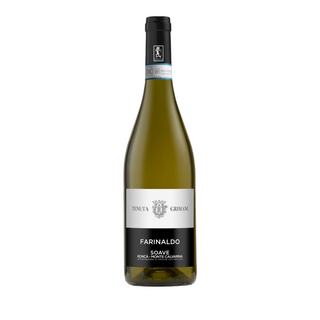
The wine I reach for most often is Farinaldo Soave from Tenuta Grimani. A 100% Garganega cuvée from the Veneto hillside vineyards, it opens with fresh green apple and white peach, followed by clean acidity and a gentle mineral finish. It works as an aperitif or through an entire seafood-focused meal — a bottle where you can taste the natural affinity with Japanese cuisine.
How to Choose, Serve, and Compare
If the label says "Soave Classico," you're getting a quality wine from the historic delimited zone. Expect to pay ¥2,500–5,000, with excellent value at that level. Serve at 8–12°C; take it from the refrigerator 10–15 minutes before pouring.
For similar styles, Pinot Grigio (lighter and fresher) and Vermentino (with mineral and saline notes) are close cousins. Start here for your introduction to Italian whites.
Frequently Asked Questions
Q. What is the difference between Soave and Soave Classico?
A. Soave Classico is limited to the historic hillside zone. The volcanic soil and the dedication of quality producers deliver complexity that is completely different from mass-produced versions.
Q. What kind of grape is Garganega?
A. A white grape variety native to the Veneto, it forms the backbone of Soave (typically 75–100%). Well-balanced in acidity and fruit, it develops almond and honey nuances with age. It also appears in the regional Lugana blend, though it is still relatively unknown in Japan.
Q. Does Soave pair well with Japanese food?
A. Absolutely. It is especially strong with sashimi, salt-grilled white fish, and shellfish (clams, surf clams). The refreshing acidity amplifies the umami of the ingredients while cleanly cutting any fishiness.
Q. Is Soave sweet or dry?
A. Standard Soave is dry. However, Recioto di Soave — made from dried grapes — is a sweet version. If you see "Recioto" on the label, the wine is sweet.
Q. Which Soave should I choose as my first bottle?
A. Look for "Classico" or "Classico DOC" on the label in the ¥3,000–4,000 range. The experience is a world apart from cheap supermarket Soave. SWIRL's Farinaldo Soave is the ideal introduction.
"Unpretentious but never fails" — that is Soave's greatest strength. A white wine that belongs at any table, alongside any dish. Try it once and discover what it really is.


Comments (0)
There are no comments for this article. Be the first one to leave a message!