

Primitivo is the signature black grape of Puglia in southern Italy, making red wines with ripe fruit and a smooth, mellow feel. Sun-drenched southern Italian reds deliver more than their price suggests, which makes them ideal if you are looking for an easy, never-miss bottle. As an importer who pours these wines around Tokyo every day, I, Federico, want to share my recommended Primitivo and a few other southern Italian reds, along with how to enjoy them.
"Dark red means harsh and heavy" is a myth
Many people see Primitivo's deep color and brace for something tannic and heavy. It is usually the opposite: the tannins are soft and round, and ripe plum-like fruit takes the lead. The alcohol can be high, but the texture is very gentle, which makes it a great first red for people new to red wine. And affordable does not mean thin. Southern Italy gets abundant sunshine, so the grapes ripen fully and reach a rich flavor naturally.
Tasting profile
| Item | Tendency |
|---|---|
| Body | Full and generous (medium to full) |
| Acidity | Soft |
| Tannins | Soft and round |
| Aromas | Ripe plum, black cherry, dried fruit, a hint of sweet spice |
| Serving temperature | 16 to 18°C (in summer, lightly chilled to 14 to 16°C) |
How style changes by origin
Even among southern Italian reds, the character shifts with origin and winemaking. The table below is a rough guide.
| Origin / type | Style tendency |
|---|---|
| Puglia (Primitivo) | Fruit-forward and approachable. The everyday classic |
| Manduria (Primitivo di Manduria DOCG) | More concentrated, a step-up style. For special days |
| Sicily (Nero d'Avola) | Fruit plus a touch more structure. A good match for food |
Many of the richer styles come from harvesting a little later for full ripeness, or from lightly drying the grapes to remove water, a technique called appassimento that concentrates the sweet fruit. It sounds technical, but the idea is simply to ripen and concentrate the grapes for a deeper flavor.
One note from the local table. South of Primitivo's Puglian heartland, in the Salento area, there is a twice-baked, hard, ring-shaped bread called frisa (frisella). Farmers and fishermen who spent days in the fields or at sea carried this long-keeping bread, then moistened it with water and topped it with tomato and olive oil. It is a summer staple, traditionally enjoyed with a glass of the local full-bodied red. It is a simple, rich food culture still little known in Japan.
Enjoying it in Japan, and what to pair
Primitivo's gently sweet fruit pairs beautifully with sweet-savory Japanese flavors. Yakitori (tare sauce), braised pork kakuni, nikujaga, and sukiyaki all hold their own against the richness of soy and mirin. In summer it is perfect with BBQ, grilled meats, and teriyaki. It looks heavy but is genuinely approachable, so it is exactly the grape to try if you think you dislike dark reds. Like that frisa, it also loves simple tomato-and-olive-oil antipasti and bread dishes.
In the warm season, chill it briefly in the fridge for about 15 minutes and serve at 14 to 16°C to tighten the fruit and make it even easier to drink. Even without a wine cellar at home, this one "chill it a little in summer" trick lets a southern Italian red shine.
Federico's recommendations
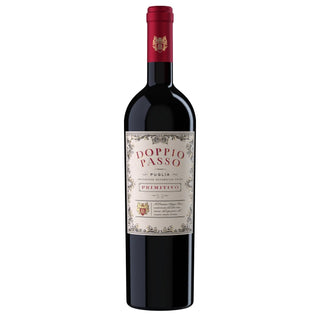
If you choose just one, the bottle I often pour is Doppio Passo Primitivo. At a friendly price it still offers solid ripe fruit and mellowness, just right for the everyday table. You can order it directly from the card below.
For a red with a little more structure, try Sicily's Baglio di Serramarrocco (Nero d'Avola). Made from 100% sustainably farmed Nero d'Avola, it adds a pleasant firmness to the fruit. And if you want even more concentration, it helps to know the higher tier of Primitivo di Manduria as a style worth keeping in mind.
Choosing, drinking, and similar grapes
For the daily table choose an affordable Puglian Primitivo; for guests or celebrations choose a concentrated Manduria or a Nero d'Avola. Choosing by occasion rarely goes wrong. Almost all are ready to drink on opening, with no need for long aging. Primitivo is the same grape as California's popular Zinfandel, sharing that generous fruit. If you like a soft texture try Merlot, and to learn more about southern Italian reds see our Primitivo grape guide and Wines of Puglia.
Frequently asked questions
Q. Is Primitivo a sweet wine?
A. Most are dry. The fruit is so rich that some people perceive sweetness, but the great majority are made dry with little residual sugar.
Q. Can an affordable one still taste good?
A. Yes. Southern Italy's generous sunshine ripens the grapes fully, so you can find satisfying, rich reds even in the affordable range.
Q. What is a common mistake?
A. Serving it at room temperature "because it is a dark red" and finding it heavy. In summer, a light chill tightens the fruit and makes it much easier to drink.
Q. What pairing is a safe bet?
A. Sweet-savory Japanese dishes (yakitori tare, kakuni, sukiyaki) and grilled food are reliable. When in doubt, head in that direction.
Once a bottle catches your eye, start with a single relaxed glass. Bring the taste of the southern Italian sun home.


Comments (0)
There are no comments for this article. Be the first one to leave a message!