

What Is Appassimento? Definition and Origins
Appassimento is an Italian winemaking technique in which harvested grapes are dried for several weeks to months, allowing moisture to evaporate and concentrating their sugars, acidity, and aromatic compounds. The name comes from the Italian verb appassire, meaning "to wither" or "to shrivel." The grapes are laid out on drying racks (gratticci) and left to slowly concentrate.
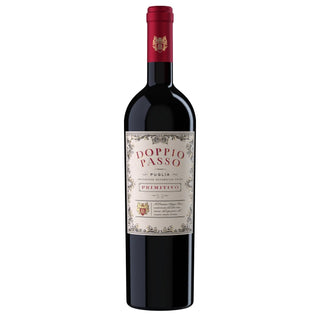
The most famous appassimento wine is Amarone della Valpolicella from Veneto, but Puglia's Doppio Passo — whose name literally means "double pass" or "double concentration" — was born from the same philosophy and offers a more approachable entry point.
The Key Misconception: Appassimento Does Not Mean Sweet
Many people assume that wine from semi-dried grapes must be sweet. It isn't necessarily. Appassimento is a concentration process, and whether the final wine is dry or sweet depends entirely on fermentation. When fermentation runs to completion, all that extra sugar becomes alcohol, producing a dry, full-bodied wine. Both Amarone and Doppio Passo are dry. Wines left with residual sugar are labeled passito or Recioto.
Flavor Profile
| Characteristic | Profile |
|---|---|
| Body | Full-bodied |
| Acidity | Low to medium (water loss softens perceived acidity) |
| Tannins | Medium to high, ripe and smooth |
| Aromas | Dried plum, raisins, spice, dark chocolate, tobacco |
| Alcohol | 13–17% (elevated) |
| Serving temperature | 16–18°C (61–64°F) |
Styles by Region
| Region | Primary Grape | Style |
|---|---|---|
| Veneto (Amarone) | Corvina-based | 3–4 months drying, powerful and age-worthy |
| Puglia (Doppio Passo) | Primitivo | Shorter drying, fruit-forward and approachable |
| Sicily (Passito) | Zibibbo (Muscat) | Mostly sweet, dessert-style |
In Puglia, grapes are often dried under direct sunlight in a technique called "secondo appassimento" (second pass). The name Doppio Passo — doppio meaning double — refers to this two-stage concentration process.
Food Pairing and Serving Tips
Appassimento wines pair best with bold, richly flavored dishes. Try them with braised pork belly, sukiyaki, dark chocolate cake, or a burger with a rich sauce. In summer, chill the bottle in the fridge for 10–15 minutes before serving — it tightens the aromatics and makes for easier drinking. No cellar? A cool, dark cupboard works fine.
Federico's Recommendation
When someone asks me what appassimento means, the first bottle I reach for is Doppio Passo Primitivo. People often assume Amarone is the only way to experience this technique, and at ¥10,000+ a bottle it can feel out of reach. Doppio Passo delivers that concentrated, sun-dried intensity at ¥2,200: Puglian Primitivo dried and condensed into something that smells of prunes and dark chocolate with every pour.
How to Choose and Serve
Look for the words "appassimento," "passito," "Doppio Passo," or "Amarone" on the label. Start with a Puglian producer for the most approachable style and price, then graduate to Veneto Amarone when you're ready for the full experience. Once opened, reseal and refrigerate — it holds well for 2–3 days.
Frequently Asked Questions
What's the difference between appassimento and passito?
"Passito" is the broader category: any wine made from dried grapes. "Appassimento" is the drying process itself. A passito wine can be sweet or dry.
Did ancient Romans make appassimento wine?
Yes. Pliny the Elder's Naturalis Historia (77 AD) describes a wine called passum, made from sun-dried grapes and commonly carried by Roman soldiers. A 12th-century document from the Basilica of San Zeno in Verona also records the technique — confirming a continuous tradition stretching back over 2,000 years.
Isn't appassimento wine too heavy?
Puglian-style versions like Doppio Passo typically run around 14% alcohol and are quite fruit-forward. They're significantly lighter than Amarone and accessible even for those new to full-bodied reds.
What foods don't pair well with appassimento wines?
Delicate white fish and subtle dashi-based dishes are difficult pairings — the wine's concentration tends to overwhelm them. Choose a lighter white for those occasions.
How long can I keep an appassimento wine?
Doppio Passo-style wines are best within 1–3 years of purchase. Amarone can age 10–20 years or more under proper cellar conditions.


Comments (0)
There are no comments for this article. Be the first one to leave a message!