

The best wine for oysters is a crisp dry sparkling or a taut mineral white when they are raw, and a fuller, rounded dry white like Soave when they are cooked. Oysters and wine are natural partners, but the wrong choice can bring out that tell-tale metallic edge or a fishy note. As a wine importer who has been pouring wine with oysters here in Tokyo, let me walk you through how to choose, style by style.
A common myth: any white wine goes with oysters
People often say white wine with oysters. The direction is right, but not just any white will do. An oaky, rich Chardonnay, or a white with residual sweetness, can clash with the oyster's delicate salinity and leave a metallic aftertaste. The keys are high acidity, a mineral character, and a clean, dry finish. When those three come together, the briny scent of the oyster really lifts. There is a second myth too: that red is forbidden with oysters. With raw oysters, yes, avoid it, but with a miso-based oyster hot pot (dotenabe), a light red actually works beautifully (more on that below).
A quick chart: oysters and wine by cooking method
The best wine changes depending on whether the oysters are raw or cooked. Use this chart as your starting point.
| How the oysters are served | Wine to reach for | Why |
|---|---|---|
| Raw oysters (lemon or ponzu) | Dry sparkling, a sharp mineral white | Bubbles and high acid rinse away salt and umami, keeping the finish light |
| Grilled oysters | A fuller dry white such as Soave | The white's body and almond note meet the smoky, savory char |
| Fried oysters (kaki fry) | Dry sparkling, a light white | Bubbles and acid cut the fried batter so it never feels heavy |
| Oyster hot pot / miso-style | A rounded white, or a light red | A fruit-forward bottle harmonizes with the sweetness and depth of miso |
Why Soave, and the sea of the Veneto
For cooked oysters, the bottle I most often pour is a Soave from the Veneto. Made from the local Garganega grape, it has a crisp acidity wrapped around a gentle body that hints at white flowers and almond. That rounded dry character stands up to the char of a grilled oyster or the batter of a fry, yet never overwhelms the oyster's salinity. Producers make both a fresh, stainless-fermented style and a richer style rested on its lees; for oysters, the clean acidity of the former is the more comfortable match.
Enjoying oysters in Japan, and Veneto's pink oyster
In Japan, oysters are mostly enjoyed cooked, from Hiroshima and Sanriku shucked oysters to winter oyster hot pot and the fried oysters of the izakaya. That is exactly why a white with body, like Soave, tends to be more useful for everyday oyster dishes than a razor-sharp white made for raw ones. A grilled oyster with a squeeze of lemon and a well-chilled Soave (8 to 10 degrees): that alone makes a weekend table feel a little special.
By the way, most people think of France when they think of oysters, but the very same Veneto that gives us Soave has its own little-known oyster. In the Sacca degli Scardovari, a lagoon at the mouth of the Po, they raise the Ostrica Rosa del Delta del Po (the pink oyster of the Po Delta). The pink streaks on its shell, formed where the sun touches it, give the oyster its name. Thanks to the plankton-rich lagoon, it matures in about a year and a half, against the three to four years typical in France or Ireland. It has a fine balance of salinity and softness, and locally it is enjoyed with white wine, an Italian treasure still largely unknown here. So pairing oysters with a Veneto Soave is, in fact, exactly what they do at the source.
Federico's picks
Three bottles I reach for on an oyster night.
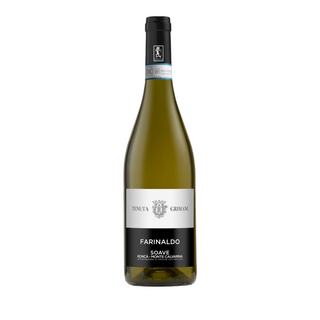
Start here: the Farinaldo Soave, which carries grilled oysters, fried oysters, and oyster hot pot with ease. That clean acidity and gentle body, so typical of Veneto Garganega, lift the oyster's umami (the buy card appears below).
For raw oysters, go for bubbles: with lemon-dressed raw oysters or a fry, reach for the crisp Prosecco Millesimato Brut. The bubbles and acid rinse the salinity away lightly.
A white of the sea: grown by the Maremma coast, Balbino (Vermentino) has a faint salinity and herbal note that resonates with oysters.
Tips on choosing and serving
- Temperature: chill whites to 8 to 10 degrees and sparkling to 6 to 8 degrees to match the oyster's salinity. If it gets too cold, let it sit a moment to open the aromas.
- Glass: a small white-wine glass is plenty. A shape that does not trap the aromas too much suits oysters.
- Similar whites: if you enjoy Soave, try other mineral whites from Garganega, or a dry white with an affinity for seafood.
For pairings with seafood beyond oysters, see Wine to Pair with Seafood as well.
Frequently asked questions
Q. Does red wine really not go with raw oysters?
A. Tannic red with raw oysters tends to leave a metallic aftertaste, so it is best avoided. If you want red, try a light, fruit-forward one, lightly chilled, with a miso-based oyster hot pot.
Q. Do I need Chablis specifically?
A. Not at all. Chablis is famous with oysters, but what matters is the three: high acidity, minerality, and a dry finish. Italian Soave and Vermentino, or a dry sparkling, all let oysters shine.
Q. What is the common mistake?
A. Pairing a sweet or heavily oaked white with raw oysters. The oyster's delicate salinity loses out and a fishy note appears. Choose a clean, dry white and you will not go wrong.
Q. What if a little wine is left over?
A. Cork it and refrigerate. The next day, use it in an oyster ajillo or a white-wine steamed pasta, and you will enjoy the same wine in both the dish and the glass.
Oyster season is coming into its own, so do find a favorite bottle to go with it. I am always happy to help.


Comments (0)
There are no comments for this article. Be the first one to leave a message!