

Sulfites in wine (shown in Japan as "antioxidant / sulfurous acid salt") are sulfur dioxide (SO2), a preservation technique thousands of years old that holds back oxidation and stray microbes to protect a wine's flavour and aroma inside the bottle. Plenty of people feel uneasy when they see "antioxidant (sulfites)" on a back label, or "contains sulfites" on an imported bottle, wondering if something harmful is inside. I am from Milan, I import Italian wine here in Tokyo, and I pour for customers every day, so I hear this question constantly. The short answer: understood properly, sulfites are nothing to fear. This article sorts out, from the floor of the trade, what they are for, how the amount shifts with the style of wine, and the truth behind that famous "sulfites give you a headache" myth.
A common myth: is it true that "sulfites give you a headache"?
Let us clear up the most common misunderstanding first: "the headache from red wine is caused by sulfites." Scientifically, this idea is on thin ice. The reason is simple. Sulfites are used in larger amounts in white and sweet wines than in red, yet most people who complain of headaches point at red wine. If sulfites were the real culprit, whites and sweet wines should be the ones causing more headaches.
So what is the cause? In 2023 a research team at the University of California, Davis put forward a leading hypothesis: quercetin. Quercetin is a natural polyphenol found in abundance in the skins of sun-soaked black grapes. The idea is that a metabolite formed in the body interferes with the enzyme that breaks down alcohol (ALDH2), letting acetaldehyde, the stuff behind a hangover, build up. In other words, the prime suspect was not sulfites but a component typical of red wine. The hypothesis is still being tested in clinical trials, but it is worth knowing that the simple "sulfites equals headache" equation is coming apart.
There are people whom sulfites genuinely affect. Mainly, that is some people with asthma: if they are sensitive to sulfites, they can get a cough or a respiratory reaction. The share is thought to be around one percent of the population, and the reaction is typically respiratory, not a headache. If that is you, do not push it, and talk to your doctor. For most other people, the amount found in ordinary wine is very unlikely to be a health problem.
What are sulfites, and why are they in wine?
Sulfites (sulfur dioxide, SO2) do two important jobs in winemaking. The first is to prevent oxidation. Just as a cut apple browns, wine tires in colour and aroma and loses its freshness when it meets air. Sulfites hold that oxidation back and protect the grape's own fruit. The second is to keep stray microbes and unwanted yeast in check, which prevents unintended refermentation and spoilage.
This is not new chemistry. Since Roman times, winemakers have burned sulfur inside their barrels to keep them clean. Modern wine simply uses a very small amount at the right moment. One point matters a lot: because yeast naturally produces a little sulfite during fermentation, even a wine with nothing added still contains a trace (on the order of 10 milligrams per litre). So "no added sulfites" means "none was added," not "zero." That is easily misread, and I explain it often in the shop.
Let me add one thing from an importer's chair. Wine travels a long way by sea from Italy to Japan. It crosses the equator and, in summer, endures high heat, a punishing journey. It is precisely because sulfites are doing their job that the aroma and fruit the producer sealed into the bottle reach your glass in Tokyo without collapsing. The reason we at Swirl insist on temperature-controlled (reefer) shipping is the same: sulfites and temperature control are the two pillars that protect the taste of a faraway origin. A small amount of sulfite is, if anything, an ally of quality. Seen that way, the picture changes, doesn't it?
| Item | Point |
|---|---|
| What it is | Sulfur dioxide (SO2). On Japanese labels, "antioxidant (sulfites)" |
| Role | Prevents oxidation / controls microbes and refermentation (protects taste and aroma) |
| Natural origin | Yeast makes a small amount during fermentation; a trace exists even with none added |
| Overseas labelling | In the EU, "contains sulfites" is required above a total of 10 mg/L |
| More or less | Tends to be higher in sweet and white wines, lower in dry reds |
The amount shifts with the style: red below white, dry below sweet
"Which wines carry more sulfites" is something you can mostly guess from the style. Two things are key: red wine is naturally more resistant to oxidation, and the more sugar a wine retains, the more it needs to guard itself.
Red wine is full of polyphenols such as tannins and anthocyanins (colour pigments) from the skins and seeds. These act as natural antioxidants, so red needs to lean on sulfites less. White wine has less of that natural protection, so it tends to use a little more than red to guard its fresh fruit and acidity. Sweet wine, whose remaining sugar is a refermentation risk, tends to use the most. Sparkling sits somewhere in the middle. Below is a rough picture of the tendency by style, though it varies by country and producer.
A rough guide to sulfites by wine style (relative picture)
This is only a relative tendency. The real amount changes with the producer's approach and the vintage. It helps to remember that "red equals lots of sulfites" is, if anything, backwards.Each country also sets upper limits. In the EU, a dry red is allowed up to a total of 150 milligrams per litre, and dry white and rosé up to 200; some sweet wines are allowed higher still. Japan's Food Sanitation Act caps sulfur dioxide in fruit wine (wine) at 0.35 grams per kilogram (350 milligrams). In practice, most wines are made well below these ceilings.
Terroir and winemaking change things: organic, bio, natural and sulfites
For anyone who wants to drink wine with as little sulfite as possible, the quickest route is to choose a wine with organic certification. The EU's organic wine rules set the sulfite ceiling lower than for ordinary wine. An organic red, for instance, is capped at 100 milligrams per litre and an organic white or rosé at 150, each 50 milligrams below the conventional limit. The certification mark is an easy sign that "the producer is deliberately keeping the amount down."
On the subject of origin, the Italian region where organic grape growing is most advanced is Sicily. Sicily has the largest area of organic vineyards of any Italian region: strong sun and dry sea breezes keep disease at bay, making it a land where growing without chemicals comes naturally. So "start your journey into natural wine with a Sicilian white" makes good sense on the floor, too.
Sicily has a lovely habit barely known in Japan: the schiticchio, an impromptu feast where friends and family gather, unfussy, around wine and food. Not a carefully booked fine-dining table, but a meal that starts on the spur of "let's get together today," full of laughter. It captures a very Sicilian brightness, the idea that wine is not something to lecture about but something that connects people. Do not overthink it: just open a bottle with people you are easy with. That, I think, is a far more wine-like way to enjoy it than filling your head with worries about sulfites.
On the winemaking side, a red with firm tannins, a white with clean acidity, and clean, temperature-controlled cellar work all let the producer keep sulfites low. In other words, "low" is not the result of going without; it is the result of good growing and careful winemaking.
Enjoying it in Japan, and reading the label (the heart of it)
Here are the practical points for the Japanese table, straight from the floor. First, reading the label. "Antioxidant (sulfites)" on the back label is a perfectly normal thing to see; it is not a sign of low quality. On the contrary, it is because they are used properly that the wine reaches your glass stable after shipping and storage. "Contains sulfites" on imported wine means the same thing.
For those who say "I still mind it," here are practical tips. First, choose a dry red: by its nature the added amount tends to be lower. Second, choose a wine with organic certification: the ceiling is set lower. Third, don't fixate on drinking it the instant it is opened: letting it breathe a little in the glass (a swirl or a decant) softens the volatile, sulfur-like note from sulfites. Even if you catch a sharp aroma right after opening, it often settles after a few minutes.
When pairing with food, choosing "by style" brings more satisfaction than worrying about sulfites. Here are my go-to combinations for the Japanese table.
| Mood / dish | Style to choose | A note |
|---|---|---|
| Washoku, sashimi, tempura | Organic dry white | Clean acidity, good with dashi and salt |
| Yakitori (tare), meat dishes | Dry red (with tannin) | A style where the added amount tends to be lower |
| Aperitivo, a toast, gyoza | Sparkling | Bubbles reset the oil; easy and lively |
| After dinner, cheese, nuts | Sweet / passito | A small glass, slowly, in place of dessert |
Even at home without a wine cellar, you are fine. Keep it away from direct sun and temperature swings, ideally lying down in a cool, dark place. The vegetable drawer of the fridge stays stable in temperature and is just right for short-term storage. Sulfites are an ally that protects taste and aroma, but even that protection cannot keep up with careless storage. Drinking it in good condition is itself the kindest way to drink.
Low-sulfite and organic wines you can drink at Swirl
From here, let me introduce the in-stock wines I actually pour here in Tokyo that suit this story. The one I pour most often is Tenuta Grimani's Pinot Grigio, an organic-certified white from the Veneto, with a clean fruit that recalls green apple and pear. It is my standard first recommendation for anyone who thinks "I mind the sulfites, but I'd like to start with an easy-drinking bottle." You can order it straight from the card below.
| Wine | Style | Role in this article |
|---|---|---|
| Pinot Grigio (Grimani) | Organic white | Certified organic. The entry bottle |
| Farinaldo Soave (Grimani) | Organic white | Certified organic. For dashi and washoku |
| Inzolia (Serramarrocco) | Sicilian white | A white from organic-leading Sicily |
| Morellino di Scansano | Dry red | Tannin's guard tends to mean less added |
| Doppio Passo Primitivo | Dry red | A fruit-rich everyday red |
| Prosecco Millesimato | Sparkling | For a toast or an aperitivo |
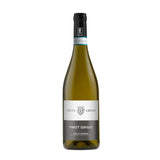
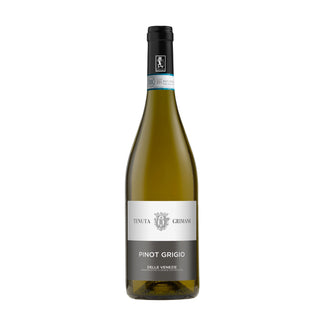
An organic-certified white from the Veneto. The entry point for anyone minding sulfites.
Pinot Grigio 2024Tenuta Grimani
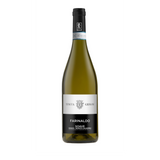
Also certified organic. A soft Garganega white, good with washoku.
Farinaldo Soave 2024Tenuta Grimani
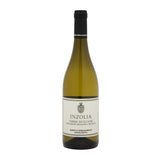
A white from organic-advanced Sicily, with a touch of Mediterranean salinity.
Inzolia Bio 2024Barone di Serramarrocco
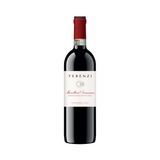
A dry Sangiovese red. Tannin's guard tends to mean less added sulfite.
Morellino di Scansano 2023Terenzi
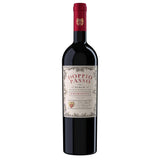
A fruit-rich dry red from Puglia. For an everyday bottle.
Doppio Passo Primitivo 2024Doppio Passo
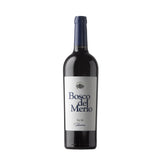
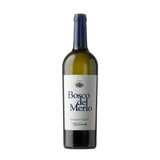
An aromatic dry white. For herb and citrus dishes.
Sauvignon Blanc Turranio 2024Bosco del Merlo
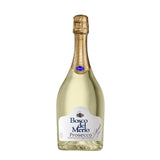
A Veneto sparkling. For a toast, an aperitivo, or fried food.
Prosecco Millesimato Brut 2024Bosco del Merlo
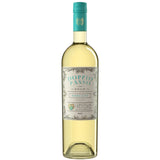
A gently sweet, lightly sparkling wine. A small glass, like dessert.
Doppio Passo Moscato 2024Doppio Passo
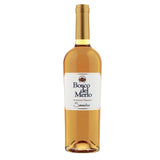
A sweet wine for after dinner. A bottle to enjoy slowly, in small pours.
Verduzzo Passito Soandre 2020Bosco del Merlo
How to choose: pick by what is bothering you
- If you simply want to keep the amount down → an organic-certified white, or a dry red with tannin.
- If the sulfur-like aroma bothers you → let it sit a few minutes, or swirl gently. A decant works too.
- If you want to pair with washoku → a clean-acid organic white such as Grimani's Pinot Grigio or Soave.
- If you love red → a dry red with fruit and tannin, such as Morellino or Primitivo.
- If a condition such as asthma concerns you → do not push it, and talk to your doctor first.
Frequently asked questions
Q. Does "no added sulfites" mean zero?
A. No. Because yeast naturally makes a small amount during fermentation, even "no added" wines contain a trace (on the order of 10 mg per litre). "No added" means "none was added," not "zero."
Q. Is it true that red wine has more sulfites and gives you a headache?
A. That is a common myth. In fact, whites and sweet wines tend to have more. For red wine headaches, recent research increasingly favours the hypothesis that a component called quercetin, not sulfites, is involved.
Q. Are the limits different for Japanese and imported wine?
A. Each country has its own ceiling. Japan's Food Sanitation Act caps sulfur dioxide in fruit wine at 0.35 grams per kilogram (350 mg). The EU sets, for example, 150 mg/L for dry red and 200 for dry white and rosé. Most wines are made well below these.
Q. How do I spot a wine with as little as possible?
A. Organic-certified wines have a lower ceiling and make an easy sign. By style, dry reds tend to be lower.
Q. Is the sharp aroma when you open a bottle the sulfites?
A. It can be. It is volatile, so letting it meet a little air in the glass often softens it. Wait a few minutes, or give it a gentle swirl. If it still bothers you, I would check the storage condition.
Sulfites are not a frightening additive; they are age-old wisdom for carrying a wine's taste and aroma safely to your glass. Know them properly and choosing becomes far freer. If anything is on your mind, call out any time in the shop. Let us pick the right bottle together.
Sources: University of California, Davis, "Why do some people get headaches from drinking red wine?" (2023, the quercetin hypothesis); EU Regulation (organic-wine sulfite ceilings, EU Reg. 2018/848 and others), the "contains sulfites" labelling requirement (from 2005); Japan, Food Sanitation Act (sulfur dioxide use standard for fruit wine, 0.35 g/kg); Sicily has the largest organic-vineyard area in Italy (Wine Enthusiast and industry statistics). Figures vary by country, year and producer.


Comments (0)
There are no comments for this article. Be the first one to leave a message!