

A wine fault (spoilage) is a state in which a wine has lost its intended aroma and flavour through something that happened in storage or production. "A strange smell." "Not the taste I expected." Most of the time, the cause is one of a handful of classic, named faults that sommeliers recognise at once. Here they are, in plain language. As an importer who opens many bottles every week, I will be honest about which are real faults and which are simply myths.
First principles: a fault is not the same as a wine you dislike. A wine that is not to your taste, one that is still too young and closed, or one just past its best is not faulted. A fault is when an external or chemical cause, cork contamination, heat, or oxygen, has robbed the wine of the shape it was designed to have. Once you can spot them, you throw away fewer sound bottles and stop drinking through ones that were actually off.
A common misconception: sediment and crystals are not spoilage
Let us clear up the most common one first. Many people see the dark sediment at the bottom of a bottle, or the glass-like crystals on the underside of a cork, and assume the wine has gone bad. It has not. These are not faults. Sediment forms naturally in aged red wine, and crystals (tartrates) appear when a wine gets cold. Both are harmless to drink, and often a sign of a good wine that has not been over-processed (see the companion article, Wine Sediment and Tartrates).
Another classic myth is that you can tell by smelling the cork. In truth the cork's smell tells you almost nothing about whether the wine is tainted. At a restaurant the cork is handed over so you can check its stamp and condition by eye, not to sniff it. Faults are judged by the aroma in the glass.
Reading the faults by nose: a quick table
Most faults reveal themselves to the nose before you ever taste. Here are the common ones.
| Sign (aroma) | What it is | Main cause | Safe to drink? |
|---|---|---|---|
| Wet cardboard, musty basement, muted fruit | Cork taint (TCA) | Contaminated cork, chlorine cleaning agents | No health risk (aroma ruined) |
| Sherry-like, bruised apple, flat aromas | Oxidation | Too much air (old seal, left open) | Safe (not pleasant) |
| Stewed, jammy, cooked fruit; pushed-up cork | Heat damage (maderization) | Heat in transit or storage | Safe (flavour lost) |
| Horse barn, band-aid, medicinal, leather | Brett | Brettanomyces yeast | Safe (a little can be character) |
| Rotten egg, struck match, boiled cabbage | Reduction | Lack of oxygen in winemaking | Safe (often blows off with air) |
The five classic faults
1. Cork taint (TCA)
The most famous fault, in reds and whites alike. The culprit is TCA (2,4,6-trichloroanisole), which comes from contaminated cork or chlorine-based cleaning agents. It smells of "wet cardboard" or a "musty basement," and in mild cases simply leaves the fruit dull and lifeless. It affects only a minority of cork-sealed bottles, and the figure varies by study (one report put noticeably tainted corks at under 1 percent). It is no risk to health, but it definitely spoils the aroma. It cannot happen to a screwcap wine. The trick is to notice the brightness of the fruit: TCA is not always loud, and mild cases just read as "somehow faint and muffled." Knowing a sound bottle of the same wine makes the difference obvious.
2. Oxidation
When wine meets too much air, the colour turns brownish and the aroma shifts toward sherry, bruised apple and nuts, while the fresh fruit goes flat. It happens with an old seal, or a bottle left open for days. The bottle that softens a touch the day after opening is mild oxidation, something everyone meets. Note that some wines, like sherry, Madeira and some orange wines, deliberately use an oxidative character. That is why it matters to know what style the wine is meant to be: intended character and plain oxidative spoilage are two different things.
3. Heat damage (maderization)
This comes from heat: summer transport, or storage in direct sun. The wine smells stewed and jammy, "cooked," and sometimes the cork is pushed up or the capsule is weeping. It is one of wine's greatest enemies, which is exactly why we ship by temperature-controlled (reefer) delivery through the summer. Heat damage cannot be undone: re-chilling the bottle will not bring the cooked aroma back. Not leaving a delivered box in the entryway or a car is a form of spoilage you can prevent at home.
4. Brett (Brettanomyces)
Caused by the yeast Brettanomyces, it gives aromas of horse barn, band-aid, leather and medicine. In tiny amounts some people enjoy it as "the complexity of a northern Rhone Syrah," but in excess it masks the fruit and becomes a fault. It is an unusual one, where the line between character and flaw sits in a different place for each person.
5. Reduction
When oxygen runs short during winemaking, sulphur compounds (such as hydrogen sulphide) form, giving aromas of rotten egg, struck match, boiled cabbage, sometimes burnt rubber. This is not necessarily fatal. Swirling the glass hard, or decanting to let air in, often softens it and the clean fruit returns. An old trick is to pass a clean copper spoon or coin briefly through the wine to lighten the sulphur smell. A wine that smells a little off the moment it is opened is worth a few minutes before you give up on it. Reduction, in fact, tends to appear in wines made carefully with the oxygen kept low to prevent oxidation.
6. Volatile acidity (a sharp vinegar or nail-polish note)
One more worth knowing is volatile acidity. As ethyl acetate and acetic acid rise, you get a sharp, nose-pricking smell of vinegar or nail-polish remover. A trace can be part of aged complexity, but in quantity it is a clear fault, and the sourness jumps out on the palate too. It shows up most in old wines, or bottles left too long in poorly kept conditions.
At a glance: reading a "strange smell"
A quick chart to narrow things down from the aroma rising out of the glass.
That last one needs a little care. If a still (non-sparkling) wine has a prickle of bubbles on the tongue, it is a sign of unintended refermentation in the bottle, which is a fault. That said, some rustic wines are meant to carry a light spritz, so knowing how a wine was made keeps you from confusion.
Regional culture, and how importing protects "soundness"
In Italy, wine lives much closer to daily life than in Japan, so people do not confuse "rustic" with "faulty." In Rome, for instance, loose wine sold by the litre (vino sfuso) is still an everyday thing. You bring an empty bottle to the shop and have it filled straight from a cask or tank. The sfuso you find in Rome is usually local wine grown in the Lazio region. It is inexpensive, an unpretentious everyday-drinking culture. Because Italians are used to these young, unadorned wines, they do not jump to "faulty" just because a wine is cheap or a little cloudy; they know in their bones what a genuinely off aroma smells like.
And in Japan the real danger is heat damage. A wine delivered by ordinary courier in high summer sits in a box at punishing temperatures for hours. Shipping by temperature-controlled (reefer) delivery through the summer is how we protect against exactly that. An importer taking responsibility for temperature ties directly to the soundness of what is in your glass (see also our article on temperature-controlled shipping).
Sound wines you can drink with confidence at Swirl
From our stock, shipped cool from Italy and stored properly, here are bottles where that soundness is easy to taste, a lineup perfect for learning "the aroma of a healthy wine."
| Type | Why faults are less likely | Example at Swirl |
|---|---|---|
| Fresh whites | Made for early drinking and quick to move, drunk before heat or air takes a toll | Pinot Grigio, Farinaldo Soave |
| Sparkling | A firm closure, resistant to oxidation | Prosecco Millesimato |
| Reds with honest fruit | Shipped cool, free of any cooked character | Morellino, Primitivo |
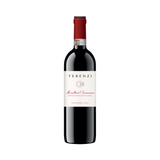
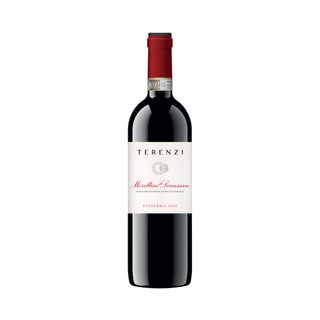
A sound Tuscan Sangiovese. Reliably in good condition, even under cork
Morellino di Scansano 2023Terenzi
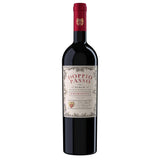
Our first-and-exclusive Japan import. Rich yet honest fruit, dependably sound
Doppio Passo Primitivo 2024Doppio Passo
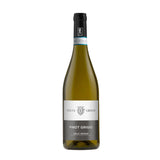
A crisp, screwcap-style white. Little risk of cork taint, an easy everyday bottle
Pinot Grigio 2024Tenuta Grimani
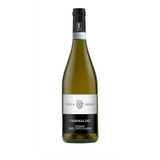
A precise Veneto white. Its clean, just-opened aroma is your reference point
Farinaldo Soave 2024Tenuta Grimani
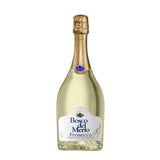
A sparkling wine, to learn the difference between proper bubbles and unwanted refermentation
Prosecco Millesimato Brut 2024Bosco del Merlo
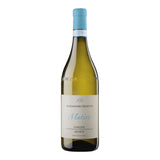
A Piedmont white, good for learning where a reductive note ends and a fault begins
Langhe Arneis 2024Alessandro Rivetto
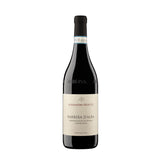
A red with lovely acidity, the first thing heat damage strips away
Barbera d'Alba 2021Alessandro Rivetto
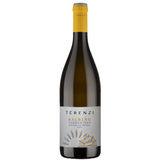
A Vermentino from the Tuscan coast, a model of a white whose life is freshness
Balbino 2024Terenzi
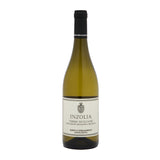
A Sicilian indigenous white, to feel the line between rustic bio character and a fault
Inzolia Bio 2024Barone di Serramarrocco
An at-home check when you open a bottle in Japan
No special tools needed. The order is always the same.
| Step | What to look for |
|---|---|
| 1. Cork and capsule | Is the cork pushed up, is the capsule weeping (a sign of heat damage)? |
| 2. Colour | Is a white deep gold to brown, a red faded too far toward brick (a sign of oxidation)? |
| 3. Aroma (the first sniff) | Any wet cardboard, cooked fruit or rotten egg? |
| 4. Wait a few minutes | Reduction (match, egg) usually blows off with air. If it clears, all is well. |
Serving temperature at home matters too. Do not over-chill reds: 16 to 18C is the mark, while whites close up if too cold, so 8 to 12C. In Tuscany's summer we put a light red in the fridge for just 20 to 30 minutes before serving. A "chilled red" is not sloppy; it is the sensible way to drink on a hot day.
What to do if you find a fault
If you do hit a genuine fault (cork taint, heat damage and the like), there is no need to force the bottle down. A shop you trust will talk it through with you if you describe what you found. This is where the words above help: "it smelled of wet cardboard," "the cork was pushed up," and the shop can picture the situation at once. Wine is an agricultural product, and however carefully it is handled, contamination from cork, a natural material, can never be reduced to zero. That is why choosing an importer whose provenance you can see, who moved and stored the wine and how, does the most to lower your odds of meeting a fault. We care about temperature bottle by bottle not because it is glamorous, but because we see it as the quiet, dependable work of keeping what is in your glass sound. If a wine ever worries you, please do not suffer it, just ask. Taking responsibility for each bottle's condition is our job as your importer.
How to choose: for readers who...
- ...feel unsure whether a smell is a fault -> start with a fresh white (Pinot Grigio, Farinaldo Soave) to build a reference for a clean aroma.
- ...want to know if a spritz is a fault -> know the real bubbles of a Prosecco, and the unwanted fizz of a still wine becomes obvious.
- ...worry about heat damage -> choosing stock delivered cool in summer is the sure bet. The honest fruit of Morellino makes any difference easy to read.
Related: Wine Sediment and Tartrates and Storing wine well without a cellar.
Frequently asked questions
Q. Is a corked (TCA) wine harmful if I drink it?
A. No. TCA only spoils the aroma; no health harm has been reported. Still, since the aroma is ruined, it is worth asking the shop you bought it from.
Q. I heard you can tell spoilage by smelling the cork. True?
A. That is a common misconception. The cork's smell tells you almost nothing. Faults are judged by the aroma in the glass.
Q. It smelled of sulphur the moment I opened it. Is it undrinkable?
A. Most likely reduction, and usually not a fault. Swirl the glass or decant and wait a few minutes; it often softens and the clean fruit returns.
Q. There was sediment at the bottom. Is that spoilage?
A. No. Sediment and tartrate crystals are harmless and not faults. See our article on sediment and tartrates.
Q. Is brett (a horse-barn smell) a fault or character?
A. It depends on the degree. A tiny amount can be complexity; if it masks the fruit it is a fault. Whether you find it pleasant is a good guide.
Q. Which fault should I most want to avoid?
A. In Japan, heat damage. It is easy to cause with summer courier delivery and cannot be reversed. In summer, choose wine from temperature-controlled distribution.
If a bottle catches your eye, let us first learn the aroma of a clean, sound wine together. With that reference, choosing wine gets much easier.
Sources: Wine Spectator "Wine Flaws: Cork Taint and TCA," Napa Valley Wine Academy "Understanding Wine Faults," SommSelect "Wine Word of the Month: Reduction," International Wine Challenge "10 common myths about wine faults."


Comments (0)
There are no comments for this article. Be the first one to leave a message!