
A wine label is the bottle's biography.
As a sommelier born in Italy and pouring wine across Tokyo, I — Federico — believe learning to read a wine label is the single most useful first step in enjoying wine.
A wine label (étiquette) refers to all the information printed on the sticker affixed to a bottle: origin, producer, classification, vintage, grape variety, alcohol content, and more. It is the most reliable compass you have when choosing wine.
It may look complicated, but there are really just six things to check. Read to the end and you'll never feel lost in the wine aisle again.
Common Misconception: Does a Fancier Label Mean Better Wine?
One of the most common mistakes beginners make is assuming that an impressive-looking label means a better wine inside.
In reality, some of Italy's greatest wines carry strikingly plain labels. And plenty of beautifully designed modern labels belong to inexpensive bottles. Label design and wine quality are unrelated. What matters is learning to read the information the label contains.
The Six Key Elements of a Wine Label
Here are the six things to check when reading any wine label.
| Element | What it tells you | Key point |
|---|---|---|
| Classification | Quality level and production regulations | DOCG > DOC > IGT (Italy) |
| Place of origin | Where the grapes were grown; the wine's character | Origin determines 90% of the taste |
| Producer name | The winery or domain that made the wine | Same region, totally different wine depending on the maker |
| Vintage (year) | Harvest year; clues about maturity | NV = Non-Vintage (multi-year blend) |
| Grape variety | The variety that shapes the flavor profile | French labels often omit this — Italian ones usually include it |
| Alcohol content | Indicator of body and finish | 13%+ tends full-bodied; 11% or below is lighter |
Italian Wine Labels: Understanding DOCG, DOC and IGT
Italian wines I recommend come with a distinctive classification system. Italy's wine classifications are among the world's most complex — here is the hierarchy simplified.
| Classification | Full name | Meaning | Examples |
|---|---|---|---|
| DOCG | Denominazione di Origine Controllata e Garantita | Top tier — region, variety and winemaking all regulated | Barolo, Prosecco Valdobbiadene |
| DOC | Denominazione di Origine Controllata | Region and variety regulated; slightly looser than DOCG | Soave, Bardolino |
| IGT | Indicazione Geografica Tipica | Region only; varieties and methods are free | Super Tuscans |
| VdT | Vino da Tavola | Table wine, no origin stated | Casual everyday wine |
A fascinating fact: every DOCG bottle carries a government-issued paper neckband (fascetta di Stato) with a unique serial number. This system was introduced in 1980 when Italy recognised its first five DOCGs. Each bottle gets its own number. No other major wine-producing country still mandates such a government guarantee seal. Next time you pick up a Barolo, Brunello or Prosecco DOCG, check for that thin strip around the neck — it is Italy's personal guarantee of authenticity.
How Labels Differ Around the World
In France, origin is everything: "Burgundy," "Chablis," "Bordeaux" — grape variety is rarely stated, because it's taken for granted. In the New World (USA, Australia, Chile), leading with the variety name is standard.
| Country | Label style | Classification |
|---|---|---|
| Italy | Origin + variety, both stated | DOCG / DOC / IGT |
| France | Origin is primary; variety rarely stated | AOC (AOP) / IGP |
| Spain | Aging terms prominent (Crianza / Reserva) | DOCa / DO |
| USA | Brand name + variety leads | AVA (American Viticultural Area) |
| Japan | "Japanese Wine" vs. "Made with Imported Wine" mandatory | GI (Geographical Indication) |
Using Labels When Buying Wine in Japan
Watch for "Made with Imported Wine" (輸入ワイン使用): Some bottles look domestic but the back label reveals they use cheap imported bulk wine. These are not the same as genuine Japanese wine.
Check the DOCG fascetta: When buying Italian DOCG wine, look for the government neckband. If it's missing, be cautious.
Check origin before vintage: For beginners, getting the region and classification right matters more than the vintage year. Master origin first and you'll make more consistent choices.
Read the back label: Japanese import regulations require importers to attach a Japanese back label with importer information. A reputable importer is itself a quality signal.
Federico's Recommendation: One Bottle to Learn Labels With
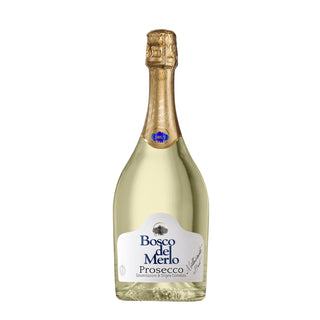
If I had to recommend one bottle for learning Italian labels, it would be a Valdobbiadene Prosecco. The wine I often serve guests is our Prosecco Valdobbiadene Superiore Millesimato Brut 2024.
Its label teaches everything: the DOCG mark, origin (Valdobbiadene), variety (Glera), style (Brut — dry), vintage (2024; "Millesimato" means single-vintage), and the government neckband. One bottle, one complete lesson.
Our Prosecco Millesimato Brut arrives with Valdobbiadene DOCG certification and fascetta intact. Study the label, then enjoy what's inside.
Label Reading Checklist
① Check the classification (DOCG / DOC / AOC etc.) — quality baseline
② Check the origin — the main clue to the wine's character
③ Check the producer — same region, very different wines by maker
④ Check the vintage — guide to age and drinking window
⑤ Check the alcohol — under 11% is lighter; 13%+ is fuller
⑥ For DOCG wines, check the neckband — proof of authenticity
Related articles: What Is a Wine Vintage? A Guide to Good Years, How to Choose a Wine: Complete Guide
Frequently Asked Questions
Q. What is the difference between DOCG and DOC in one sentence?
A. DOCG is doubly regulated and the only category where the Italian government issues a per-bottle serial-number guarantee strip; for the same region, DOCG tends to carry higher quality assurance.
Q. Is an NV (Non-Vintage) wine lower quality?
A. Not at all. Champagne and many Proseccos are NV by design — blending vintages creates a consistent house style. NV is a strategy, not a shortcut.
Q. Can I trust a wine that has a Japanese back label?
A. Yes — Japanese import law requires importers to attach a Japanese label with their information. A reputable importer is a quality indicator in its own right.
Q. Does a higher classification guarantee better taste?
A. Classification measures compliance with production rules, not personal preference. Many IGT Super Tuscans outperform some DOCGs. Use classification as a guide, not a verdict.
Q. What should I look at when buying wine as a gift?
A. Check the origin and producer; DOCG or DOC adds credibility. For a gift, a well-known region (Barolo, Prosecco, Langhe) or an interesting story wine from a lesser-known area both work well.


Comments (0)
There are no comments for this article. Be the first one to leave a message!