

Minerality in wine refers to a fresh, cooling sensation, think limestone, sea salt, or wet stones, that shows up most often in white wines. Descriptors like "sea breeze," "wet slate," "oyster shell," or "salty finish" are all ways wine lovers try to capture this quality, which is one of the most talked-about characteristics in wine.
Common Misconception: Minerality Does Not Mean Mineral Content
Many people assume that mineral-tasting wines are simply soaking up minerals from the soil, like a plant absorbing nutrients. Scientifically, this is not quite right. While vines do absorb trace elements from the ground, these do not directly translate into the "stony" flavors in the glass. Minerality is better understood as a combination of high acidity, low alcohol, certain volatile sulfur compounds, and the subtle interaction of climate, soil, and variety. It is a signature of place, not a chemical formula.
Profile of Mineral-Driven Wines
| Attribute | Tendency |
|---|---|
| Body | Light to medium |
| Acidity | High (sharp and clean) |
| Tannins | None to very light (mostly white wines) |
| Aromas | Sea salt, white flowers, citrus, wet stone, marine breeze |
| Serving Temp | 8-11°C |
How Minerality Varies by Region
| Region | Soil Character | Mineral Style |
|---|---|---|
| Chablis (France) | Kimmeridgian limestone (ancient marine beds) | Sharp and precise. The classic oyster pairing |
| Sardinia (Italy) | Decomposed granite (feldspar, quartz, mica) | Pronounced saltiness, almost briny finish |
| Maremma (Tuscany, Italy) | Sandstone, coastal sandy soils, Mediterranean wind | Fresh and light, with a marine, seaside quality |
| Campania (Southern Italy) | Volcanic soils (lava, ash) | Smoky with a saline, volcanic edge |
Vermentino from Maremma owes its distinctive freshness to the salt-laden winds off the Tyrrhenian Sea and the sandstone soils along the Tuscan coast. The grapes are harvested early to preserve acidity, then fermented at low temperatures to lock in fruit and mineral freshness.
Enjoying Mineral Wines in Japan
When I first tasted Maremma Vermentino, it was at a fisherman's lunch, just an everyday white poured without ceremony alongside the catch of the day. In Italy, the idea that wine grown by the sea belongs at the table with seafood needs no explanation. That same instinct applies perfectly in Japan.
Mineral-driven whites are outstanding with sashimi, raw oysters, white fish carpaccio, and salt-grilled fish. If you have found wine difficult to pair with Japanese fish dishes, a crisp mineral white is your best bet. When soy sauce creates a flavor clash, switch to ponzu or shio-koji-based sauces. The salt-acid balance aligns beautifully with mineral whites. Serve well-chilled at 8-10°C for the best expression.
Federico's Recommendation
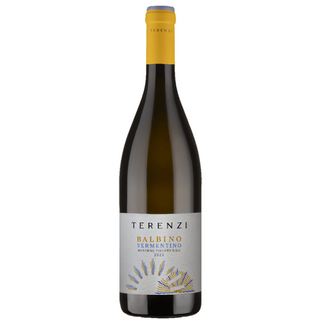
To experience minerality firsthand, start with our Balbino (Vermentino di Maremma, Terenzi). Raised on Maremma's sandstone soils with constant sea breezes off the Tyrrhenian, this wine delivers the salty, citrus-bright minerality the grape is known for. It is the ideal introduction to what mineral-driven whites are all about.
How to Choose / Serving Tips / Similar Wines
Three signals that a wine will be mineral-driven: coastal or riverside origin, limestone or granite soils, and unoaked production. Chablis, Muscadet, Albariño, and Vermentino are the most reliable choices. For more on individual varieties, see our Vermentino guide and Sauvignon Blanc guide.
FAQ
Q. Are mineral wines healthier because of their mineral content?
A. No. Minerality is a flavor descriptor, not a nutritional claim. The sensory impression of minerals does not mean the wine is high in dietary minerals. Choose wine by taste.
Q. Can red wines also be mineral?
A. Yes. Northern Rhône Syrah and Chianti Classico Sangiovese both show minerality. However, it is less pronounced in reds than in whites, where high acidity amplifies the sensation.
Q. Do all unoaked white wines taste mineral?
A. Not necessarily. While skipping oak lets fruit and acidity shine through, minerality still depends heavily on the grape variety and soil type. Wines from limestone or granite-heavy regions are the most reliably mineral-driven.
Q. I bought a wine labeled "mineral" and it did not taste that way. What went wrong?
A. "Mineral" on a label is a producer's subjective tasting note, not a certified style. A safer approach is to use region as your guide: Chablis and Vermentino di Gallura (Sardinia) are the most consistent sources of genuine minerality.
Q. Who are mineral whites best suited for?
A. Anyone who finds big, heavy reds or buttery whites off-putting; anyone looking for a wine to pair with Japanese cuisine; and anyone who simply loves crisp, refreshing whites. These wines are among the most food-friendly styles available.
Mineral whites are some of the most Japan-friendly wines in the world. Try one alongside a seafood meal and you may never look at fish pairings the same way again.


Comments (0)
There are no comments for this article. Be the first one to leave a message!