

Wine sediment and tartrate crystals are harmless deposits that form naturally through ageing and storage, and neither is spoilage or a fault. Many people see the dark specks at the bottom of a bottle, or the sparkling, glass-like crystals on the underside of a cork or the base of the bottle, and worry, "can I still drink this?" The short answer: they are harmless, and often the sign of a good wine that has not been over-processed. As an importer handling many aged wines every week, let me explain, in plain language, what sediment and tartrates really are, and how to tell them from a genuine fault.
In Japan the image of wine as "naturally clear" runs strong. The mass-produced wine on supermarket shelves is heavily filtered and treated so that no deposit appears. But wine made with care and time will, if anything, leave sediment and crystals of its own accord. That is not a flaw but character, and knowing it opens up a whole new corner of wine.
A common misconception: crystals are not glass shards or spoilage
The most common mix-up is seeing the clear crystals on the base or cork and thinking "glass got in," "there's sugar in it," or "it's gone bad." These are tartrates (potassium bitartrate), the tartaric acid naturally present in wine, crystallised by cold. In English they are called "wine diamonds." As industry pros put it, they are "flavourless and completely harmless." The sediment that gathers in aged red wine, likewise, is the natural result of ageing, not spoilage. Neither is a "gone bad" sign.
So why the worry? Because most wine drunk in Japan is either young, before any deposit forms, or a mass-produced wine thoroughly processed (filtering, cold stabilisation) to remove it. The more you meet wines from careful producers that have aged, the more sediment and tartrates become simply "part of the scenery." At the European table, gently tilting a bottle with sediment to pour off the clear part is an entirely ordinary gesture; no one is surprised. It is not knowledge so much as a habit of daily life.
What is sediment?
What sediment is made of
Sediment is not one substance but a mixture. Early on it is mainly dead yeast cells (the lees) and small fragments of grape pulp, skin and seed; as time passes in the bottle, tartrates join in, and in red wine, "solids where pigment and tannin have bound and grown heavy." So most of the sediment in red wine is tannin and colour (anthocyanin) joining hands over long ageing until they can no longer stay dissolved and sink. The slight bitterness and grittiness of sediment come from that tannin, which is why, for flavour's sake, the rule is to leave it rather than force it down. Not because it is harmful, but simply because it is not pleasant.
Which wines show it
Sediment after bottling is relatively rare, and usually the sign of a fine wine that has spent some years in the bottle. Nebbiolo (Barolo), aged Sangiovese and vintage Port are known for it. The more lightly filtered, or unfiltered, the producer's wine, the more readily sediment appears. In other words, sediment is also a mark of a wine "made carefully, without over-handling, and given real time." With vintage Port, bottled unfiltered and built for long ageing, sediment is taken as a matter of course, and the ritual of decanting it off has been handed down for generations.
Why reds show it more
Red wine is macerated with skins and seeds, so it is full of tannin and pigment (anthocyanin). When young these are finely dissolved, but year by year they slowly bind, the molecules grow large and heavy, and at last they can no longer stay in the liquid. That is the mechanism of sediment. So the darker, more tannic, longer-ageing reds show the most. White wine has little pigment, so sediment is modest; what appears is mostly the tartrates described next.
What are tartrates?
What tartrates are
Tartrates are crystals of potassium bitartrate. Wine contains several acids, chief among them tartaric acid. When a wine gets good and cold, that acid can crystallise and settle, or cling to the underside of the cork. They look like sugar or shards of glass, but they are a natural, wine-born component. They appear in both red and white; clear crystals in white, sometimes reddish-purple in red where they catch the pigment. If you cook, you may know "cream of tartar": that is the very same potassium bitartrate, born from wine. Think of the crystals at the bottom of your glass as a cousin of the powder in your kitchen drawer, and they feel much more familiar.
Cold stabilisation
Many producers chill the wine to about minus 1 to 2C for a few weeks before bottling, forcing the tartrates out in advance, a process called cold stabilisation. It is done for appearance (to spare customers the surprise of crystals). Others decline, believing cold stabilisation can limit a wine's complexity and dull its aroma and flavour. So the crystal at the bottom of your glass is also a sign that the wine was bottled as it naturally is.
Not a mark of a great year or high quality, but still
The presence of tartrates does not directly signal a wine's quality, high or low. They appear in cheap and expensive wines alike. That said, wines built for long bottle ageing often leave them, and producers who skip cold stabilisation do so meaning to protect aroma and depth. Find a crystal and read it as "this wine hasn't been over-dressed," and it grows rather endearing. Even a small crystal at the bottom of a white you chilled hard in the fridge, please rest easy.
Telling sediment, tartrates and a real fault apart
Let us line up the three that are easily confused. Grasp this and the deposits at the bottom will never alarm you again.
Sediment
Dark powder or fine solids. Common in aged reds. Tannin, pigment and yeast. Bitter and gritty, so leave it rather than pour it.Tartrates (crystals)
Clear to reddish-purple crystals, like glass or sugar. Appear when cold. Flavourless, also found on the cork. No problem if swallowed.A real fault
Wet cardboard, cooked fruit, rotten egg, sharp vinegar. Judged by aroma. Unrelated to any deposit.The point: sediment and tartrates are a matter of what you see, a fault a matter of what you smell. If there is a deposit but the aroma is sound, the wine is perfectly fine. If the base is crystal clear but the aroma is off, that is a fault. What you judge is not the deposit but the aroma (see the companion article, How to spot wine faults).
One thing to watch: bubbles. If a still (non-sparkling) wine has a deposit and also throws an unexpected fine fizz when poured, it may be refermenting in the bottle, which is a different problem. The sign is not the deposit itself but the "fizz" and the "aroma." If sediment or tartrates are simply sitting quietly, there is nothing to worry about.
How style varies by region, and a Tuscan tradition
Whether a wine shows sediment is bound up with the philosophy of how it is made. In Tuscany, near my own home, there is a traditional method called "governo all'uso toscano." A portion of the harvest is dried, and its partly-raisined must is added to the just-fermented young wine to trigger a second fermentation. It was once near-universal across the Chianti zone. It softens the tannins and lifts the roundness that comes from alcohol and glycerol, and it is recorded in seventeenth-century Tuscan farming texts. It nearly died out, but several producers have revived it. On the old Tuscan farm, governo gave a wine that had wintered over a youthful lift, an everyday bottle ready to enjoy early. It is the opposite of uniform mass production, a wine rooted in land and season.
Wines at Swirl where you can meet sediment and tartrates
Here are wines where ageing or a minimal hand lets you meet sediment and tartrates. Every deposit is harmless, and if anything an expression of what is inside. If this is your first time meeting them, knowing what appears and when lets you enjoy it without alarm.
| Deposit | Wines that show it | Example at Swirl |
|---|---|---|
| Sediment (tannin, pigment) | Aged dark reds, unfiltered reds | Madrechiesa, Langhe Nebbiolo |
| Tartrates (crystals) | Chilled whites and reds, wines with little cold stabilisation | Farinaldo Soave, Barbera d'Alba |
| Sometimes both | Wines with some years in bottle | Serramarrocco 2015 |
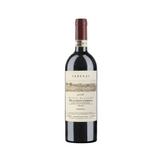
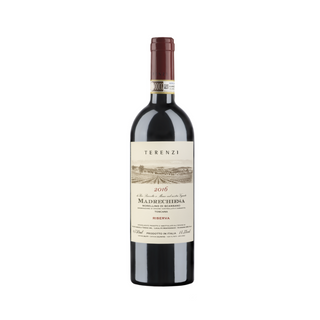
An aged Tuscan Sangiovese Riserva, the classic bottle that throws sediment in the bottle
Madrechiesa 2020Terenzi
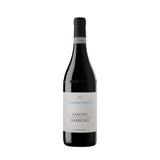
The king of sediment, Nebbiolo. Fine sediment settles over time, a bottle made for decanting
Langhe Nebbiolo 2022Alessandro Rivetto
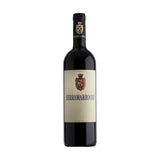
A long-aged Sicilian red. Sediment is the sign of good ageing
Serramarrocco 2015Barone di Serramarrocco
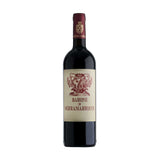
A few years in bottle bind pigment and tannin, leaving a quiet sediment
Barone Serramarrocco Pignatello 2019Barone di Serramarrocco
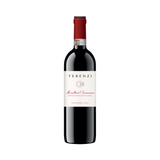
Clear when young, but a Sangiovese that grows sediment the longer you keep it
Morellino di Scansano 2023Terenzi
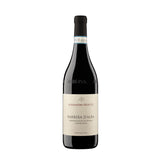
A red rich in acidity, which can show tartrate crystals when chilled
Barbera d'Alba 2021Alessandro Rivetto
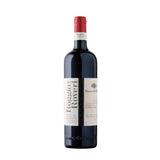
A dark Veneto red, lightly filtered so sediment appears readily
Refosco Roggio ai Roveri 2020Bosco del Merlo
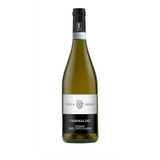
A fine example that even a white can show tartrates when chilled, the harmless 'wine diamonds'
Farinaldo Soave 2024Tenuta Grimani
Enjoying it in Japan: decanting and one small trick at home
The knack for enjoying a wine with sediment is simple. "Decanting" sounds daunting, but it just means "pour off the clear part without stirring up the sediment." No special equipment or skill required.
| Step | What to do |
|---|---|
| 1. Stand it to rest | Stand the bottle upright half a day to a day before drinking, and the sediment settles |
| 2. Pour gently (decant) | Transfer slowly to another vessel (a decanter), stopping before the sediment lifts |
| 3. Use light | Shine a phone light below the shoulder of the bottle to see the sediment approach |
| 4. Leave the last mouthful | Use the cloudy last drop in cooking, or simply leave it |
No decanter? A clean glass or pitcher does fine. Tartrate crystals are easier still: once they form from the cold, just pour and they stay at the bottom, and no harm if one slips into your mouth. Homes in Japan often have no wine cellar, but an aged wine with sediment is transformed simply by standing it to rest before opening. Do not lay it straight down out of the fridge; stand it and let it settle. That one small step makes an aged wine far more enjoyable.
On temperature: chilling a white makes tartrates more likely, but this has nothing to do with quality. Take it as "a crystal appeared, so it got nicely cold, a natural wine." Do not chill an aged red suddenly; open it at a slightly cool room temperature of around 18C, stood upright and settled, and the sediment stays put while the aroma opens. In the Japanese summer especially, rather than laying a delivered wine on its side at once, stand it and let it rest half a day. Make that a habit and an aged wine's expression grows gentler and more beautiful.
How to choose: for readers who...
- ...want to try an aged red with sediment -> Langhe Nebbiolo and Madrechiesa, ideal for practising decanting.
- ...want to confirm tartrates really are harmless -> chill a Farinaldo Soave. Crystals change nothing about the taste.
- ...want to taste the expression of age -> long-aged Serramarrocco 2015, with its sediment and the depth of time.
Related: How to spot wine faults and Storing wine well without a cellar.
Frequently asked questions
Q. Is it alright if I drink the dark sediment at the bottom?
A. It is harmless. It is just bitter and gritty, so for flavour's sake it is best left rather than poured.
Q. What are the glass-like crystals on the cork or at the base?
A. Tartrate crystals (potassium bitartrate), also called "wine diamonds." Flavourless and completely harmless.
Q. Do sediment and tartrates mean poor quality?
A. No. If anything they are often a sign of careful, minimally processed winemaking and ageing. They have no direct bearing on quality.
Q. How do I tell sediment from a real fault?
A. Sediment and tartrates are about what you see, a fault about what you smell. A deposit with a sound aroma is fine. Wet cardboard or cooked fruit on the nose is a different matter.
Q. How do I drink it without the sediment?
A. Stand the bottle upright about half a day ahead to settle the sediment, then pour gently into a decanter or another glass.
Q. My white wine threw crystals. Has it gone bad?
A. It has not. Whites show tartrates too. They appear most when well chilled, and are flavourless and harmless.
Q. Should I drink a wine with a lot of sediment sooner?
A. Sediment itself is not a sign of spoilage. More sediment is a rough guide that ageing has advanced, so if the aroma is open, consider it ready to drink.
The deposit at the bottom is not something to fear but a signal that you have met a good wine. The quiet moment of pouring an aged red off its sediment, the small crystals glinting in a chilled white: both are proof that the wine is alive and has gathered time. Next time you find crystals or sediment, enjoy it with confidence, imagining the story of that one bottle. And if anything puzzles you, just ask, any time.
Sources: Wikipedia "Sediment (wine)" (citing Jancis Robinson, The Oxford Companion to Wine, 3rd ed.), Wine.com "What Are Tartrates in Wine?", Wine With Seth "Governo all'uso toscano."

Comments (0)
There are no comments for this article. Be the first one to leave a message!