

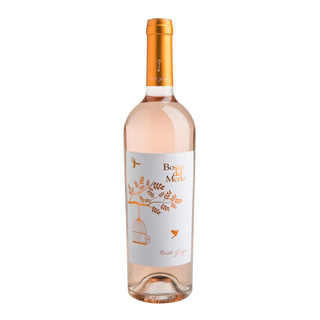
The best wine for salmon is a dry rosé, or a red with the very lightest tannin, that has enough fruit to meet the fish's fat and umami while keeping the acidity to wash the finish clean. Autumn salmon (aki-jake) is rich in fat and takes many forms, from salt-grilling to meuniere, teriyaki, sashimi and smoked. The wine I most often pour is a dry rosé from Veneto, Pinot Grigio Rosé.
A common misconception: it's fish, so white leaves flavor on the table
Salmon has more fat and flesh-umami than white fish; it is really a pink fish, closer to red meat than you might think. Beyond white wine, a dry rosé with red-fruit character, or a red with the lightest tannin (Pinot Noir), actually suits it better. A heavy, tannic red, by contrast, collides with the fish oils and iodine and can taste metallic. Rosé takes the best of white and red, and it is salmon's finest companion.
The taste profile that suits salmon
Use this profile as a guide.
| Element | Tendency |
|---|---|
| Body | Light to medium |
| Acidity | Firm (washes the fat) |
| Tannin | None to very light |
| Aroma | Red fruit, citrus, herbs |
| Serving temperature | Rosé 8 to 10C / light red 12 to 14C |
How style changes by region
| Region / style | Character and the salmon dish it suits |
|---|---|
| Veneto (Lake Garda) / Chiaretto | Pale dry rosé. Made for lake and river fish |
| Provence-style / dry rosé | Light and all-purpose. For salt-grilling and sashimi |
| Burgundy, New World / Pinot Noir | Light red. For richer preparations like teriyaki and meuniere |
| Northern Italy / ramato (Pinot Grigio rosé) | More depth of umami. For fatty salmon |
On the shores of Lake Garda in Veneto there is a pale pink rosé called chiaretto. It began in 1896, when Pompeo Molmenti brought the rosé method he had learned in France to Moniga del Garda, and Bardolino's Chiaretto became one of the very first Italian wines to earn DOC status, in 1968. The people of Lake Garda drink chilled chiaretto every day with the lake's freshwater fish (coregone whitefish and lake trout). That idea, a pale rosé for lean, delicate fish, carries over perfectly to salmon.
How to enjoy it in Japan
Autumn salmon changes character with the cooking method, so it helps to shift the wine a little too.
Salt-grilled (shioyaki): for the simple salt seasoning, a crisply chilled dry rosé. Red fruit and acidity meet the crisp skin and fat.
Meuniere / butter-fried: for the richness of the butter, a rosé or a light red.
Teriyaki / chanchan-yaki (miso-butter): for the sweet-savory flavors, the fruit of a light Pinot Noir sits beautifully.
Sashimi / ruibe / salmon sushi: a well-chilled dry rosé, or sparkling (Prosecco). The balance of fat and acidity is delightful.
Smoked salmon: for the smoke and salt, a rosé or sparkling.
Ishikari-nabe: for the miso hot pot, a light red or rosé, served warm in spirit.
People assume that because salmon is fatty it needs a rich white, but a dry rosé with acidity actually leaves the finish lighter. Rosé shows its aromas at 8 to 10C, not colder. When pairing with sashimi or sushi, chill it a little more and any fishiness stays away.
Federico's picks
The wine I most often pour with salmon is the Veneto dry rosé, Pinot Grigio Rosé. With red fruit and lifting acidity, it is the all-rounder that goes from salt-grilled to sashimi. For richer preparations like teriyaki and chanchan-yaki, reach for the light Petaluma Gap Pinot Noir. For sashimi and smoked salmon, the sparkling Prosecco Millesimato Brut is a lovely match. All three are in stock right now.
Choosing, serving, and similar styles
Choosing by cooking method is the simplest approach. For simple dishes like salt-grilling and sashimi, a dry rosé; for sweet-savory flavors like teriyaki and miso, a light red. Serve rosé at 8 to 10C and a light red slightly chilled at 12 to 14C, which pairs well with the fat. A dry rosé offers versatility, and a light red (Pinot Noir) offers strength against sweet-savory seasoning, so choosing by the richness of the seasoning keeps it easy. For seafood in general, see wine pairings for seafood; to learn more about rosé, see how to enjoy and choose rosé.
FAQ
Q. Does red wine not work with salmon?
A. A heavy, tannic red is a poor fit, but a light, low-tannin red like Pinot Noir works very well with teriyaki or miso-seasoned salmon.
Q. What suits sashimi or salmon sushi?
A. A well-chilled dry rosé or sparkling (Prosecco). The acidity and bubbles cut cleanly through the fat.
Q. And smoked salmon?
A. For the smoke and salt, a dry rosé or sparkling. A little citrus or herb pulls it together even more lightly.
Q. What is the most common mistake?
A. Pairing a rich, oaky white or a strongly tannic red. The first is heavy, the second clashes with the fish oils. A dry rosé with acidity is the safe choice.
Q. Any guide to budget and chilling?
A. For salmon at home you can enjoy plenty from around 3,000 yen. Put rosé in the fridge one to two hours before drinking, then take it out a little before serving so the aromas open. Pour a bottle for the autumn table.


Comments (0)
There are no comments for this article. Be the first one to leave a message!