

Before a wine born in Italy reaches your table in Japan, it passes through many stages: harvest and winemaking, temperature-controlled shipping, customs and liquor-tax procedures, and the warehouse. Most of this never meets the customer's eye, yet it has a huge effect on quality. Here, from the perspective of importing Italian wine in Tokyo and pouring it every day, is a look behind the scenes at how wine reaches you.
A common misconception: it is temperature, not distance
People often assume imported wine is damaged because it travels so far, but what really affects quality is temperature, not distance. Wine is very sensitive to heat: exposed to high temperatures it can turn flat or take on a cooked flavor (heat damage). That is exactly why keeping the temperature steady, all the way from the vineyard to Japan, matters more than anything.
From vineyard to glass: six stages
| Stage | What happens |
|---|---|
| 1. Harvest and winemaking | Grapes are harvested at the source, made into wine and bottled |
| 2. Storage before shipping | Kept in a cool cellar at the source until loading |
| 3. Temperature-controlled shipping (reefer) | Shipped by sea in a reefer container (a temperature-controlled container) that holds a steady temperature |
| 4. Customs and liquor tax | On arrival in Japan, customs clearance and liquor tax are handled |
| 5. Temperature-controlled warehouse | Stored in a temperature-managed warehouse in Japan |
| 6. To your home | Dispatched to order (delivered by cool courier in summer) |
Why a steady temperature matters so much
The key is the reefer container (a temperature-controlled sea-freight container that holds a steady internal temperature). On the long route past the equator, an ordinary container can get extremely hot inside. Heat is wine's greatest enemy, and a flavor once spoiled by heat cannot be restored. The cool cellar at the source, the reefer container, the temperature-controlled warehouse in Japan, and finally the cool courier in summer: if the temperature breaks at even one point, it is all undone. That is why we make a point of connecting this chain of temperature (the cold chain) from beginning to end.
The regions where wine is born also carry their own living culture. For example, Puglia, the home of our staple Doppio Passo, is a major heartland of the Primitivo grape. In its center, Manduria, there is the Museo della Civiltà del Vino Primitivo (Museum of Primitivo Wine Civilization), set in the 19th-century underground cellars of a cooperative founded by local farmers in 1928, with more than thirty exhibits. An 18th-century stone wine press and period farming tools speak to the deep bond between this land and its wine. A bottle's journey begins in the daily life of places like these.
A few tips for receiving it in Japan
Even a wine whose temperature was carefully protected can vary at the final step, how you receive it. In summer, specify a time when you will be home, or choose cool-courier delivery rather than a delivery box. A just-arrived bottle can be a little tired from the shaking of transit (bottle shock: the aromas closing up temporarily right after shipping), so resting it in a cool, dark place for half a day to a few days before drinking brings it back to itself. When you open it, mind the serving temperature: chill whites and sparkling well, and do not over-chill reds. From July to September we deliver by cool courier, protecting the temperature over this final leg too.
Federico's pick
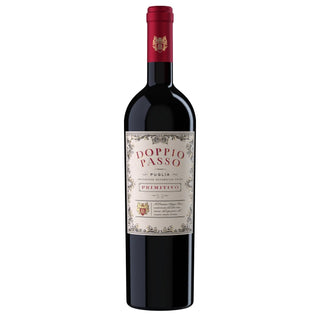
The star of the journey we traced, Puglia's Doppio Passo Primitivo, is a bottle that lets you taste that road. With the ripe Primitivo character of dark fruit and spice and a soft, round mouthfeel, it shows just how honest and delicious a wine can be when its temperature is carefully protected all the way. Start with it as an easy everyday bottle.
How to spot a trustworthy importer
You can gauge whether a wine has been handled well from a few clues. Does the seller state that they use temperature-controlled shipping and storage? Is the importer's name clearly listed? On the bottle itself, is the fill level not extremely low, and is the cork not pushed up? These points hint at whether the temperature was protected. See also How to store wine properly and Wine serving temperatures.
Frequently asked questions
Q. Is imported wine often spoiled?
A. With proper temperature management, there is little to worry about. What matters is connecting temperature-controlled shipping and storage from the source to Japan, so choosing a trustworthy importer means peace of mind.
Q. Is it safe to buy in summer?
A. Yes. From July to September we deliver by cool courier and protect the temperature in transit. Receiving it while home, or by cool courier, makes it even safer.
Q. What is a reefer (temperature-controlled container)?
A. It is a sea-freight container that holds a steady internal temperature. It is used to protect wine from heat and is essential to preserving quality.
Q. Can I drink it as soon as it arrives?
A. You can, but right after shipping the aromas may be temporarily closed (bottle shock). Resting it in a cool, dark place for half a day to a few days lets you enjoy its true character more fully.
Q. I worry about temperature control when buying wine online.
A. Check the delivery method (whether cool courier is offered) and the importer's details. A shop that, like ours, states it uses temperature-controlled shipping, temperature-controlled storage and summer cool-courier delivery is a safe choice.


Comments (0)
There are no comments for this article. Be the first one to leave a message!