

Barolo is a red wine from the Langhe area of Piedmont, in northwestern Italy, made from 100 percent Nebbiolo. Called the king of Italian wine, it is a long-lived, noble red released only after long aging, recognized at Italy's highest DOCG rank. As importers who have long worked with the wines of Piedmont, we at SWIRL bring together everything that makes Barolo special: its history, its flavor, the revolution of the "Barolo Boys," how it is loved in Japan, and a recommended bottle.
The history of Barolo: the king of wines, the wine of kings
Until the early 19th century, Nebbiolo was often made as a sweet or lightly sparkling wine. The turning point came with Giulia (Juliette) Falletti, Marchesa of Barolo, born into the French Colbert family. In the 1830s she brought in the French oenologist Louis Oudart, who fermented the wine fully dry to create a powerful red, the prototype of today's Barolo. Count Camillo Benso di Cavour, a chief architect of Italian unification, pursued the same reforms on his estate at Grinzane. Barolo went on to grace the court of the House of Savoy, earning its name as the wine of kings and the king of wines (in Italian, re dei vini, vino dei re).
What does Barolo taste like?
A pale, garnet-tinged color with complex aromas of rose, violet, dried fruit, spice, and leather. Powerful tannins and high acidity unfold slowly and gracefully over many years.
| Attribute | Profile |
|---|---|
| Body | Full |
| Acidity | High |
| Tannins | High (mellowing with age) |
| Style | Dry |
| Serving temp | 16 to 18°C |
The "Barolo Boys": the revolution that changed the Langhe
In the 1980s and 90s, a group of young Langhe producers boldly changed the way Barolo was made. They shortened the maceration (the contact with the skins), lowered yields, brought in small French oak barrels called barriques, and bottled single vineyards, or "cru," separately. Their wines were darker, fruitier, and approachable young, and they swept the American market. The New York Times dubbed them the "Barolo Boys."
The revolution sparked a fierce debate with the "traditionalists," who age their wine in large casks (botti), and split the region in two. The 2014 documentary "Barolo Boys: The Story of a Revolution" captured that fervor, the conflict, and the eventual truce, and carried Barolo's name to tables around the world. Today modernists and traditionalists coexist peacefully, quality has risen across the Langhe, and in 2014 these very hills were named a UNESCO World Heritage Site, with a deep culture of single-vineyard sites (MGA). When I, Federico, visit the Langhe, every grower still has a different philosophy of oak, and that conversation is, to me, the greatest pleasure of Barolo.
What food pairs with Barolo?
It pairs with roast and braised red meat, game, aged cheese, and truffle dishes, and other hearty fare. In its native Piedmont, brasato al Barolo, beef braised slowly in Barolo, is a classic. A bottle made for a special occasion.
Barolo in Japan: a beloved king of Italian wine
Japan is home to some 12,000 Italian restaurants, most of them run by Japanese chefs. Since the "Italian food" boom of the 1990s, serious Italian wine has become an accessible aspiration, and Barolo in particular has become a fixture on the lists of trattorias and osterias across the country, the bottle for an anniversary or a special night.
Nebbiolo is one of the most beloved grapes among Japanese wine lovers. Its depth, surprising for such a pale color, and its delicate aromatics, which echo the umami of dashi, resonate deeply with the Japanese palate. Many of our SWIRL customers come looking precisely for a Barolo for a special day, and exchange between the Langhe and Japanese producers continues to grow.
Why is Barolo special (and pricey)?
Only wine from the hills of just eleven villages may be called Barolo. Beyond strict rules, it must age at least 38 months (with 18 or more in wood), and Riserva for 62 months, before release. Production is naturally small, and the wine keeps gaining appeal for years in the bottle. That is why Barolo is special, and worth its price.
SWIRL's recommended Barolo
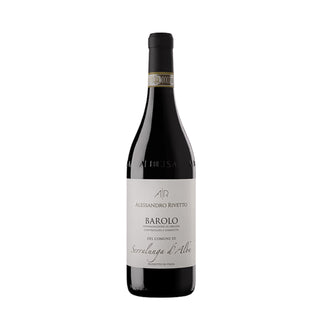
A Barolo from the village of Serralunga, Rivetto's Barolo del Comune di Serralunga lets you taste the nobility of the king's wine in the powerful yet refined Serralunga style.
 |
Barolo del Comune di Serralunga 2019 / Barolo DOCG / 100% Nebbiolo (Rivetto, Serralunga) Garnet hue with rose, dried fruit, and leather; noble tannins and a long finish. A powerful yet refined Serralunga Barolo. ¥12,100 (tax incl.) Buy now |
To know the grape itself, see What Is Nebbiolo? too.
The autumn table of the Langhe: tajarin, white truffle, and Barolo
Every October, when autumn fog (nebbia) wraps the Langhe hills, the town of Alba hosts the Fiera Internazionale del Tartufo Bianco d'Alba (the International Alba White Truffle Fair), a tradition running since 1929. In Japan the white truffle is known as a luxury ingredient, but for the people of the Langhe it is the annual pleasure of autumn.
On the Langhe table in this season there is always tajarin. This hand-cut pasta from the Alba area is made with 20 to 30 egg yolks per kilogram of flour, five to ten times more than standard pasta. Cut into fine strands of 2 to 3 mm and a vivid yellow, it is tossed in melted butter and finished with a shaving of white truffle. At the weekend osteria or the family Sunday lunch, the local custom is to open a bottle of Barolo with this dish.
Nebbiolo takes its name from the fog (nebbia) that rolls in at harvest time; in the same fog the truffle grows, and at the same table the tajarin waits. The Langhe sets its terroir on the plate in exactly this way.
FAQ
Q. What grape is Barolo?
A. 100 percent Nebbiolo.
Q. What is the price range for Barolo, and why is it expensive?
A. In Japan, expect to pay ¥8,000 to ¥30,000 or more per bottle. The appellation is limited to eleven designated villages, and minimum aging of 38 months (with 18 or more in oak) is mandatory, naturally capping production and reflecting in price. Our Rivetto Barolo del Comune di Serralunga (¥12,100) delivers the character of the King of Wines at excellent value for this tier.
Q. Should I decant it?
A. Decant young vintages early to open the aromas.
Q. Serving temperature?
A. 16 to 18°C, in a larger glass.
Q. Modernist or traditionalist, which should I choose?
A. Modernist Barolo is fruit-forward and approachable young; traditionalist Barolo offers classic aromatics and finesse to enjoy over time. Neither is better; choose by taste and by the dish.
Q. How long can it age?
A. It is already drinkable on release, but good vintages can age 10 to 20 years or more. Decant young bottles to open them sooner.
Q. What is the difference between Barolo and Barbaresco?
A. Both are 100 percent Nebbiolo DOCGs, the king and the queen of Piedmont wine. Barolo comes from eleven villages in the southwest Langhe; Barbaresco from three villages northeast of Alba. Minimum aging is 38 months for Barolo (18 in wood) versus 26 months for Barbaresco (9 in wood), so Barbaresco tends to open a little sooner. Neither is superior to the other; choose by taste and by the dish.
Further reading: Italian Wine Regions Guide


Comments (0)
There are no comments for this article. Be the first one to leave a message!