

Grillo is a white grape grown on the island of Sicily, giving dry white wines with lemon and herb aromas and a firm, structured backbone. It has become essential to any conversation about modern Sicilian white wine, prized for combining a crisp, clean mouthfeel with real depth. As an importer who pours Sicilian wines every day, I, Federico, will walk you through Grillo's flavor, food pairings, and how to choose a bottle.
The "plain Marsala grape" misconception
Grillo first spread as a leading grape of Marsala, Sicily's fortified wine (made by adding a little alcohol, and capable of sweet styles). Because of that, it is often saddled with an old image as a "grape for cooking wine." In truth, today it is highly regarded as a serious dry varietal white. Its tendency to build sugar and generous flavor is exactly what gives a dry yet substantial white. From Marsala's supporting player to a leading Sicilian white in its own right: that re-evaluation is well underway.
Tasting profile
| Item | Tendency |
|---|---|
| Body | Medium. Crisp but with real depth |
| Acidity | Lively and refreshing |
| Tannins | None to very light |
| Aromas | Lemon, green apple, herbs, a hint of salinity and almond |
| Serving temperature | 8 to 10°C (well chilled) |
How style changes by origin
Even within Grillo, the expression shifts with where it grows and how it is made.
| Origin / winemaking | Style tendency |
|---|---|
| Western Sicily, coastal (around Trapani) | Sea-breeze minerality and a crisp, dry edge |
| Inland, higher-altitude vineyards | Tighter acidity, more delicate and fragrant |
| Barrel-aged styles | Added weight and depth, made to sit alongside food |
Most Grillo is fermented at cool temperatures in stainless steel to keep its aromas and freshness. It sounds technical, but the point is simply to make it in a cool environment so the fruit's perfume is not lost.
Western Sicily's Trapani area has a specialty still little known in Japan: cùscusu alla trapanese, fish couscous. Couscous is a North African dish, but in this region facing Africa across the sea it has been rooted since the Middle Ages, so much so that locals call it "the most important dish of the province." It is served with a fish broth scented with cinnamon and almonds. Pairing it with the local white, a well-chilled Grillo, is the most natural combination there is on that coast.
Enjoying it in Japan, and what to pair
Grillo's lemony freshness and gentle depth make it a white that pairs wonderfully with Japanese food. Sashimi, white-fish carpaccio, tempura, grilled fish: the simpler the dish, with just salt and lemon, the more it shines. Just as Trapani's fish couscous shows, Grillo is at its best alongside the umami of seafood. In summer it also loves chilled noodles and grilled prawns or squid. People assume "Sicilian white means light and one-dimensional," but in reality it has aroma and depth, a genuinely food-friendly and generous glass. Serve it well chilled at 8 to 10°C, crisp and cold on a hot day.
Federico's recommendations
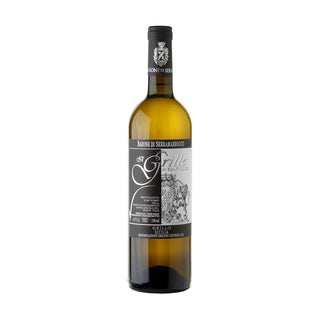
To try Sicilian Grillo for the first time, the bottle I often pour is Grillo del Barone. It is made by Barone di Serramarrocco in Erice, western Sicily, from sustainably farmed Grillo. Lemon and herb aromas lead into a wine with real grip and a lingering finish of acidity and minerality. You can order it directly from the card below. If you like this style of sea-kissed Sicilian white, see Inzolia too.
Choosing, drinking, and similar grapes
It is a dependable dry white you can enjoy with food every day. Serve well chilled at 8 to 10°C. It is mostly a wine to enjoy young and fresh, delicious as soon as you open it. For whites in a similar direction, try fellow Sicilian Inzolia, mineral Vermentino, or for sheer freshness Sauvignon Blanc. To explore more Sicilian whites, see our Sicily wine recommendations.
Frequently asked questions
Q. Is Grillo a sweet wine?
A. No, it is essentially dry. The Marsala association (a fortified wine that can be sweet) makes people assume sweetness, but varietal Grillo is made as a crisp dry white.
Q. What food does it pair with?
A. Seafood of all kinds: sashimi, tempura, grilled fish. Simple salt-and-lemon dishes pair especially well.
Q. What is a common mistake or misconception?
A. Assuming "Sicilian whites are just light." Grillo has both aroma and depth, and over-chilling hides its charm, so aim for around 8 to 10°C.
Q. How is it different from Inzolia?
A. Both are refreshing Sicilian whites, but Grillo has firmer structure and a longer finish. If you want more presence on the palate, Grillo is the pick.
If it has caught your interest, start with a well-chilled glass. Bring the sea and sun of Sicily into your home.


Comments (0)
There are no comments for this article. Be the first one to leave a message!