

Wine alcohol content is the percentage of ethanol by volume (shown on the label as "alc. 12%" or "12% vol"), and most Italian wines fall between 11 and 14%. People often ask me whether wine is a strong drink. In fact it sits a little above beer and a little below sake. I am Federico, a Milan-born Italian wine importer based in Tokyo, and in this guide I will walk through typical ABV by type, how wine compares with other drinks, how to read the label, and how to find a lighter bottle, all in plain language. Once you understand ABV, you can match a bottle to your mood, your food, and the time of day, and wine becomes much more approachable.
What is the alcohol content of wine? ABV by type
Wine ranges from the 5% of a light, sweet style up to around 15% for a full red. As a rule of thumb, bubbles and sweet wines are lower, rich reds are higher. In the band below, further left is lighter and further right is stronger. Each type is paired with a bottle you can actually drink from Swirl.
| Type | Typical ABV | A bottle from Swirl | Price (incl. tax) |
|---|---|---|---|
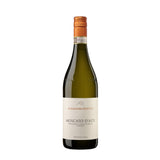
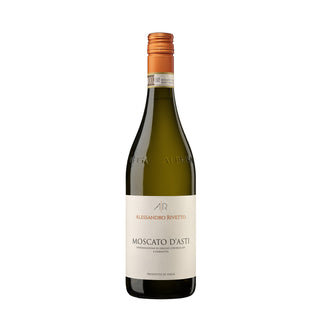
| Sweet frizzante (Moscato d'Asti) | approx. 5 to 6% | Alessandro Rivetto / Moscato d'Asti | ¥3,900 |
| Sweet frizzante (Puglia Moscato) | approx. 7 to 8% | Doppio Passo / Moscato | ¥2,200 |
| Sparkling (Prosecco) | approx. 11% | Bosco del Merlo / Prosecco Millesimato Brut | ¥3,300 |
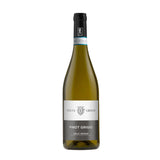
| Lighter white (Pinot Grigio, Soave) | approx. 11.5 to 13% | Tenuta Grimani / Pinot Grigio | ¥3,700 |
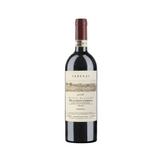
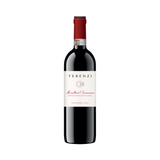
| Medium red (Sangiovese) | approx. 13 to 14% | Terenzi / Morellino di Scansano | ¥3,850 |
| Full red (Primitivo) | approx. 13.5 to 14.5% | Doppio Passo / Primitivo | ¥2,200 |
| Rich, long-aged red (e.g. Amarone) | approx. 15 to 16% | (Not stocked at Swirl. Shown as the right-hand marker) | - |
The same type varies by producer and vintage. Always check the "alc." figure on the bottle for the exact number.
Is wine stronger than beer or sake? A drinks comparison
Here is the short answer: ordinary wine (11 to 14%) is higher than beer (about 5%) and a little lower than sake (about 15 to 16%). So it is not an extremely strong drink. Lined up against familiar drinks, wine's place becomes clear.
| Drink | Typical ABV |
|---|---|
| Beer | approx. 5% |
| Chuhai / hard seltzer | approx. 3 to 9% |
| Moscato d'Asti (sweet frizzante) | approx. 5 to 6% |
| Typical wine | approx. 11 to 14% |
| Sake | approx. 15 to 16% |
| Shochu | approx. 25% |
| Whisky | approx. 40% |
It may surprise you that sake and wine are so close in ABV. Because wine is sipped slowly alongside food, it tends to feel gentler than the number suggests. If strong drinks are not your thing, start with lower-alcohol bubbles or whites and keep water on the table between glasses (in Italy there is always water at the table), and you will enjoy the whole meal. If you switch to a slightly stronger wine while drinking at the pace you would use for beer or a highball at an izakaya, it can hit faster than expected, so just mind your pace.
Where is the ABV on the label, and how does it vary by country and region?
Alcohol content is printed on almost every wine label as "alc. 13% vol" or "13.0%". Imported wines sold in Japan also show it in Japanese on the back label as "アルコール分 13%", so look there first if you are curious.
Countries and regions show clear patterns. The traditional European regions (the Old World), especially northern Italy and cooler parts of France, center on a modest 11 to 13%. Warmer regions with strong sun, such as southern Italy, California, and Australia (including the New World), ripen grapes more fully and tend to come out higher, at 14 to 15%. If one bottle feels heavier than another of the same grape, the regional climate is usually the reason. If you want a lighter bottle, use 13% or below on the label as a guide, and choose around 14% on a day when you want more body, using ABV as a shopping yardstick. The fact that a northern Italian sparkler like Prosecco is light while a southern red like Primitivo is fuller is a good example.
Is sparkling wine low in alcohol? Prosecco and Moscato
Sparkling is surprisingly restrained, about 11% for Prosecco and just around 5.5% for Moscato d'Asti, on a par with beer. Bubbles do not mean strength; their lightness is exactly what makes them good before a meal or at lunch.
The reason lies in how they are made. Prosecco and Moscato d'Asti are made by a second fermentation in a tank, the "Metodo Martinotti" (the Charmat method). For Moscato d'Asti, the tank is chilled partway through to stop the yeast and deliberately leave some of the sugar. Because fermentation is halted before the sugar fully turns to alcohol, sweetness remains, the ABV stays low, and the bubbles are gentle. That is exactly why I so often pour it for a toast or a light glass in the afternoon. If you want to go deeper, see our guide to sweet and lightly sparkling wines.
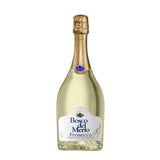
About 11%. A dry sparkler for a toast or before a meal.
Prosecco Millesimato Brut 2024Bosco del Merlo
Why are some wines high in alcohol and others low? Sugar and fermentation
What sets the ABV is the sugar in the grapes. During fermentation, yeast eats the grape sugar and turns it into alcohol, so riper, sweeter grapes make higher-alcohol wine. Here the regional climate comes into play.
In the hot, sunny south of Italy, a grape like Primitivo in Puglia ripens fully and loads up on sugar, reaching around 14%. Cooler northern regions and earlier-picked grapes have less sugar and finish lower. In cool areas, some regions even allow an old practice called chaptalization, adding a little sugar before fermentation to lift the alcohol. The image that "the south is rich and strong, the north and the bubbles are light" grows out of these differences in sugar and winemaking.
There is one more technique that pushes ABV up. In Valpolicella, Veneto, Amarone is made by drying the harvested grapes for about three to four months (a process called appassimento) to remove water and concentrate the sugar before fermentation. That is how it reaches 15 to 16%. Locally in Valpolicella, Amarone is called a "vino da meditazione" (a meditation wine): rather than pairing it with food, people have just one glass after dinner, by the fireplace, savored slowly. It is little known in Japan, but the idea is that a strong wine is less about volume and more about a companion for a quiet moment.
The same "sweet and high" combination exists in the south too. Manduria in Puglia has a sweet DOCG called Primitivo di Manduria Dolce Naturale, where the grapes are ripened almost to raisins on the vine to make a bottle that carries both sweetness and high alcohol, the region's wine for celebrations. Knowing these local customs reveals the story behind the ABV number.
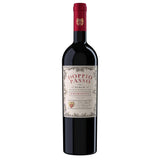
About 14%. Mellow richness born of the hot Puglian sun.
Doppio Passo Primitivo 2024Doppio Passo
Is wine getting stronger than it used to be?
Yes, over the past few decades wine ABV has crept up worldwide. Warming has ripened grapes more fully, and a taste for bold, fruit-forward styles has grown alongside it, so reds that were often around 12% are now not unusual at 14%. If you feel modern wines taste stronger, you are not imagining it. That said, Italy still has many regions and producers that protect lightness. If you prefer lighter wines, choose northern Italian whites and bubbles, and early-drinking reds, and you will find the gentler ABV of old. A little attention to region and producer brings you closer to your preferred alcohol range.
Is "sweet wine equals high alcohol" true? A common myth
No, it is often the opposite, a classic misunderstanding. Sweetness and strength are separate things: sweet Moscato d'Asti is about 5.5%, far lighter than a dry red at about 14%.
The reason is simple. Most sweet wines stop fermentation partway to leave sugar behind, so the alcohol stays low. Dry wines, by contrast, use up nearly all the sugar and turn it into alcohol, so the ABV tends to rise. Rather than "sweet equals strong alcohol," remember "sweet equals sugar left in (and the ABV is often lower)." The exceptions are Amarone, mentioned above, and botrytized and passito wines made from dried grapes, which are special types that are sweet yet high in alcohol. If you love sweet wine but want to keep it light, the Moscato styles are a perfect fit.
How do you choose a lower-alcohol wine? A by-the-occasion list
ABV works well as a yardstick for the occasion. If you are unsure, try choosing like this.
- For a light drink at lunch or a toast → Moscato d'Asti or Prosecco, about 5 to 11%
- For everyday drinking with food → Pinot Grigio, Soave, or Morellino, about 12 to 13%
- For one slow glass at night → Primitivo or Madrechiesa, about 14%
- If strong drinks are not your thing → start with light bubbles or sweet styles
A few tips for homes in Japan. For a higher-ABV red, serving it a touch cooler (around 16 to 18 degrees), without over-chilling, softens the bite of the alcohol and makes it easier to drink. Pouring smaller measures and keeping water on the table between glasses is standard practice at the Italian table too. At home, simply using a smaller glass and reducing the amount per pour lets you take your time without worrying about the next morning. More than the ABV number itself, how much you drink and at what pace is what really changes how it affects you.
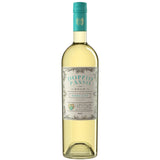
About 7%. Sweet and light, friendly even for the wine-shy.
Doppio Passo Moscato 2024Doppio Passo
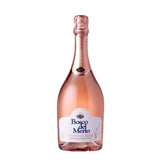
About 11%. Festive bubbles from the aperitivo onward.
Prosecco Rosé Millesimato 2024Bosco del Merlo
How Federico chooses by ABV
For a first glass, or for anyone who does not love strong drinks, the one I most often pour is Moscato d'Asti. At about 5.5%, as light as beer, with gentle sweetness and fine bubbles, it works before a meal and with fruit or sweets afterward. Guests who told me "wine seems too strong for me" have fallen for wine on the spot through this bottle, many times, at tables around Tokyo.
In my home city of Milan, the "aperitivo", a light drink on the way home from work, is part of daily life, and what we reach for in the early evening is usually low-alcohol bubbles or a crisp white. The idea is to unwind before a proper meal with something light, and here too a lower ABV shines. At home in Japan too, a glass of Moscato or Prosecco before dinner, then a white or red with the meal, lets you enjoy the whole evening without overdoing it.
From there, climb the ABV ladder little by little: a dry sparkler (Prosecco), a light white (Pinot Grigio), an everyday red (Morellino), and finally a bottle to savor slowly at night (Primitivo). There is no need to start with a big red. From the cards below, pick the bottle that suits your mood today.
Frequently asked questions
Q. Which wine has the lowest alcohol?
A. Generally a sweet frizzante such as Moscato d'Asti, around 5%. For something even lighter, "lower-alcohol" (0.5 to 1%) and "no-alcohol" (0.00 to 0.5%) wines are increasingly available, and these are the safe choice during pregnancy or before driving.
Q. Does a higher-ABV wine get you drunk faster?
A. Intoxication comes down to ABV times the amount you drink. Keeping a 14% wine to a single glass means less total alcohol than three glasses of an 11%. With a high-ABV bottle, the trick is a smaller amount, savored slowly.
Q. Is there a link between a wine's ABV and its calories?
A. Yes. Alcohol has about 7 kcal per gram, so higher-ABV wines tend to be higher in calories too. On a day you want to keep calories down, a lower-ABV dry wine or sparkler is a useful guide.
Q. Does the ABV drop after opening or decanting?
A. Hardly at all. Exposure to air opens the aromas, but only a tiny amount of alcohol noticeably evaporates. If you want less alcohol, the practical move is to pour less or add water between glasses.
Q. Does chilling change the ABV?
A. The number does not change. But chilling makes the bite of alcohol harder to notice, so even a higher-ABV red can feel lighter on the palate. Think of serving temperature as a way to adjust flavor.
Q. Should I consider ABV when pairing with food?
A. Yes. Light starters and fried food go well with lower to medium bubbles and whites (about 11 to 12%), while rich meat dishes suit 13 to 14% reds. A wine that is too light for a rich dish will be overpowered.
ABV is a measure of strength, but it is also a number that reflects a wine's character. Do not be put off by the figure; choose it for the occasion, and wine becomes a far more casual glass. If a bottle catches your eye, please feel free to give it a try.
Sources: Consorzio Asti DOCG; Wikipedia "Moscato d'Asti" (Metodo Martinotti and ABV); Consorzio Tutela Vini Valpolicella / wine.com Amarone Guide (appassimento and ABV, vino da meditazione); Primitivo di Manduria Dolce Naturale DOCG production rules (AIS Italia). Check the "alc." figure on the bottle for each wine's exact alcohol content.

Comments (0)
There are no comments for this article. Be the first one to leave a message!