

A grape family tree maps how wine grape varieties are related (parent and child, siblings, or the same grape under different names), based on DNA profiling. Since the 1990s, DNA research has turned wine wisdom upside down: Chardonnay turned out to have a "peasant" grape for a parent, and Puglia's Primitivo proved to be the very same grape as California's Zinfandel.
I am Italian, and in Tokyo I import Italian wine and pour it almost every day. When a customer asks "I love this white, what should I try next?", the family tree is the most useful tool I have. In this guide we follow the main French and Italian varieties family by family, and show which wines in the Swirl cellar let you actually taste each branch.
The common misconception: different name, different grape?
The most common assumption is that a different name means a different variety, and that grapes from the same region must be related. Very often the opposite is true.
- Different names, same grape: Primitivo = Zinfandel, Vermentino = Rolle (Provence), Garganega (Soave) = Grecanico Dorato (Sicily).
- Different colours, same grape: Pinot Nero, Pinot Grigio and Pinot Bianco are skin-colour mutations of one variety with identical DNA.
- Same region, unrelated: Piedmont's Nebbiolo and Barbera grow side by side, yet no close DNA relationship has been found between them.
A family tree uses three kinds of lines: a full parentage, where both parents are known; a parent-offspring link, where the relationship is certain but we do not know which is the parent; and a synonym, where only the name differs. This guide keeps those distinctions.
How to read the trees: Green = a grape you can drink from the Swirl cellar today, Outline = family members we mention for context. "×" marks the two parents of a natural cross; "=" marks the same grape under different names.
The French family tree: Pinot and Cabernet Franc, the two great ancestors
Most of France's major varieties lead back to two ancestors: Pinot from Burgundy and Cabernet Franc from Bordeaux. The Alpine lines of Savagnin and Syrah complete the picture.
1. The Pinot family: Burgundy's founding house
Gouais Blanc was a peasant grape, banned several times in the Middle Ages for its poor quality. The cross of that humble grape with noble Pinot gave the world its most famous white grape, Chardonnay. Pinot Gris (Pinot Grigio) and Pinot Blanc (Pinot Bianco) are Pinot Noir (Pinot Nero in Italian) with its skin colour changed: not parent and child, but the same grape in another colour.
At Swirl you can taste the same Pinot in different colours: Pinot Grigio from Veneto, the Pinot Grigio Rosé that draws colour from the grape's pink skins, and the head of the family in Petaluma Gap Pinot Noir. Add a Chardonnay, Pinot's child, and the whole family is at the table.
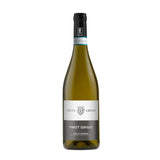
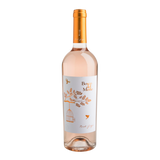
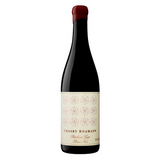
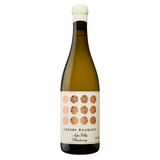
Our Prosecco Millesimato Brut also blends 15% Pinot Nero with Glera: the Pinot family even turns up in the bubbles.
2. The Cabernet Franc family: the father of Bordeaux
So Cabernet Franc is the father of both Cabernet Sauvignon and Merlot. The classic Bordeaux red blends Cabernet Sauvignon, Merlot and Cabernet Franc; seen through the family tree, it is a family wine with a father and two of his children in one bottle. Most people are also surprised that Cabernet Sauvignon's mother is a white grape, Sauvignon Blanc.
In the Swirl cellar this family lives in both Bordeaux and Italy. On the Right Bank, Château Rocher Gardat blends Merlot and Cabernet Franc, child and father. In Sicily, Serramarrocco is 85% Cabernet Sauvignon with 15% Cabernet Franc, another parent and child pairing. And the maternal side, Sauvignon Blanc, is in Turranio from Bosco del Merlo in eastern Veneto.
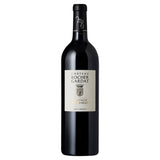
Merlot × Cabernet Franc: father and son on the Right Bank
Château Rocher Gardat Montagne Saint-Emilion 2020Château Rocher Gardat
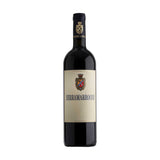
Cabernet Sauvignon plus its father, Cabernet Franc (Sicily)
Serramarrocco 2015Barone di Serramarrocco
The same family also appears in Cuvée du Centenaire from Graves and in Blend Numero Sette, Bordeaux varieties grown in Tuscany's Maremma.
3. The Savagnin (Traminer) family: an old Alpine bloodline
Here the trees connect. Since Sauvignon Blanc is probably Savagnin's child, Savagnin is most likely a grandparent of Cabernet Sauvignon. Gewürztraminer, famous for lychee and rose, is a distant relative of Bordeaux red. At Swirl you can taste it under its Italian name, Traminer Aromatico, in Ibisco from northern Italy.
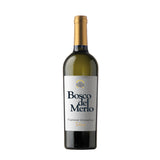
Gewürztraminer, the aromatic mutation of Savagnin
Traminer Aromatico Ibisco 2023Bosco del Merlo
4. Syrah: Italian relatives across the Alps
The father of the northern Rhône's great grape is Dureza, an old black grape from the Ardèche. Its mother has long been identified as Mondeuse Blanche, a white grape from Savoie (recent genome work suggests that link may be more complex). The fascinating part is that Dureza turned out to be a sibling of Trentino's Teroldego. That makes Teroldego Syrah's uncle, and links a great French variety by blood to Italy across the Alps.
The wine to sip with that story in mind is Syrah Seduzione, grown in Veneto in northern Italy. Less dense than northern Rhône, with black-pepper spice and soft fruit, it is an easy Syrah to pair with Japanese food.
The Italian family tree: Sangiovese spreads south, Moscato crosses the sea
Italy has more than 500 native varieties, and in 2021 researchers published a "Parentage Atlas of Italian Grapevine Varieties" based on DNA from hundreds of Italian varieties. It confirmed that Tuscany's Sangiovese and the Moscato grapes that spread across the Mediterranean are parents of many southern Italian varieties.
5. The Sangiovese family: from Tuscany to the south
Sangiovese is Italy's most planted black grape, yet its parents are still unknown. A 2007 study proposed Ciliegiolo × Calabrese di Montenuovo, but later DNA work rejected it and showed instead that Ciliegiolo is Sangiovese's child. Unknown parents, and children spread from Tuscany all the way to Mount Etna in Sicily: that is what makes Sangiovese so intriguing.
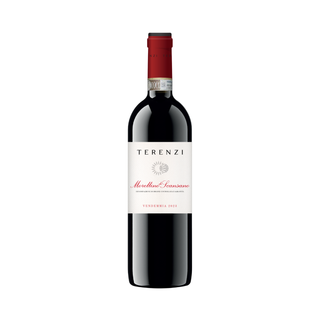
All the Sangiovese at Swirl comes from the Terenzi family in Maremma, southern Tuscany, a land where Ciliegiolo has also long been grown. Maremma is home to the butteri, mounted cattle herders whose tradition is said to reach back to Etruscan times. When Buffalo Bill's Wild West Show toured Italy in 1890, the butteri challenged his cowboys to break wild horses, and the story of their victory is still told today. That untamed land grows Sangiovese with firm acidity and bright fruit.
For a more concentrated Sangiovese, try the small-production Pvrosangve. Same grape, same maker, and you can taste how vineyard and ageing change its expression.
6. The Moscato family and Garganega: Sicily's Grillo is a "mixed-blood" white
Grillo, Sicily's signature white, was born from a natural cross of Catarratto and Zibibbo. Zibibbo's parent is Moscato Bianco, the grape behind Piedmont's Moscato d'Asti. And Catarratto is linked as parent or child to Garganega, the grape of Soave in Veneto. Northern Soave and southern Sicily meet inside Grillo.
You can taste all three generations from the Swirl cellar: the ancestral Moscato d'Asti, its child Zibibbo, its grandchild Grillo, plus Soave from the "other branch", Garganega. At our tastings this is the line-up that sparks the most conversation.
The ancestor, Moscato Bianco (Piedmont, lightly sparkling, sweet)
Moscato d'Asti 2024Alessandro Rivetto
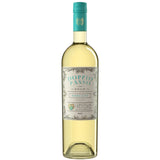
Sicilian Moscato in a dry style (Japan's first and exclusive import)
Doppio Passo Moscato 2024Doppio Passo
7. Primitivo = Zinfandel = Tribidrag
Both "Primitivo" and "Tribidrag" mean "early ripening". The grape's home is Croatia, across the Adriatic, where a cross of Tribidrag and Dobričić also gave Croatia its flagship red, Plavac Mali. Same genes, different places: ripe, warm and sweet-fruited in Puglia, jammy and powerful in California.
The easiest way to taste "same grape, different country" is Doppio Passo Primitivo, imported to Japan first and exclusively by Swirl. For the Californian side, compare Napa's Bon Ton Red, which includes Zinfandel in its blend.
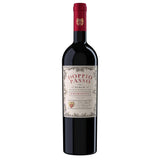
Primitivo from Puglia (Japan's first and exclusive import)
Doppio Passo Primitivo 2024Doppio Passo
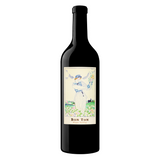
8. Vermentino = Rolle: one grape across the border
"Rolle" in Provence, "Pigato" in Liguria, "Favorita" in Piedmont: only the name changes between France and Italy. Often grown by the sea, it has a fresh, almost saline brightness. At Swirl you can enjoy it in Balbino from Maremma.
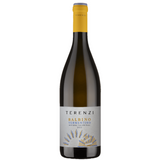
9. Piedmont: Nebbiolo, the parent with unknown parents
Nebbiolo, the grape of Barolo and Barbaresco, sits near the top of Piedmont's family tree as a parent, while its own parents remain unknown. No close relationship has been found with Barbera or Dolcetto from the same Langhe vineyards; Dolcetto is the child of another line, Moissan × Dolcetto Bianco. For an introduction to Nebbiolo, we recommend the Rivetto family's Langhe Nebbiolo.
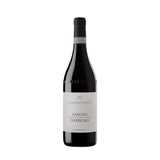
10. The blanks in the tree: grapes whose parents are still unknown
Even with modern DNA research, many varieties still have unknown parents. Sicily's Nero d'Avola and Inzolia, and Piedmont's Arneis and Nascetta, are classic examples. A gap in the tree is also a sign of how old and deeply rooted a grape is. A common mix-up: Nero d'Avola is also called "Calabrese", but it is a different grape from Campania's "Calabrese di Montenuovo", once proposed as a parent of Sangiovese.
Following the family tree in the Swirl cellar
Here are the wines from each family that Swirl can deliver today. Check stock and prices on each product page.
| Family | Grapes you can drink at Swirl | Wines |
|---|---|---|
| Pinot family | Pinot Grigio, Pinot Noir, Chardonnay | Pinot Grigio / Pinot Grigio Rosé / Petaluma Gap Pinot Noir / Napa Valley Chardonnay |
| Cabernet Franc family | Cabernet Franc, Cabernet Sauvignon, Merlot, Sauvignon Blanc | Château Rocher Gardat / Serramarrocco / Sauvignon Blanc Turranio |
| Savagnin family | Gewürztraminer | Traminer Aromatico Ibisco |
| Syrah | Syrah | Syrah Seduzione |
| Sangiovese family | Sangiovese | Morellino di Scansano / Madrechiesa / Pvrosangve |
| Moscato and Garganega family | Moscato, Zibibbo, Grillo, Garganega | Moscato d'Asti / Doppio Passo Moscato / Quojane Zibibbo / Grillo del Barone / Farinaldo Soave |
| Tribidrag (one grape) | Primitivo = Zinfandel | Doppio Passo Primitivo / Napa Valley Bon Ton Red |
| Vermentino (one grape) | Vermentino = Rolle | Balbino |
| Nebbiolo family | Nebbiolo | Langhe Nebbiolo |
| Parents unknown | Nero d'Avola, Inzolia, Nascetta | Baglio di Serramarrocco / Inzolia / Langhe Nascetta |
Enjoying it in Japan: family-tree tastings
The best use of a family tree is a tasting at home. Line up two or three bottles and your understanding of wine jumps. These are the three flights I recommend most often.
| Theme | Wines to line up | Food to pair |
|---|---|---|
| Three Sicilian generations | Moscato d'Asti → Quojane Zibibbo → Grillo del Barone | Tempura with salt, white-fish carpaccio, fruit after dinner |
| Bordeaux's father and mother | Sauvignon Blanc Turranio → Serramarrocco | Chicken tenderloin with ume and shiso to start, then beef steak or sukiyaki |
| Same grape, different country | Doppio Passo Primitivo ↔ Napa Valley Bon Ton Red | Yakiniku sauce, teriyaki, hamburg steak |
The trick is to pour from lighter and less aromatic to fuller and more aromatic. In a Japanese home, temperature matters most: take whites out of the fridge about 5 minutes before serving, and in summer chill reds like Sangiovese or Primitivo in the fridge for 20 to 30 minutes, to around 15 to 18°C, so acidity and fruit show in balance. You do not need a wine cellar.
How to choose: follow the relatives of a wine you love
The family tree is a map for picking your next bottle without a miss. Start from a taste you already love:
- Love Chardonnay → its sibling Gamay, or its parent Pinot Grigio
- Love Cabernet Sauvignon → a Right Bank blend that includes its father, Cabernet Franc
- Love Moscato d'Asti → its child Zibibbo and grandchild Grillo, into dry territory
- Love Primitivo → the same grape as Zinfandel
- Love Sangiovese → its child, Etna's Nerello Mascalese
For deeper dives into single varieties, see our grape guides such as What is Zinfandel?
FAQ
Q. Are Primitivo and Zinfandel really the same grape?
A. Yes. DNA research confirmed that Primitivo, Zinfandel and Croatia's Tribidrag (Crljenak Kaštelanski) are one variety. Differences in taste come from place and winemaking.
Q. Is one of Cabernet Sauvignon's parents really a white grape?
A. Yes. A 1997 DNA study showed it was born from a natural cross of the black grape Cabernet Franc and the white grape Sauvignon Blanc.
Q. Are Pinot Grigio and Pinot Noir parent and child?
A. No, they are the same grape. Pinot Grigio (Pinot Gris) is a skin-colour mutation of Pinot Noir with identical DNA.
Q. Do we know the parents of Sangiovese?
A. Not yet. The theory published in 2007 was later rejected by DNA research. What is confirmed is that Sangiovese is a parent of southern Italian varieties such as Nerello Mascalese and Gaglioppo.
Q. What is the most common misconception?
A. Believing that a different name means a different grape, and that grapes from the same region must be related. Vermentino and Rolle are one grape across a border, while Nebbiolo and Barbera grow in the same vineyards yet are not close relatives.
Take the family tree with you and line up a few "relatives". Your everyday wine will start to look a little different.
References: Bowers et al., Science (1999); Bowers & Meredith, Nature Genetics (1997); Boursiquot et al. (2009); Vouillamoz & Grando, Heredity (2006); Crespan et al., VITIS (2008); D'Onofrio et al., Frontiers in Plant Science (2021); Raimondi et al., Scientific Reports (2020).

Comments (0)
There are no comments for this article. Be the first one to leave a message!