

Italian wine classifications indicate how strict the rules governing origin and production are, not quality itself. DOCG, DOC, IGT: you see these letters on every label. Many people end up choosing by price alone because the system seems confusing, but once you understand how it works, the same budget buys a bottle that suits your palate far better. Italy currently has 78 DOCGs and 341 DOCs, each with detailed regulations on permitted grape varieties, maximum yields, and minimum ageing periods. This guide sorts Italy's four classification tiers into a pyramid, then walks you through everything from the fascetta (government-certified seal) to tasting the tiers first-hand with Swirl's direct-import wines. Whether you are new to Italian wine or already an enthusiast, this article will equip you to use the classification system to your advantage.
What Is Italy's Wine Classification System?
Italy's classification system began in 1963, when DOC (Denominazione di Origine Controllata) was created on the model of France's AOC. At the time, Italian wine quality was inconsistent and the credibility of regional names needed reinforcing. In 1980, the more stringent DOCG (Denominazione di Origine Controllata e Garantita) was added, with Barolo and Brunello di Montalcino among the first to be certified. IGT (Indicazione Geografica Tipica) followed in 1992, giving a formal home to rule-breaking, innovative wines like the Super Tuscans.
A 2009 EU regulation folded DOCG and DOC into PDO (Protected Designation of Origin) and IGT into PGI (Protected Geographical Indication), but Italy still uses the traditional names domestically, and labels continue to read DOCG, DOC or IGT. Visualised as a pyramid, the tiers grow stricter and rarer as you move up.
78 designations / sensory exam + fascetta required
341 designations / origin, varieties & methods regulated
~120 designations / geographical indication only, high creative freedom
Table wine / no regulations
The Four Tiers at a Glance
| Tier | Full Name | Key Criteria | Count | Notable Examples |
|---|---|---|---|---|
| DOCG | Denominazione di Origine Controllata e Garantita | Stricter production rules than DOC + mandatory sensory examination (assaggio) by a government panel for every vintage + fascetta seal on each bottle | 78 | Barolo, Brunello di Montalcino, Chianti Classico, Morellino di Scansano, Moscato d'Asti |
| DOC | Denominazione di Origine Controllata | Permitted varieties, maximum yields, winemaking methods and minimum ageing periods are regulated. Chemical analysis for quality checks | 341 | Soave, Barbera d'Alba, Langhe Nebbiolo, Prosecco |
| IGT | Indicazione Geografica Tipica | At least 85% of grapes must be harvested in the stated region. Varieties and methods are at the producer's discretion | ~120 | Toscana IGT (including Super Tuscans), Terre Siciliane IGT |
| Vino | Table wine (formerly Vino da Tavola) | No requirement to state origin, grape variety or vintage. Only the country name (Italy) is required | N/A | Everyday wines, some natural wines |
The Heart of DOCG: The Fascetta, a Wine's Identity Card
Every DOCG bottle carries a paper band called the "fascetta di stato" wrapped over the capsule. It is printed and issued by Italy's state mint (Istituto Poligrafico e Zecca dello Stato) and bears a unique serial number. These numbers are tracked in a central database, enabling bottle-level traceability back to the producer, lot and bottling date if a quality issue arises.
DOC wines also carry a seal called the "contrassegno di Stato," but it has no serial number and offers no bottle-level traceability. In other words, the numbered fascetta is a privilege reserved exclusively for DOCG, and it is the most rigorous mechanism for guaranteeing a wine's authenticity and quality.
In Italy, this band is sometimes called "the wine's identity card" (carta d'identita del vino). When Italians choose wine for a gift, many specifically ask for "one with a fascetta," meaning a DOCG. Since 2024, the fascetta's design has incorporated the Italian tricolour. Agriculture Minister Lollobrigida called it "a promotion of Italian identity," reaffirming the DOCG seal as a symbol of national quality assurance. You can check for this band and its serial number on any DOCG bottle purchased in Japan. Next time you open a Barolo or a Morellino di Scansano, take a closer look.
DOC and IGT: Classification Does Not Equal Quality
"DOCG is the best, IGT is low quality" is the biggest misconception in Italian wine. The tiers represent degrees of regulatory strictness regarding origin, varieties and production methods, not an absolute ranking of quality. Stricter rules do not necessarily mean better wine.
The Super Tuscans are the perfect example. In the 1970s, innovative Tuscan producers began blending Cabernet Sauvignon and Merlot instead of the prescribed Sangiovese. Their wines did not comply with the Chianti DOC rules, so they were demoted to VdT (table wine), the lowest tier. Yet wines like Sassicaia and Tignanello won acclaim as some of the world's finest. The IGT category was created in 1992 to resolve this paradox. To this day, Sassicaia remains an IGT, yet a single bottle costs over 40,000 yen.
Likewise, the same producer routinely makes both DOCG and DOC wines. Piedmont's Alessandro Rivetto makes Barolo (DOCG) and Langhe Nebbiolo (DOC) from the same Nebbiolo grape. The differences are vineyard location (designated Barolo plots or not), minimum ageing (38 months for Barolo vs. a few months for Langhe) and yield caps. The DOC is fresher, more approachable and less expensive, making it the ideal introduction to the Nebbiolo grape's character.
Region x Classification: Key Combinations
| Region | Key DOCGs | Key DOCs | Key IGTs | Character |
|---|---|---|---|---|
| Tuscany | Chianti Classico, Brunello di Montalcino, Morellino di Scansano | Bolgheri, Maremma Toscana | Toscana IGT (birthplace of the Super Tuscans) | Sangiovese-driven. Bright acidity and structured tannins |
| Piedmont | Barolo, Barbaresco, Moscato d'Asti | Barbera d'Alba, Langhe Nebbiolo, Dolcetto d'Alba | Piemonte IGT | From age-worthy Nebbiolo to sweet Moscato |
| Veneto | Amarone, Prosecco Superiore (Conegliano Valdobbiadene) | Soave, Prosecco, Valpolicella | Veneto IGT | A powerhouse for whites and sparkling wines |
| Puglia | Primitivo di Manduria Dolce Naturale | Primitivo di Manduria | Puglia IGT | Rich, concentrated Primitivo is the flagship |
| Sicily | Cerasuolo di Vittoria | Sicilia DOC | Terre Siciliane IGT | A treasure chest of indigenous varieties: Nero d'Avola, Perricone and more |
Reading an Italian Wine Label: Three Checkpoints
When choosing an Italian wine in a shop or restaurant, there are three things to check on the label.
1. Classification (DOCG / DOC / IGT)
This always appears on the front or back label. For DOCG wines, you can also confirm it by the numbered fascetta band over the capsule. If no classification is shown, the wine is a Vino (table wine).
2. Vintage (harvest year)
Even within the same designation, the vintage can make a real difference in flavour. Piedmont's Nebbiolo and Tuscany's Sangiovese are especially vintage-sensitive; wines from great years can age for decades. IGT and Vino wines sometimes omit the vintage.
3. Producer name and Consorzio logo
Within the same classification and region, the producer's philosophy and skill ultimately determine quality. A Consorzio (producers' association) logo on the label means the wine also meets the association's own voluntary standards. The back label sometimes shows grape varieties used, a map of the growing area, altitude and soil type; details like these reveal the vineyard's unique character beyond what the classification alone can tell you.
Common Misconceptions and Smart Buying Tips
Misconception 1: DOCG always tastes better than DOC
The tiers measure regulatory strictness, not a ranking of quality. An excellent producer's DOC wine regularly outshines a mediocre DOCG. A well-regarded Barbera d'Alba (DOC) will satisfy you far more reliably than a DOCG chosen on name recognition alone.
Misconception 2: IGT means cheap wine
IGT means "freedom from the rules," not low quality. Sassicaia is an IGT and costs over 40,000 yen a bottle. Sicily's IGT Terre Siciliane also delivers distinctive wines made from indigenous varieties like Perricone and Nero d'Avola.
Misconception 3: Table wine is not worth drinking
The Vino d'Italia category includes natural wine producers who deliberately opt out of classification rules to pursue creative freedom. There are excellent everyday options at great value, and plenty of discoveries to be made outside the classification system.
Experience the Tiers with Swirl's Wines
The best way to understand the classification differences is to taste them side by side. Here are representative wines from each tier in Swirl's direct-import range, from Sangiovese and Nebbiolo reds to Prosecco sparkling and sweet Moscato, letting you experience the breadth of the system one glass at a time.
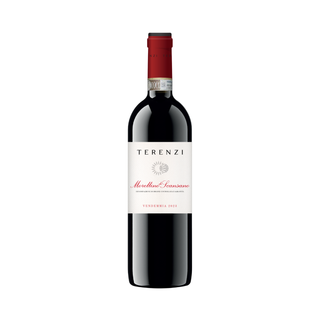
DOCG (Denominazione di Origine Controllata e Garantita)
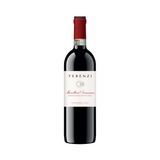
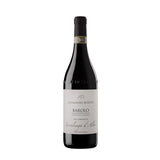
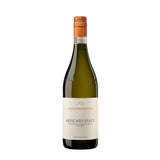
DOC (Denominazione di Origine Controllata)
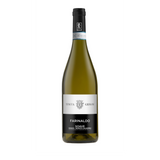
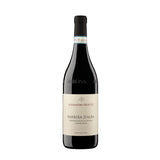
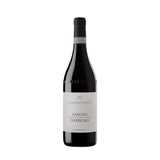
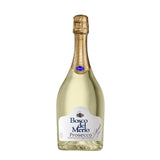
IGT (Indicazione Geografica Tipica)
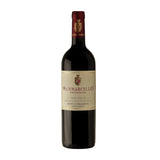
Frequently Asked Questions
Q. Why are Super Tuscans classified as IGT?
A. In the 1970s, Tuscan producers deliberately used French grape varieties such as Cabernet Sauvignon and Merlot that were not permitted under the DOC/DOCG rules of the time. The classification reflects non-compliance with rules, not a lack of quality. Sassicaia remains an IGT to this day, yet it is one of the most acclaimed Italian wines in the world.
Q. Where can I find the fascetta (band) on a DOCG bottle?
A. It is a paper band wrapped over the capsule (foil) at the top of the bottle. It bears a unique serial number, and since 2024 it also features the Italian tricolour design. The same band appears on any DOCG wine purchased in Japan.
Q. Why is there such a wide price range within Barolo?
A. Although every Barolo shares the DOCG classification, vineyard location (differences between communes and crus), production scale, years of ageing and the producer's philosophy all directly affect price. Serralunga, La Morra and Barolo each have their own style by commune.
Q. Are there quality differences among DOC wines?
A. There is no official sub-ranking, but market perception varies by history and reputation. Some DOC regions eventually upgrade to DOCG; Morellino di Scansano was promoted to DOCG in 2007. More promotions are possible in the future.
Q. What is a good classification tasting set?
A. Start with two bottles: DOCG Morellino di Scansano and DOC Barbera d'Alba. The contrast in region (Tuscany vs. Piedmont), grape (Sangiovese vs. Barbera) and tier (DOCG vs. DOC) comes through in a single glass of each. As a next step, compare DOC Langhe Nebbiolo and DOCG Barolo: same grape, different classification, and the meaning of the tiers becomes even clearer.
References: Ministero dell'agricoltura, della sovranita alimentare e delle foreste "Registri DOP e IGP"; Federdoc; Cellar Tours "Decoding Italian Wine Classification"; Gambero Rosso International "The tricolour arrives on DOC and DOCG wines"
Related articles: What Is Sangiovese? / What Is Primitivo? / What Is Prosecco?


Comments (0)
There are no comments for this article. Be the first one to leave a message!