
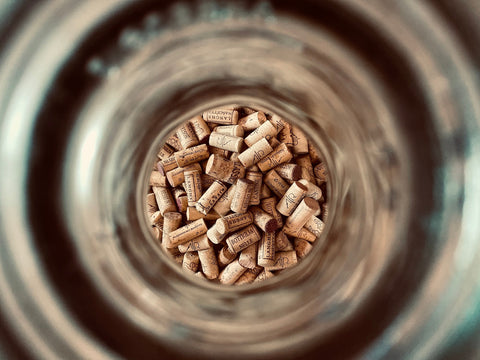
Piedmont wine is the wine made in Piemonte, the region of northwest Italy, and it spans an astonishing range for a single region: from the noble Nebbiolo reds led by Barolo, the "king of Italian wine," to everyday reds like Barbera and Dolcetto, white Arneis and Nascetta, and the sweet, lightly sparkling Moscato d'Asti. At the foot of the Alps, on hills wrapped in autumn fog (nebbia), the wines manage to be both delicate and powerful.
I am from Italy and I import Italian wine in Tokyo, pouring it almost every day. Piedmont is the Italian region that cares most about the character of each individual vineyard, which is why it is so often compared to Burgundy in France. It has prestigious, expensive bottles like Barolo, and it has unpretentious reds you can enjoy for the price of a casual dinner. In this guide I will walk through the whole picture of the region, its classifications, grapes, and how to choose, alongside the Piedmont wines you can actually drink from the Swirl cellar.
A common misconception: Piedmont means Barolo, so it is expensive and difficult?
The most common assumption is that Piedmont equals Barolo, meaning expensive, tannic, difficult wines across the board. Barolo is indeed an aspirational bottle that often costs well over 10,000 yen, but it is only the very top of the region.
The real Piedmont forms a clean pyramid: from Barolo and Barbaresco at the summit, down through everyday Barbera and Dolcetto (many from the 2,000 to 4,000 yen range), crisp white Arneis, and the sweet, low-alcohol Moscato d'Asti. If anything, Piedmont is a treasure chest of unpretentious bottles for the daily table, and that is its real charm.
The everyday hero is Barbera. In fact, the most widely planted black grape in Piedmont is not Nebbiolo but Barbera, which for generations was the farmers' daily wine. If Nebbiolo is the bottle for a special occasion, Barbera is the one you open on a Wednesday evening. Once you know this "everyday Piedmont," the region feels much closer to home.
One more thing worth knowing: Piedmont has no "IGT," the intermediate category found in most Italian regions. Many regions have easygoing IGT wines that carry a place name, but Piedmont growers skip that and choose either a proper DOC or DOCG, or simply "vino" (table wine). So at first glance the region looks serious and high-minded, yet packed beneath that are plenty of DOC and DOCG wines made for everyday drinking.
Geography and climate: why Nebbiolo thrives here
The name Piemonte means "at the foot of the mountains" in Italian. True to its name, the region is cradled by mountains on three sides: the high Alps to the west and north, and the Apennines to the south. It has no coastline.
This terrain produces a large day-to-night temperature swing. Days are properly warm, nights turn cold with air sliding down from the mountains. The grapes build sugar by day and keep their acidity by night, so even when fully ripe the wines keep a bright, taut acidity. And in autumn, at harvest, the hills of the Langhe sink into deep morning fog. Late-ripening Nebbiolo colors up exactly in this foggy season, and the grape's name is widely said to come from nebbia, the Italian word for fog.
Piedmont is not one place but several. A rough mental map makes labels much easier to read.
The soils of the Langhe are a reminder that this was once the floor of a sea. They fall broadly into two types. To the west, La Morra and the village of Barolo sit on younger, softer marl known as "Tortonian," giving perfumed, supple Barolo. To the east, Serralunga and Monforte sit on older, sandier, iron-rich "Serravallian (Helvetian)" soils that give firmer, longer-lived Barolo. With the same Nebbiolo, the name of the village already hints at the style. This is why Piedmont is called a region of vineyard wines.
At the center of these hills is the small town of Alba, on the Tanaro river. Famous for truffles and for confectionery (the world-renowned hazelnut chocolate also comes from this area), it sits right on the border of the Langhe and Roero. As a wine region, Piedmont packs all of this variety into hills spanning only a few dozen kilometers around Alba. Because the character is concentrated in a small area, comparing bottles side by side is a real pleasure.
The main grapes of Piedmont: red, white, and sweet
Piedmont is a treasure house of native grapes. Here are the faces to know first, sorted by type.
| Grape | Color / type | Character |
|---|---|---|
| Nebbiolo | Red (the king) | The grape of Barolo and Barbaresco. Pale in color yet high in tannin and acidity, with rose, tar, and dried cherry. A long-aging style. |
| Barbera | Red (everyday) | Light tannin, acidity in the lead. Juicy and food-friendly: Piedmont's "wine for every day." |
| Dolcetto | Red (lighter) | The name means "little sweet one," but the wine is dry. Gentle tannin and acidity, easy to enjoy young. |
| Arneis | White | The white of Roero. Pear and white flowers, soft on the palate. Nicknamed the "white Nebbiolo." |
| Nascetta | White (rare) | A rare native white of the Langhe. Herbs and citrus with firm acidity. Once nearly extinct. |
| Cortese | White | The grape of Gavi. A crisp, dry white of lemon and minerals. Lovely with seafood. |
| Moscato Bianco | Sweet / lightly sparkling | The grape of Moscato d'Asti. Low in alcohol (about 5.5%), with sweet muscat aromatics. |
Beyond these there are plenty of charming supporting players: the pale, light-footed Grignolino; the sweet, strawberry-scented sparkling red Brachetto d'Acqui; Freisa, which ranges from dry to sweet; the noble northern white Erbaluce; and Favorita, which is the same grape as Tuscany's Vermentino. So many native grapes survive here precisely because the surrounding mountains kept outside varieties out, and the old grapes were carefully preserved. Learn the seven above and you can read most of the labels.
Classification and the main DOCGs: Barolo and Barbaresco, the kings
As mentioned, Piedmont has no IGT, so its wines fall essentially into DOCG (the top tier), DOC, and "vino." And Piedmont holds more DOCGs than any other Italian region (around 18 as of 2021). That seriousness about quality shows in the number.
At the top of the classification stand two brothers born from the same Nebbiolo: Barolo and Barbaresco. Both are 100% Nebbiolo, and both were promoted to DOCG together in 1980.
| Item | Barolo | Barbaresco |
|---|---|---|
| Grape | 100% Nebbiolo | 100% Nebbiolo |
| Minimum aging | 38 months (18 in wood) | 26 months (9 in wood) |
| Riserva | 62 months | 50 months |
| Style | More powerful and long-lived. "The king of wines" | More supple, opens earlier |
Because Barolo ages longer, it is weightier and takes more time to reach its peak. Barbaresco, from the same grape, opens earlier and feels softer. If the king seems a little daunting, starting with Barbaresco is a fine idea.
A few other main DOCGs are worth noting: Barbera d'Asti and Nizza (benchmarks for Barbera), the whites Gavi (Cortese) and Roero Arneis, the sweet Asti / Moscato d'Asti, Dogliani for Dolcetto, and Alta Langa, a serious bottle-fermented sparkling wine. No other Italian region offers this breadth of classifications in a single place.
A quick word on reading labels. Barolo and Barbaresco labels often carry a village or vineyard name. Names like Cannubi, Brunate, or Rocche dell'Annunziata indicate top single vineyards (the "menzione geografica aggiuntiva," or MGA), much like a Burgundy cru. You cannot memorize them all at first, and that is fine. Start by looking at just two things: the producer's name, and whether it is Barolo or Barbaresco. Learn the vineyard differences little by little, once you have found a bottle you love, and it becomes a pleasure in itself.
How style changes by place: Langhe, Roero, Monferrato
Even within Piedmont, change the hill and you change the taste. The rough differences are below.
| Area | Soil / climate | Style |
|---|---|---|
| Langhe (Barolo side) | Limestone and marl, upper slopes | Dense, long-lived Nebbiolo. Classic power. |
| Roero | Sandy, well-drained | Lighter, aromatic Nebbiolo and clean white Arneis. |
| Monferrato / Asti | Gentle and warm | Fruity Barbera, sweet Moscato. |
| Alto Piemonte | Cool, volcanic soils | Supple, lighter Nebbiolo driven by acidity and minerals. |
In making Nebbiolo there are two schools: a traditional approach that ages the wine slowly in large casks (the "botte" of Slavonian oak), and a modern approach that uses small new barrels (barrique) to push the fruit forward. In the 1990s this even became a debate known as the "Barolo Wars," but today both coexist and can be enjoyed as expressions of the producer. As a rough guide, large casks lean toward aroma and finesse, small barrels toward richness: remember that much and you are set.
And here is a piece of this region's culture that I especially want Japanese readers to know: the "infernot" (plural infernoti) scattered through the villages of Monferrato. These are small stone rooms that each family dug by hand underground, with no windows, no light, and no ventilation. They are carved just a few square meters into a soft local sandstone called "Pietra da Cantoni." No wine is made there and no barrels are kept there. They are simply a family's treasure room, where the household lays its best bottles on their side. In 2014 these humble underground chambers were inscribed as one component ("the Monferrato of the Infernot") of the UNESCO World Heritage site "Vineyard Landscape of Piedmont: Langhe-Roero and Monferrato." They are the wisdom that farmers arrived at, in an age with no refrigeration and no air conditioning, to protect their wine.
Piedmont's wine culture is also deeply tied to the history of its capital, Turin. Turin was once the seat of the House of Savoy, and Barolo, which graced the royal table, came to be called "the king of wines and the wine of kings." It is also a city where the aperitivo culture took root, and it was in late-18th-century Turin that vermouth, wine blended with herbs, was born. The habit of marking the end of the day with an aperitif in the early evening still lives in the daily life of northern Italy.
And in autumn, Alba becomes the world capital of the white truffle. The annual Alba International White Truffle Fair draws visitors from around the world, and pairing freshly shaved white truffle with aged Barolo or Barbaresco is the season's greatest luxury in Piedmont. Taken together with this food culture, the region gains a whole new depth.
Piedmont from the Swirl cellar: the Rivetto family's seven
The Swirl cellar carries the Piedmont wines made by the Alessandro Rivetto family of the Langhe. From the kingly Barolo to everyday Dolcetto, a crisp white, and sweet fizz, it is a rare lineup that lets you climb the entire Piedmont staircase with a single producer.
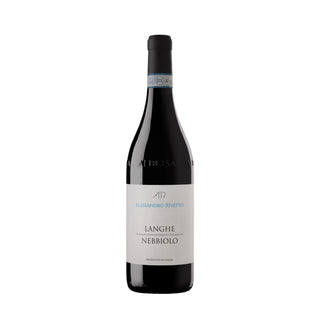
For a first bottle I often recommend the Langhe Nebbiolo. Made from the same Nebbiolo as Barolo but built to enjoy younger, it is in effect an "approachable Barolo." With rose and cherry aromas and supple tannins, it offers the king's charm at a friendly price. For something more serious, we also keep a small allocation of Barolo del Comune di Serralunga (quantities are limited).
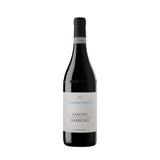
The ideal starting point: the same Nebbiolo as Barolo, made approachable
Langhe Nebbiolo 2022Alessandro Rivetto
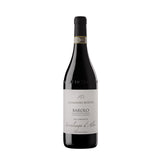
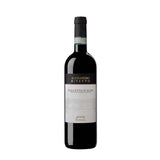
The summit: a powerful Serralunga Barolo (small allocation)
Barolo del Comune di Serralunga 2019Alessandro Rivetto
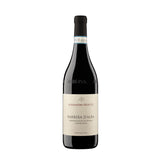
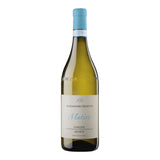
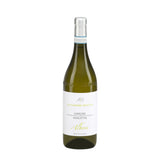
A rare native Langhe white: herbs, citrus, firm acidity
Langhe Nascetta 2022Alessandro Rivetto
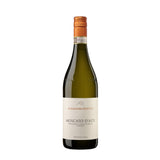
Sweet, lightly sparkling, about 5.5% alcohol. For dessert or after dinner
Moscato d'Asti 2024Alessandro Rivetto
One family, on the same hills, crafting wines of such different expression grape by grape, and you can line them up and taste across the range. That is the joy of the Rivetto lineup.
| Type | Grape | Wines at Swirl |
|---|---|---|
| The kingly red | Nebbiolo | Langhe Nebbiolo / Barolo del Comune di Serralunga |
| Everyday reds | Barbera, Dolcetto | Barbera d'Alba / Dolcetto d'Alba |
| Whites | Arneis, Nascetta | Langhe Arneis / Langhe Nascetta |
| Sweet / sparkling | Moscato | Moscato d'Asti |
Enjoying Piedmont in Japan: food pairings, and keeping wine well without a cellar
Piedmont wines suit the Japanese table surprisingly well. Here are the affinities grape by grape, with familiar dishes.
| Wine | Japanese dishes it loves | In a word |
|---|---|---|
| Nebbiolo / Barolo | Mushroom dishes, roast duck, sukiyaki | Strong with umami and dashi. Mushrooms in autumn are a sure bet. Fragrant |
| Barbera | Tomato-sauce pasta, pizza, pork ginger saute | High acidity cuts through tomato and fat |
| Dolcetto | Cured ham, sausage, everyday meat dishes | Light tannin keeps it easy, never heavy |
| Arneis / Nascetta | Tempura (with salt), white-fish sashimi, dashimaki tamago | A soft white that sits beside delicate washoku |
| Moscato d'Asti | Wagashi, mizu-manju, fruit | Low in alcohol and sweet, good even at lunch or after a meal |
In Piedmont, Nebbiolo's home, autumn brings mountains of white truffle, shaved over tajarin (a thin hand-cut pasta) or a fried egg and paired with aged Nebbiolo. The earthy aroma of mushrooms also pairs beautifully with Nebbiolo in Japan, so do try it in autumn. Saute some shiitake or maitake in butter and soy sauce, pour a glass of Langhe Nebbiolo, and you have a small autumn feast.
Because Nebbiolo's aroma is the main event, choose a slightly larger glass so the floral and fruity notes can rise. Young Barolo or Nebbiolo opens up nicely if you uncork it about 30 minutes ahead, or decant it (pour it into another vessel): the edges soften and it becomes much easier to drink. No need to overthink it, just open it a little early.
As for storage, the infernot teaches us the answer. Those underground rooms were dark, windowless, and held a steady temperature year round because that is exactly the ideal for wine. Even without a cellar in a Japanese home, the thinking is the same. Avoid light and temperature swings, keep bottles somewhere as cool and dark as possible (a north-facing closet or under-floor storage), and lay them on their side. That alone makes a real difference. When you drink, serve reds like Nebbiolo and Barbera at 16 to 18C, chilling them for just 15 to 20 minutes in summer so acidity and fruit line up. Whites and Moscato are best well chilled, around 6 to 9C.
How to choose: finding Piedmont from the taste you already like
Finally, a shortcut for choosing from what you usually enjoy.
- You like Burgundian Pinot Noir, go to pale, aromatic Nebbiolo
- You like light reds with little tannin, try Dolcetto
- You want an everyday red that goes with anything, reach for clean-acid Barbera
- You prefer a crisp white over an oaky one, choose Arneis or Nascetta
- You want something sweet, light, and fit for after dinner, pick Moscato d'Asti
To go deeper, see What is Barolo, the grape deep-dive What is Nebbiolo, the white What is Langhe Arneis, and the grape family tree to see how varieties connect.
Frequently asked questions
Q. What is the difference between Barolo and Barbaresco?
A. Both are 100% Nebbiolo DOCGs from Piedmont, but their aging differs: Barolo is a minimum of 38 months and Barbaresco 26 months, so Barolo is more powerful and long-lived while Barbaresco is more supple and ready to enjoy sooner.
Q. Is Piedmont wine always expensive?
A. No. Barolo and Barbaresco are pricey, but Barbera, Dolcetto, and Arneis offer plenty of options from roughly 2,000 to 5,000 yen that suit the everyday table.
Q. Why is Nebbiolo so tannic and high in acidity?
A. Nebbiolo is simply a grape rich in tannin and acidity. Giving it a little air, or pairing it with food, softens the grip. Serve it not too cold, around 16 to 18C.
Q. If I am trying Piedmont for the first time, what should I pick?
A. Langhe Nebbiolo is a great choice. It lets you enjoy the same grape as Barolo younger and more affordably, an "approachable Barolo" that makes a perfect doorway to the region.
Q. What is a common misconception?
A. That all Piedmont wines need long aging. Barolo does reward time, but Dolcetto, Arneis, and Moscato d'Asti are meant to be enjoyed for their freshness while young.
From fog-wrapped hills come both the kingly red and the everyday bottle. That is the fascination of Piedmont. I hope you find a favorite of your own.
Sources: Barolo / Barbaresco DOCG production rules (Consorzio di Tutela Barolo Barbaresco Alba Langhe e Dogliani); UNESCO World Heritage "Vineyard Landscape of Piedmont: Langhe-Roero and Monferrato" (inscribed 2014).

Comments (0)
There are no comments for this article. Be the first one to leave a message!